Killer Whales and Dolphins May Team Up to Hunt Salmon


December 11, 2025
2 min reading
 Add us on GoogleAdd SciAm
Killer whales and dolphins could team up to hunt salmon
Tantalizing observations suggest marine mammals could team up to hunt
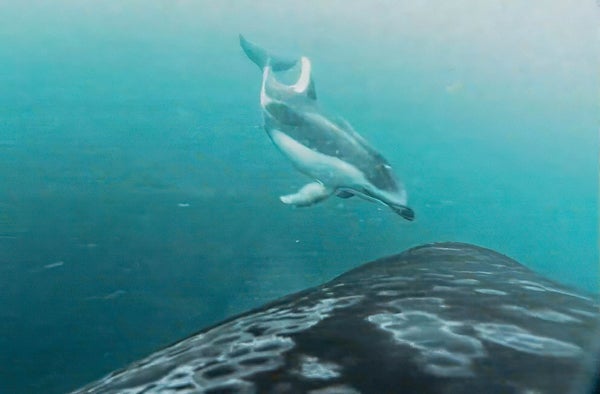
A Pacific white-sided dolphin approaches a Northern Resident Killer Whale with a camera mounted on it.
A. Trites/University of British Columbia/S. Fortune/Dalhousie University/K. Holmes/Hakai Institute/X. Cheng/Leibniz Institute for Zoo and Wildlife Research
We could all use a friend to help us find dinner from time to time.
New research published on December 11 in Scientific reports postulates that killer whales (Killer whale) off the coast of British Columbia could forge hunting partnerships that bridge the gap between species.
Sarah Fortune, a marine ecologist at Dalhousie University in Nova Scotia, and her colleagues used drones and camera-equipped tags to study killer whales for two weeks in August 2020. While observing them, they noticed something strange: the regular presence of Pacific white-sided dolphins (Lagenorhynchus obliquidens).
On supporting science journalism
If you enjoy this article, please consider supporting our award-winning journalism by subscription. By purchasing a subscription, you help ensure the future of impactful stories about the discoveries and ideas shaping our world today.
“We kept finding that when the killer whales were feeding, the dolphins were there,” Fortune says. “That gave us a little inkling that maybe something big was going on.”
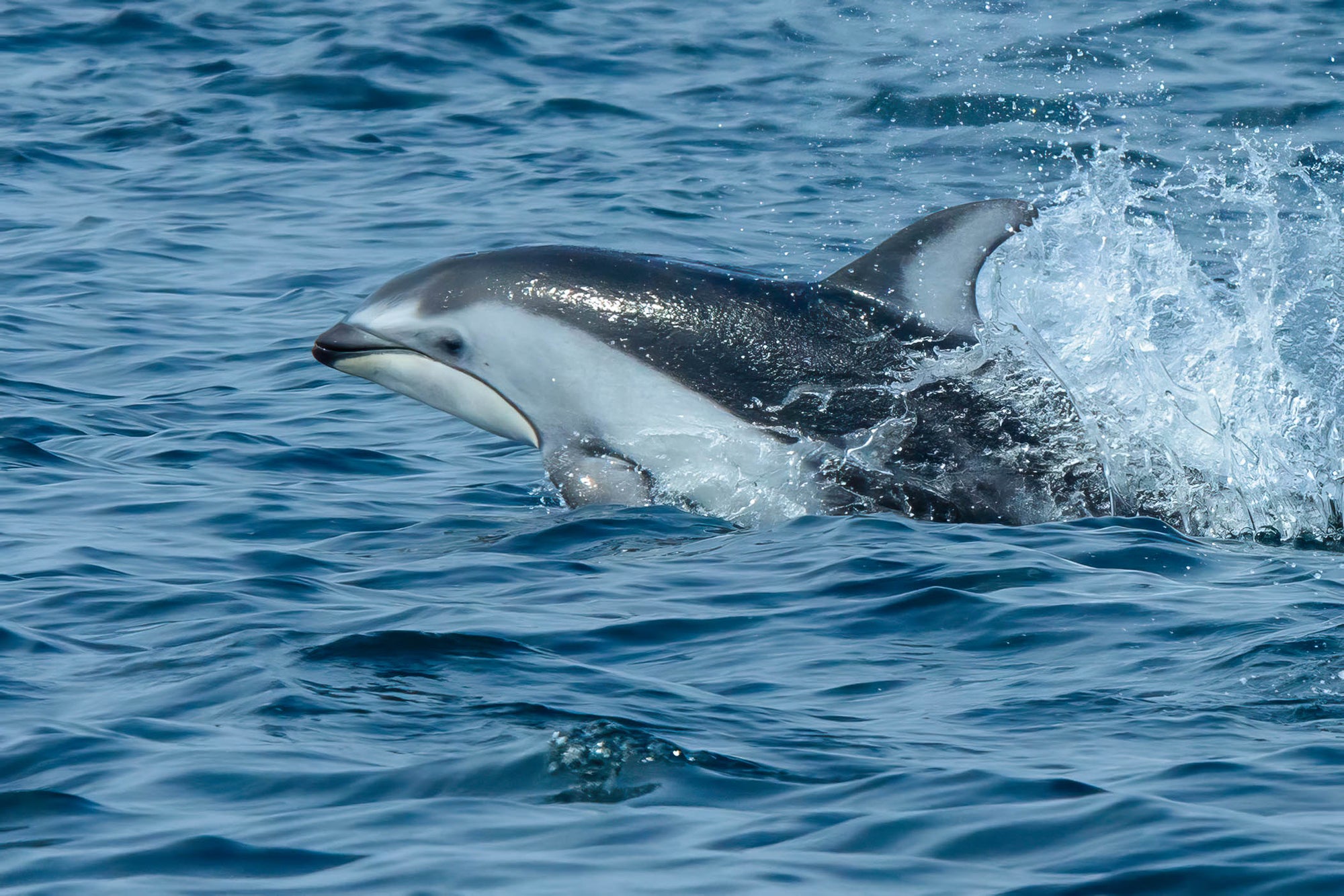
A Pacific white-sided dolphin observed during a new study of possible hunting partnerships between orcas and dolphins.
A. Trites/University of British Columbia/S. Fortune/Dalhousie University/H. Holmes/Hakai Institute/X. Cheng/Leibniz Institute for Zoo and Wildlife Research
So the scientists delved into the data, looking for evidence of how these different marine mammals interacted during killer whale feedings, when the animals hunt large adult Chinook salmon (Oncorhynchus tshawytscha). The researchers noticed that the killer whale hunters they studied seemed to show a notable preference for following dolphins. In one particularly striking sighting, a killer whale caught a salmon and dined while nearby dolphins gobbled up pieces of fish.
To Fortune and his colleagues, the interactions suggest that these killer whales – part of what is called the Northern Resident population – and the dolphins are teaming up, with one or more dolphins helping a killer whale catch its prey and then sharing the feast in a striking display of interspecific cooperation. “Killer whales that are salmon specialists, that’s what they rely on,” Fortune says. “The fact that they were following the dolphins and dragging them behind them and kind of letting the dolphins guide them really surprised me.”
But it may be too early to announce a power alliance with marine mammals, says Janet Mann, a behavioral ecologist at Georgetown University who specializes in marine mammals and was not involved in the new research. She would like to see more evidence that dolphins actually benefit from and seek partnership rather than simply being exploited by killer whales eager to use their hunting skills.
“I don’t think it was demonstrated as cooperation because I think the standards for cooperation are a little higher,” Mann says. “It’s not like the dolphins are waiting for the killer whales to arrive and then say, ‘Let’s go’.”
Fortune agrees, saying that his and his colleagues’ observations support the scientific definition of cooperation they used — behavioral coordination — but do not yet fit a definition of mutualism, which requires that both species benefit.
Editor’s Note (11/12/25): This article was updated after publication to include additional commentary from Sarah Fortune.
It’s time to defend science
If you enjoyed this article, I would like to ask for your support. Scientific American has been defending science and industry for 180 years, and we are currently experiencing perhaps the most critical moment in these two centuries of history.
I was a Scientific American subscriber since the age of 12, and it helped shape the way I see the world. SciAm always educates and delights me, and inspires a sense of respect for our vast and beautiful universe. I hope this is the case for you too.
If you subscribe to Scientific Americanyou help ensure our coverage centers on meaningful research and discoveries; that we have the resources to account for decisions that threaten laboratories across the United States; and that we support budding and working scientists at a time when the value of science itself too often goes unrecognized.
In exchange, you receive essential information, captivating podcasts, brilliant infographics, newsletters not to be missed, unmissable videos, stimulating games and the best writings and reports from the scientific world. You can even offer a subscription to someone.
There has never been a more important time for us to stand up and show why science matters. I hope you will support us in this mission.


