Malcolm Turnbull accuses Liberals of ‘Trumpian campaign against renewables’ after party dumps net zero | Liberal party


Former Liberal Prime Minister Malcolm Turnbull said his party’s decision to abandon the net zero emissions target shows it “does not take climate change seriously”, accusing the opposition of a “Trumpian campaign against renewable energy”.
But while moderate sources worry about the impact on winning back or retaining urban voters, and climate groups have called the rollback a “disaster”, the Liberal decision to abandon its own 2050 target and return to Labor’s 2035 commitments and renewable energy has been welcomed by Conservative MPs and activists.
Turnbull, ousted by right-wing MPs in a 2018 coup in part over energy and climate policy, told Guardian Australia: “This is what happens when you outsource your policymaking to Sky News and the right-wing media echo chamber.
“The Liberals’ decision to abandon net zero emissions by 2050 will simply confirm to most Australians that the parliamentary party does not take climate change seriously and wants to join a Trumpian campaign against renewable energy,” Turnbull said.
“No nuance or footnote will change that impression. They have the memory of goldfish and the eating habits of piranhas.”
The move was warmly welcomed by the right-wing campaign group Advance, which had pushed the Coalition to abandon net zero, including by bringing its members together to bombard Liberal MPs with messages. Advance’s director, Matthew Sheahan, emailed supporters calling the change “a major victory in the fight to take back the country from activists and elites.”
Nationals leader David Littleproud said Liberal policies “reflect” his own party’s position and expressed optimism about upcoming negotiations with Liberal MPs to achieve a unified coalition position.
“We believe in climate change. We believe that we have to do something. That we have to do our fair share,” he said.
Subscribe: Email AU Breaking News
Liberal MP Leon Rebello told Guardian Australia the coalition believed it had the social license to abandon the targets. Queensland Conservative MP Garth Hamilton called it a “big backbench victory”.
Hamilton, who previously backed Andrew Hastie for leadership of the Liberal Party, predicted immigration could become the next controversial political challenge.
“I hope we will deal with the issue of immigration much better,” he said.
Questions and answers
What is net zero emissions?
To show
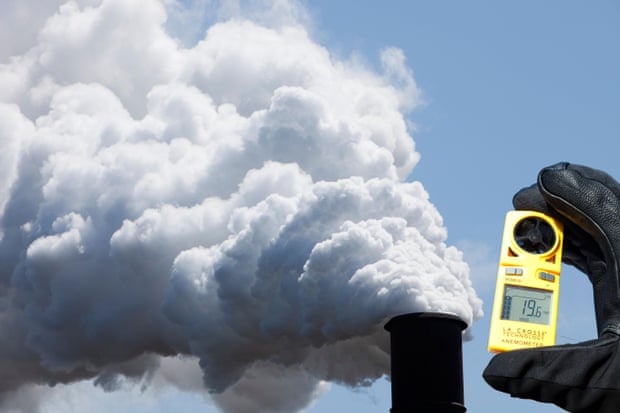
Net zero emissions is a goal adopted by governments, businesses and other organizations to eliminate their contribution to the climate crisis. This is sometimes called “carbon neutrality”.
The climate crisis is caused by carbon dioxide and other greenhouse gases being released into the atmosphere, where they trap heat. They have already caused a significant increase in average global temperatures above pre-industrial levels recorded since the mid-20th century.
Countries and others that set net zero emissions targets commit to ending their role in making the situation worse by reducing their climate pollution and balancing remaining emissions by sucking an equivalent amount of CO2 from the atmosphere.
This could happen through natural projects – planting trees, for example – or using carbon dioxide removal technology.
Removing CO2 from the atmosphere is the “net” part of net zero. Scientists say some emissions will be difficult to stop and will need to be offset. But they also say net zero targets will only be effective if carbon removal is limited to offsetting “hard-to-reduce” emissions. The use of fossils will still have to be considerably reduced.
After signing the Paris Agreement in 2015, the global community asked the Intergovernmental Panel on Climate Change (IPCC) to assess what would be needed to give the world a chance of limiting global warming to 1.5°C.
The IPCC has estimated that this would require significantly reducing global CO2 emissions: to around 45% below 2010 levels by 2030, and to zero by around 2050.
The Climate Action Tracker found that more than 145 countries have set or are considering setting net zero emissions targets.
Environmental groups were dismayed by the change. The Australian Conservation Foundation accused the Liberals of “giving up on climate action, giving in to global fossil fuel giants and condemning Australians to” extreme weather events due to climate change.
Although Ley said the Liberals supported the Paris Agreement’s intention to limit global temperature rise, the Climate Council said “moving away from net zero equates to more than 3C of global warming and would be a disaster for Australia’s climate, economy and household bills”.
Greens senator Sarah Hanson-Young called Ley’s announcement a “rail disaster”.
“This is a bunch of lunatics who want to push the Australian economy over the precipice and continue to destroy our environment,” she told a news conference.
Independent MP Zali Steggall called it “reckless and a big step backwards”; Monique Ryan said the decision meant the Liberals had “doomed themselves to electoral oblivion.”
after newsletter promotion
The change is seen as a major internal victory for right-wing liberal MPs over the moderate faction. Key moderates such as Tim Wilson, Andrew Bragg, Maria Kovacic and Dave Sharma had raised the alarm over the electoral repercussions of abandoning the target.
One moderate lawmaker said it would be difficult to get the policy accepted, calling it a “friendless” position.
Jason Falinski, a former Liberal MP and president of the New South Wales branch, had warned his party against a “national lite” approach. He told Guardian Australia on Thursday: “I’m looking forward to figuring out how this gets us more votes.” »
Charlotte Mortlock, the founder of Hilma’s Network, a group aimed at recruiting liberal women, was scathing about the decision. She told ABC TV that it would be difficult for the party to regain seats in the interior metropolises.
“What I fear is that the main takeaway is that we are not taking climate change seriously,” she said.
“The Coalition has a checkered history on climate… right now there may be a movement around net zero and climate change, but you either believe in climate change and want to pursue net zero, or you want to abandon it.
Several moderates told Guardian Australia they largely accepted this position, which would “allow us to continue to fight” in metropolitan seats. One MP said moderates had negotiated at the meeting to maintain the 2050 target and, while supporting that position, called the outcome “pretty brutal”.
Others raised concerns the breakdown in bipartisan support for net zero and the Coalition’s promise to cut Labor’s climate incentives would impact investor confidence.
Tony Wood, senior fellow on energy and climate change at the public policy think tank Grattan Institute, said business groups were constantly calling for predictability and clarity on climate policy.
“The idea that Australia no longer has a clear long-term direction, but just ‘follows everyone’, is not very helpful for investors,” he said.
“In what has been proposed so far, I don’t see how it would reduce emissions, I don’t see how it would reduce prices either.”


