Meet NASA’s New Artemis II Science Officers


Business attire, headsets and multiple computer screens make for a very different backdrop than Iceland’s hiking gear, jackhammers and volcanic fields. For Kelsey Young of NASA’s Goddard Space Flight Center in Greenbelt, Maryland, and Trevor Graff and Angela Garcia of NASA’s Johnson Space Center in Houston, the comfort and proficiency in both environments made them uniquely suited to be certified as NASA’s first Artemis II science officers.
The integration of science operations into human spaceflight dates back to Apollo, but Artemis introduces a new dedicated position within NASA Mission Control, marking an evolution in how science is integrated into mission operations.
“The science officer is the primary flight controller responsible for lunar science and geological objectives during the Artemis missions,” said Young, who is also responsible for Artemis II lunar science at NASA. “They will integrate with all other console disciplines and ensure that NASA’s lunar science objectives are seamlessly integrated into mission execution.”
The forward room of Mission Control is filled with consoles, or workstations, each dedicated to a particular mission system or function. Flight controllers on each console monitor areas such as communications, life support, propulsion, and now science. Many console positions are supported by larger teams of experts who work either in different “back rooms” at NASA’s Johnson Space Center in Houston or in other locations.
Young, Garcia and Graff completed months of flight controller training, testing and certification simulations in Mission Control, while also performing geology and lunar observation training and integrated simulations with the astronauts.
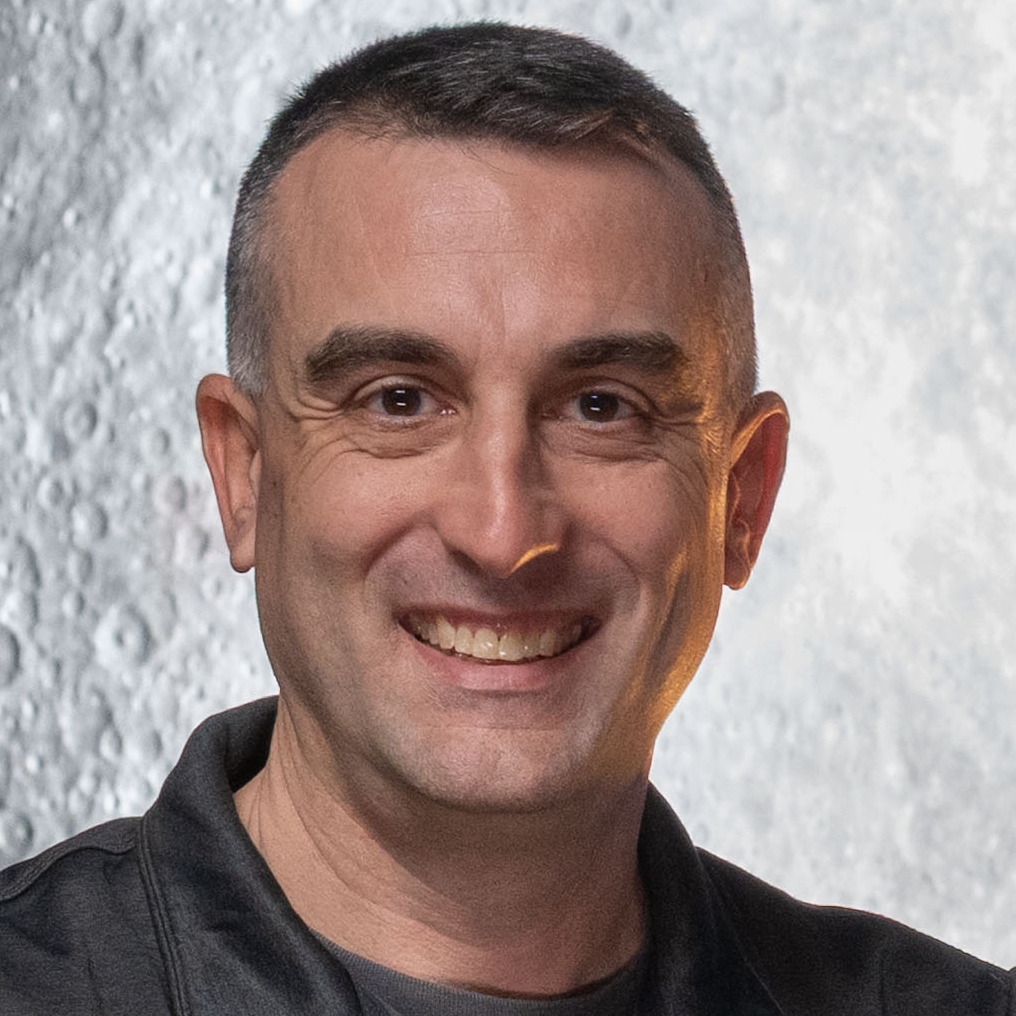
Trevor Graff
Artemis Science Officer
“The simulations, where we tested our skills and knowledge while being immersed in highly realistic mission scenarios, are one of the most exciting, challenging and rewarding elements of the process,” Graff said.
The simulations often included the Artemis II astronauts and covered the lunar flyby portion of the mission, scheduled for Monday, April 6, during which the crew will take photographs of the Moon and record audio of their observations. They will be the eyes of lunar scientists on Earth and have undergone classroom and field geology training to be able to capture as much information as possible as they pass around the far side of the Moon. Young said the astronauts worked incredibly hard to build their lunar science toolboxes, study lunar geography, travel lunar landscapes in Iceland and cultivate their ability to provide scientifically impactful descriptions of the Moon.
Listen to this audio clip of Kelsey Young explaining how the Artemis II astronauts studied lunar geography to prepare for their mission. Credit: NASA’s Curious Universe
“After so many months of hearing their descriptions of lunar visualizations in simulations, I’m very excited for the very first time I’m hearing them describe the real Moon through Orion’s windows,” Young said. “Hearing the enthusiasm and scientific significance of their descriptions will be an incredible moment.”
Human eyes and brains are very sensitive to subtle changes in color, texture, and other surface characteristics. Having astronauts’ eyes directly observing the lunar surface, combined with the context of all the advances scientists have made on the Moon in recent decades, could lead to new discoveries and a more nuanced appreciation of the features of the Moon’s surface. Although Artemis II will not land on the lunar surface, its contributions to lunar science are significant.
“The crew will explore through observation, a fundamental scientific tool,” Garcia said.
As the astronauts make these observations, their photos and audio recordings will be transmitted to two science backrooms at NASA Johnson, the Science Evaluation Room and the Science Mission Operations Room. Experts in these rooms will provide real-time data analysis and strategic advice to the Mission Control chief scientist. These processes represent a major element of Artemis II as a test flight: refining the operations of the science mission.
This mission will test workflows, technical requirements, and integration of the lunar science team into Mission Control. Lessons learned during Artemis II will pave the way for lunar science operations for future Artemis missions. Young explained that integrating science into human spaceflight has a long and rich history. Although there were no science representatives in the main room of Mission Control during Apollo, there was a geology back room on site at Johnson. As the Apollo missions progressed, the integration structure with the rest of the flight control team evolved and the footprint expanded as the science capability of each mission increased.
Garcia said she was honored, honored and grateful to be part of the flight control team and to have trained the astronauts. The Moon is something that everyone, everywhere can see and connect with, according to Young.
“I hope people around the world can be inspired by this estrangement from our planet,” Young said. “I also hope they remember the Moon, how much we still have to learn about our closest neighbor, but also the special place it holds for people around the world.”
Download high-resolution images and videos


