MENA leaders call for housing to go beyond ‘bricks and mortar’ at Baku forum

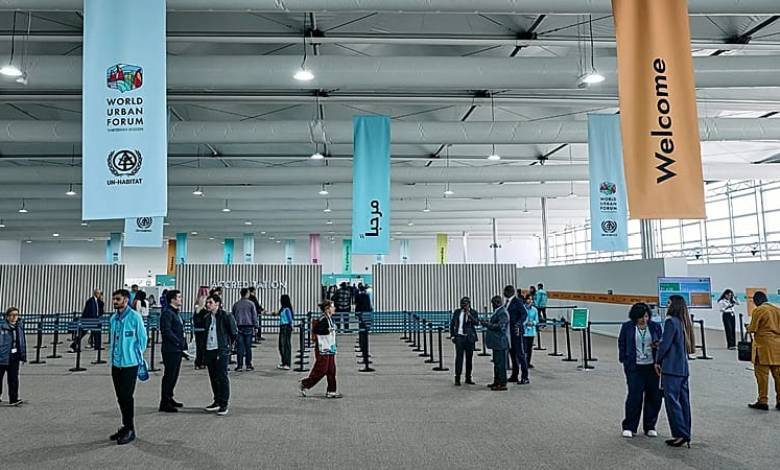
At the 13th World Urban Forum (WUF13) in Baku, debates on housing in the Middle East and North Africa moved beyond construction targets and financing figures to focus instead on resilience, dignity and long-term social stability.
Officials and philanthropic leaders from Saudi Arabia, Palestine and Morocco explained how the region is increasingly linking housing policy to jobs, climate adaptation and urban inclusion, while confronting the realities of conflict and reconstruction.
One of the strongest messages came from Lamia bint Majid Al Saud, Secretary General of Alwaleed Philanthropies, who said housing solutions cannot be replicated across countries.
Strategies need to be built around data and local realities rather than “one-size-fits-all” approaches, she said. “We don’t see this as a problem… it’s about understanding communities and being creative with solutions.”
She discussed projects in Africa in which climate-resilient homes were built from natural materials while simultaneously training local masons, creating jobs alongside housing.
According to Alwaleed Philanthropies, more than 1.2 million homes have been supported worldwide through models adapted to local conditions.
Al Saud also described how Saudi initiatives are increasingly linking housing assistance with economic empowerment, particularly for women.
In partnership with Saudi authorities, the organization provides housing, vehicles and job training, connecting beneficiaries with ride-sharing platforms such as Uber and Careem to generate additional income.
Related
His intervention reflects a broader shift emerging during discussions in the MENA region at WUF13: housing is no longer seen just as infrastructure, but as part of a broader economic and social ecosystem.
Reconstruction dominated the intervention of Sami Hijawi, Minister of Local Government of Palestine, who used the forum to draw attention to the humanitarian and urban destruction caused by the war in Gaza.
Palestinian authorities are relying heavily on international cooperation, development banks and public-private partnerships to prepare for future reconstruction efforts, despite severe financial pressures.
“The Palestinian people have decided to stay on their land,” he said, calling for stronger global support for rebuilding housing and urban infrastructure.
Hijawi noted that unemployment had risen sharply due to the war and highlighted ongoing talks with international institutions, including the World Bank, to expand financial support programs.
For Palestinian officials, WUF13 served not only as a forum for urban development, but also as a diplomatic platform to mobilize international support for reconstruction and long-term housing restoration.
Moroccan Secretary of State for Housing Adib Benbrahim presented his country’s housing strategy as a regional model of state-led urban transformation supported by public-private investment.
Morocco made housing a central pillar of social policy under King Mohammed VI, with programs targeting slum eradication, middle-class housing and urban renewal.
According to Moroccan authorities, more than 720,000 housing units have been developed through public-private partnerships, while more than 325,000 people have benefited from slum resettlement programs since 2004.
The country is also moving towards a new subsidy model launched in 2024, transferring direct financial support from developers to citizens, thus giving families greater freedom in choosing where they live and encouraging social diversity.
Alongside housing construction, Morocco is investing in schools, health facilities and urban infrastructure in disadvantaged neighborhoods as part of broader urban regeneration efforts.


