Michael Malone through an NBA lens: What he’ll do well and where it could get tricky at North Carolina


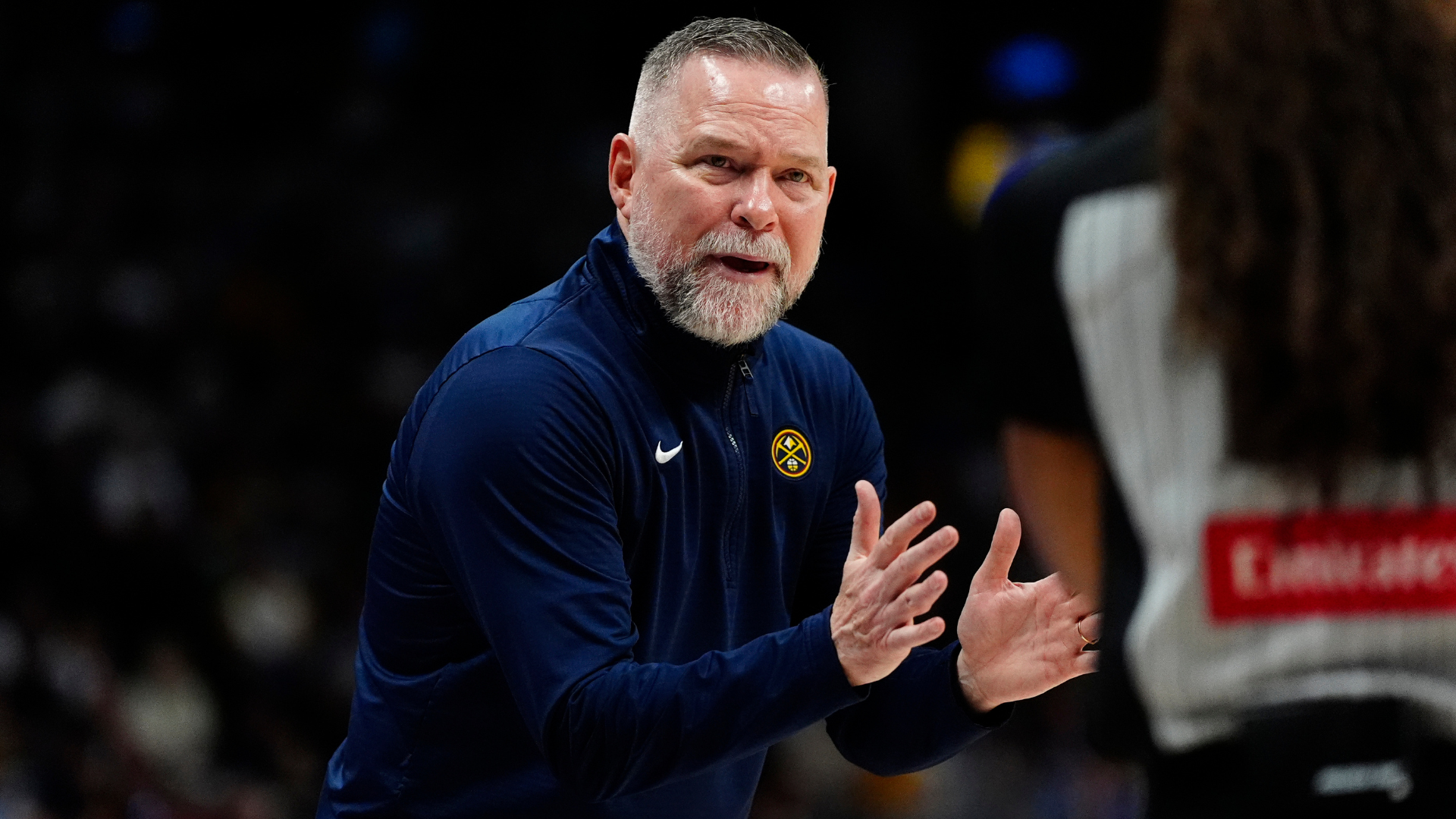
If you are surprised that Michael Malone will be the next coach of the North Carolina Tar Heels, understandably. Unlike Chicago Bulls coach Billy Donovan, another candidate for the job, and unlike Boston Celtics president Brad Stevens, who was not interested in it, Malone is not one of the names typically thrown around when a major college program has a coaching vacancy. He previously worked in college basketball, having been an assistant coach at Oakland, Providence and Manhattan and director of basketball administration at Virginia, but that seven-year stint ended when he joined the coaching staff of the New York Knicks 25 years ago. Malone has spent the vast majority of his professional life in the NBA.
Malone does, however, have a connection to UNC. His daughter Bridget is a freshman on the volleyball team, and as a result, he has spent a lot of time in Chapel Hill. He attended the basketball team’s practices, and last October he appeared on the Tar Heels’ official podcast. Although he didn’t attend North Carolina himself — he played point guard for Loyola (Maryland) — he said on this podcast that his father, the late coach Brendan Malone, told him about Dean Smith when he was little.
“I’ve always been a Carolina fan,” he said. “And when she decided to come here, it made it even more special, because now I’m ‘Go Heels’ for everything. I support every team. I fell in love with Chapel Hill.”
OK, so Malone loves Chapel Hill. And he won an NBA championship in 2023 as coach of the Denver Nuggets. But what else should college fans know about him? Let’s start with the reputation he had long before he arrived in Denver.
Malone is an old-school, defense-first guy, right?
It was certainly the book about him before he came to Denver. Malone’s father was a disciplinarian, and when Malone was an assistant coach under Mike Brown in Cleveland, Monty Williams in New Orleans and Mark Jackson at Golden State. he was responsible for the defense.
“I would say that even though I’m a young NBA coach, in terms of my tenure as an NBA head coach, I would also say that I have a lot of old school in me as well,” Malone told Mike Olsen, then of the Denver Stiffs, in 2016. “I appreciate the discipline. I know it worked for me when I was playing, and maybe because I grew up with it in the house, but I responded better to coaches who were tough on me, disciplined me and didn’t take the easy route. It was good for me, and at the end of the day, that’s what I believe in, and that’s obviously my approach.
In that 2016 interview, Malone went on to discuss his relationship with DeMarcus Cousins, who clashed with many coaches in Sacramento but got along famously with Malone. The Kings’ decision to fire Malone (at the start of the 2014-2015 season, while Cousins was suffering from viral meningitis) hurt their franchise player and aged him terribly. Malone was in the early stages of establishing a culture in Sacramento, and Cousins, who clashed with many other Kings coaches, had bought into it.
In 2017, three years after Malone kicked him out of a cabinet, Cousins told the story to then-ESPN’s Kevin Arnovitz:
It’s an afternoon in early 2014, midway through the season, and first-year Kings coach Mike Malone is leading a particularly brutal practice. Malone was hired by the Kings last June, and Cousins has seen practices like this before. “Mike has his days,” Cousins says. “You saw him standing aside, veins popping out of his head…too frustrated, angry at the world. It was one of those days.”
Cousins also lives one of these days, dead tired from what appears to have been an almost intentionally sadistic practice. And when Malone yells for the team to line up to run sprints, Cousins is defiant: “Fuck, man. I’m not running!”
And then, as Cousins remembers, “every piece of 5-9 Mike Malone comes up to me and says, ‘Mother—uh, you’re going to run or you’re going to fuck with my training, you big dick!’ And I say, ‘I’m not running, Mike!'”
Malone quickly shows Cousins the door.
Cousins went on to tell ESPN that while Malone could get angry, it was never personal. “Mike was real,” Cousins said. “Mike held everyone accountable, especially himself. That’s all that matters. That’s what it’s all about.” In the same story, Malone said Cousins ”always knew I cared about him and loved him.” Malone added, “Once you earn his trust, he’ll go to war for you. I think I earned his trust pretty early in our relationship.”
The Nuggets hired Malone in 2015. The year before his arrival, ESPN published an article, also written by Arnovitz, titled “The Fall of the Denver Nuggets,” in which the roster was described as a “menagerie of mismatched pieces” and the organization was described as “rudderless.” Malone has given the franchise a sense of stability.
At first, improvements were gradual. Then, after “Jokmas” – December 15, 2016, the day Malone decided to make 21-year-old Nikola Jokić the starting center and play with him – everything changed, including Malone’s rep. Given the way Denver has played offensively in the years since, it would be inaccurate to describe him as simply a hard-nosed, defensive-minded culture builder.
What was so special about his Nuggets teams?
Jokić, mainly. And also Jamal Murray. Malone, however, gave them the platform to perfect their two-man game. He earned their trust, empowered them and challenged them. Each year, Denver’s offense has become less conventional. As Jokić evolved, so did the Nuggets. By the end of Malone’s tenure, their franchise player was not only the best passer in NBA history, he was truly positionless. Unlike other “point centers” who make plays from the high post, Jokić executed pick-and-rolls like a guard and came out of pindowns like a wing.
During Jokić’s first seasons, Malone had to take it upon himself to establish himself as a scorer. “Sometimes I don’t think [Jokić] realizes how good he is,” Malone said at media day in 2018. “And what a great player he is. There were times last year when we were talking about other big men in the NBA. He’d say, “I don’t think I’m as good as this guy or that guy,” and I’d look at him like, “Are you crazy?”
Malone would ride horses in Jokić’s hometown of Sombor, Serbia, in the summer, and he spent years getting to know Jokić and trying to maximize his particular basketball genius. By the time the Nuggets were in contention, their motion-oriented offense was a reflection of their superstar’s unprecedented skill combination. His teammates quickly realized that by simply going to the basket at the opportune moment, they could feast on Jokić’s passes. Rather than doing a lot of set plays in practice, Denver worked on concepts. A drill, as then-assistant coach David Adelman told Michael Pina of The Ringer in 2023: five on zero, 18 seconds on the clock, no pick-and-roll, no shooting until the clock hits five.
“You get all kinds of cuts and moves, and that can, in a sense, be a game in itself,” Adelman said.
Malone’s Nuggets were unpredictable and unconventional. They’ve built an elite offense that has withstood the scrutiny of the playoffs, despite being one of the slowest and most opposing 3-point teams in the league. They were tough enough to get the stops they needed during their 2023 title run, but they were special because they picked apart opposing defenses.
What are the blows to Malone?
Well, his relationship with then-Nuggets general manager Calvin Booth deteriorated to the point where they barely spoke, leading to them both being fired around this time last year. “Everyone in the organization was unhappy,” a team source told ESPN’s Ramona Shelburne in one of several articles documenting the rift between the two.
Some tension between a team’s coach and the front office is inevitable. It can even be healthy. But that clearly wasn’t the case, and Malone has to take some of the blame for that. He was reluctant to play against some of the young players Booth wanted him to develop — in hindsight, Booth was right to be particularly high on Peyton Watson — and, year after year, he played his starting five for an enormous number of minutes together, which was good for those players’ chemistry and not necessarily optimal for everyone.
If it wasn’t already clear, Malone is intense. And by the end of his tenure in Denver, many players would have had enough of his yelling. The team also seemed to ignore him on the field.
Generally speaking, if you think of a negative trait typically associated with coaches who describe themselves as “old school,” it was probably used to describe Malone at some point. He is a loud, fiery and sometimes stubborn guy. He is demanding. It can work, and it has in Denver for almost 10 full seasons. But it can also wear out.
If you’re optimistic about the Tar Heels hiring, you can point to the success of UConn’s Dan Hurley, which makes Malone look cold in comparison. Malone has a history of connecting with star players, which should stand him in good stead as a recruiter. He also showed with the Nuggets that he’s a more creative offensive coach than previously thought, and there’s no reason that couldn’t translate to the college level.
If you’re against this hire, you can point to the simple fact that this isn’t the NBA and he won’t have the luxury of coaching someone to Jokić’s level. The players he coaches in Chapel Hill will make mistakes and test his patience more than the young pros in Denver. Maybe he’s ready for it, but it’s definitely going to be an adjustment.


