
NEWYou can now listen to Fox News articles!
Steve Martin and John Belushi once conspired to get the “Saturday Night Live” star to appear on “The Tonight Show.”
In his book, “Love Johnny Carson,” author Mark Malkoff described how the “Father of the Bride” star snuck Belushi onstage while he was guest hosting “The Tonight Show” in August 1977.
“At the time, Carson refused to book current ‘SNL’ cast members due to his dislike of the show,” Malkoff wrote. “Carson found the show’s humor cruel. [Chevy] Chase, who had left ‘SNL’ and Carson had gotten into a war of words, but Chase had recently sent Carson an apology letter. So, Carson lifted the ban on Chase. But the ban remained on the existing ‘SNL’ cast- including Belushi.”
Malkoff writes that Johnny Carson’s ban on “SNL” cast members was in effect by the late 1970s, as he was not a fan of the show and the many sketches it did that mocked his show.
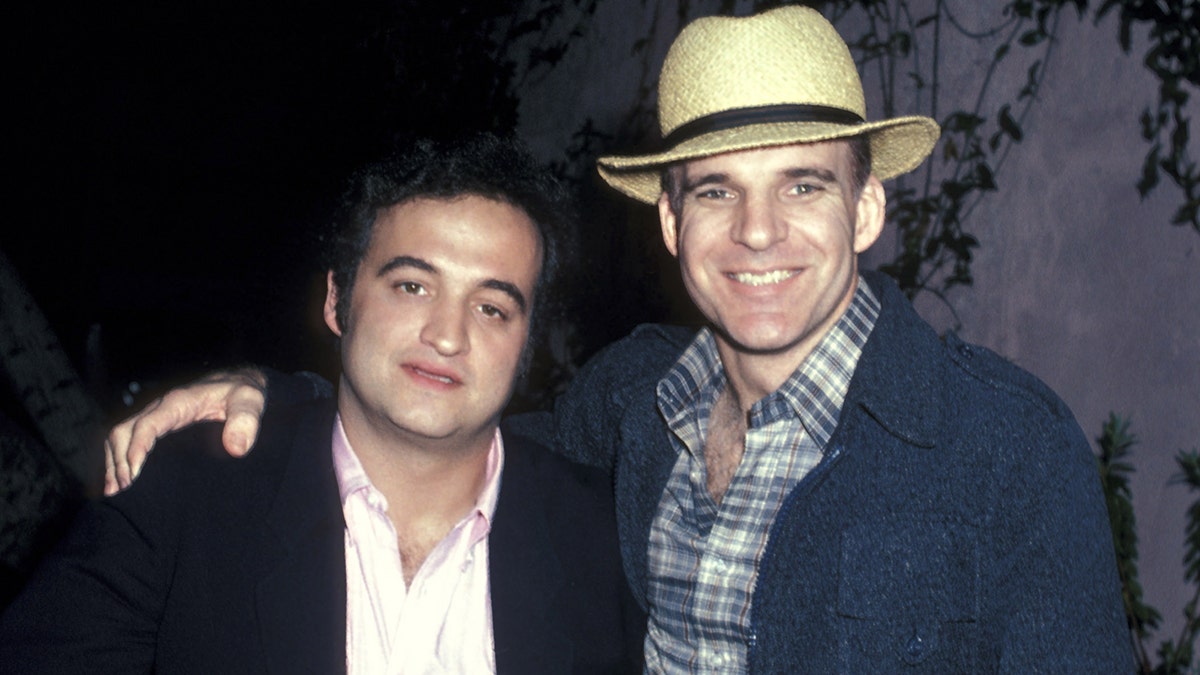
Martin conspired with Chevy Chase to get Belushi to appear on the “Tonight Show.” (Ron Galella/Ron Galella Collection via Getty Images)
MERV GRIFFIN AND JOHNNY CARSON WERE BITTER RIVALS WHO FOUGHT OVER CELEBRITY GUESTS FOR YEARS
To get around the ban, Chevy Chase and Martin “hatched a secret plan” to have Chase introduce his wife who was supposedly sitting in the audience, only Chase wasn’t married at the time.
“When the camera cut to Chase’s supposed wife, it was revealed to be John Belushi sitting in the studio audience,” Malkoff wrote. “The audience erupted in applause at the surprise. Since Belushi wasn’t a seated guest on the couch, Martin and Chase got away with the spectacle. Belushi, who achieved his goal of finally being on the ‘Tonight Show’, was delighted.”
Belushi’s “SNL” cast members, including Gilda Radner, Dan Aykroyd, Jane Curtin and Bill Murray, were later invited to be guests on the “Tonight Show,” however Belushi himself never did as he tragically died in March 1982 at the age of 33 due to a drug overdose.
The legendary comedian was part of the original cast of “Saturday Night Live,” which also included Chase, Radner, Aykroyd, Curtin, Laraine Newman and Garrett Morris.
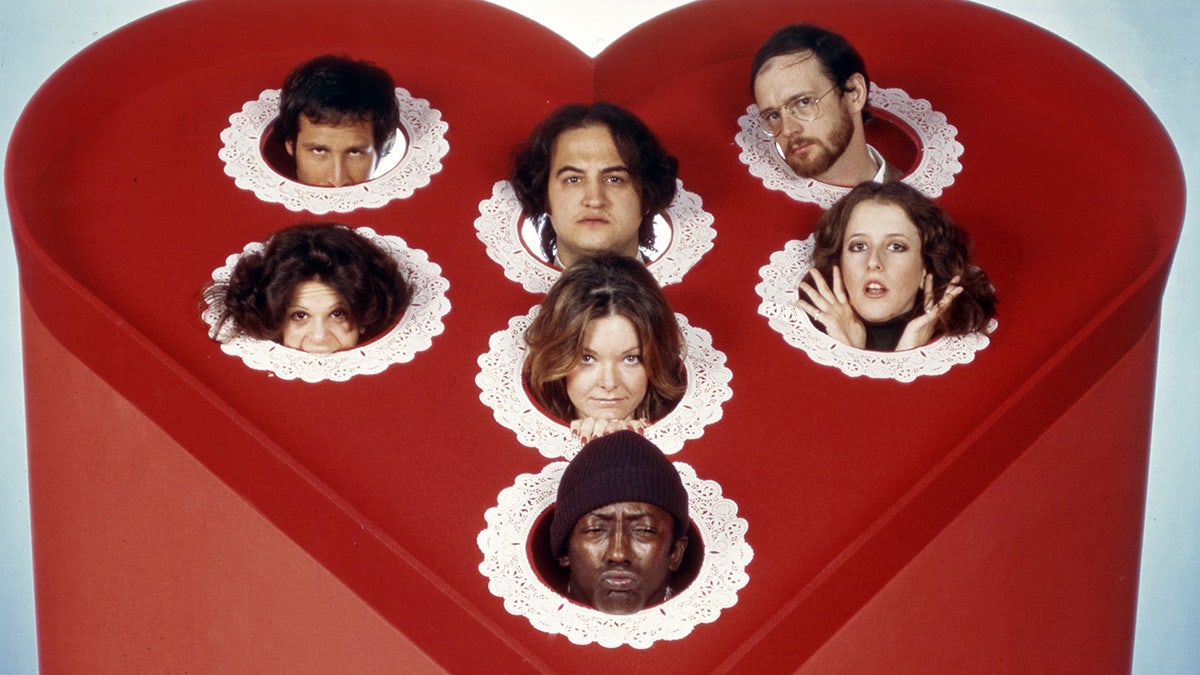
Belushi was a member of the original cast of “Saturday Night Live.” (Photo by NBC/NBCU Photo Bank via Getty Images)
Carson’s issues with the popular sketch comedy show stemmed from the way he was portrayed in the skits, which often painted him as “old and out of touch,” with some insinuating “that Johnny was losing his grip.”
CLICK HERE TO SIGN UP FOR THE ENTERTAINMENT NEWSLETTER
“In 1977, Jane Curtin joked on ‘Weekend Update:’ ‘In a sudden policy shift, The Tonight Show Starring Johnny Carson will not be broadcast live, starting next week, as previously announced,” Malkoff wrote. “‘The decision was based on California’s new euthanasia law, which states that ‘A program does not have to be kept alive by artificial means and has the right to a dignified death.’”
Malkoff writes in the book that Jay Leno heard Carson tell his staff that if “SNL” was going to keep poking fun at him, then it was “time to go.”
Two days after Carson allegedly made that comment, Malkoff wrote, “SNL” aired the “Carsenio” sketch, in which Dana Carvey portrayed Carson as if he were channeling rival talk show host Arsenio Hall. Five days after the sketch aired, Carson made the announcement that he was stepping down and that his last show would be in May 1992.
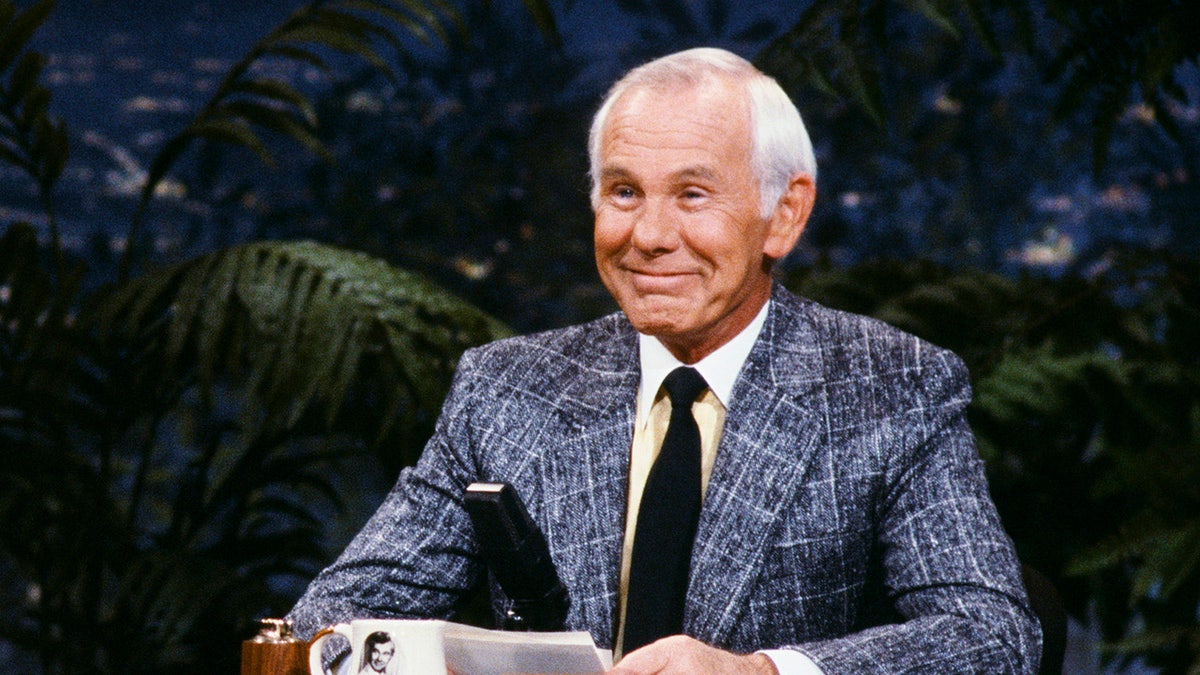
Carson’s last show aired in May 1992. (NBCU Photo Bank/NBCUniversal via Getty Images via Getty Images)
As the day of his final show got closer, Carson began fighting back against the jokes made at his expense on the show.
LIKE WHAT YOU’RE READING? CLICK HERE FOR MORE ENTERTAINMENT NEWS
“But Johnny had the last laugh,” the book states. “In his monologue on May 20, two days before his final show, he said, ‘We’ve been with this network for thirty years, and this fall — I saw the [new] schedule, and they’re coming up with some real great, innovative programming. They’re going to try a comedy version of Saturday Night Live.'”
“The Tonight Show starring Johnny Carson” aired its final episode on May 22, 1992, and out of respect for the legendary talk show host, Malkoff wrote that Comedy Central went dark for the full hour of his show, and Arsenio Hall ran reruns of his show all that week.
Fox News Digital has reached out to Martin and Chase’s reps for comment.
CLICK HERE TO DOWNLOAD THE FOX NEWS APP


