Multi-generational vulture nests hold 700 years of human artifacts


Most birds of birds are temporary houses, but not for the bearded vulture (Barbatus gypetus). Threatened species assemble their residences in rocky shelters and cliff caves from various mountain ranges from around the world, offering a shelter for generations. If it is particularly well protected from the elements, a bearded vulture nest can host animals for several centuries.
Like many other birds, the bearded vulture is not difficult either on building materials. Objects made by humans, including paper litter and plastic bags, often find their way in nesting components. For creative archaeologists, this means that the residences of harmless scavengers can involuntarily double as temporal capsules. And after examining several sites in Spain, the researchers determined that some of these accumulated artifacts are almost 700 years old. The results are detailed in a study recently published in the journal Ecology.
Although bearded vultures are still in certain regions of Europe such as the Pyrenees, environmentalists think they have disappeared from southern Spain in between 70 and 130 years. However, some of their nests are still in this part of the country, thanks to their strategic placement and their solid construction. More than six years, a team including collaborators from the Institute for Game and Wildlife Research and the University of Granada had the opportunity to carry out archaeological surveys in 12 of these nests abandoned for a long time.
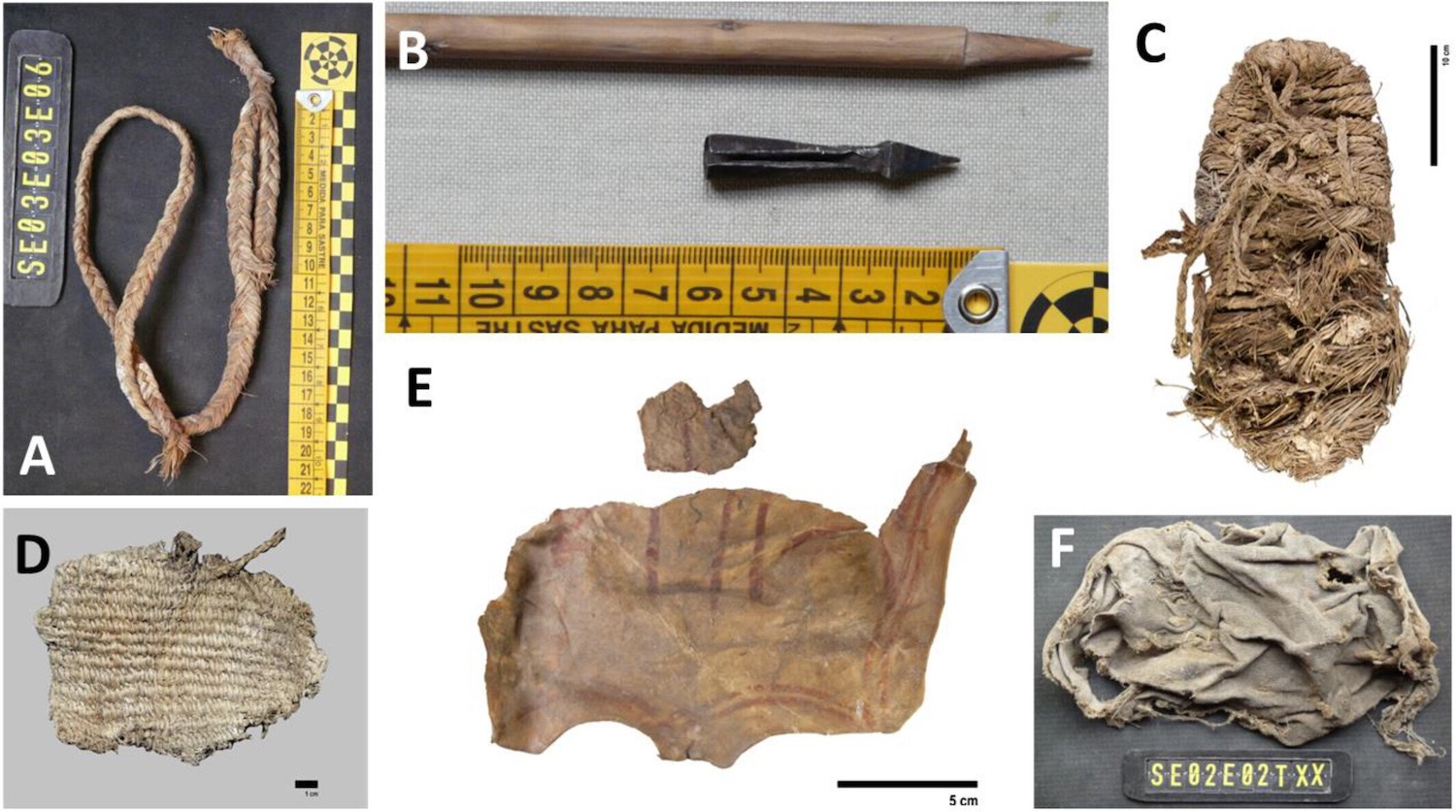
Among the centuries of egg shells, prey shutters and a natural nesting material, researchers have identified 226 objects that have been manufactured or modified by humans. These included weapons like a crossbow bolt and a wooden lance, decorated sheep leather and parts of a sling.
Using carbon dating, the team determined that the articles also had a huge age group. For example, a shoe made from twigs and grass is about 675 years old, while a basket is estimated that it was woven about 150 years ago.
Beyond the relics made from the past of our species, archaeologists have also cataloged 2,117 bones, 86 hooves and 43 egg shells. They even located 11 hair among the nesting layers. More analyzes will provide an overview of the area past of the region, as well as its various flora and fauna.
“Thanks to the solidity of the bearded vulture nest structures and their locations in the Western Mediterranean … They acted as natural museums, retaining historical equipment in good condition,” wrote researchers in their study.
Like so many other species, the bearded vulture currently faces a disastrous situation due to ecological destruction and the climate crisis. There remains the most threatened vulture in Europe, with only 309 reproductive pairs documented across the continent. Without effective conservation work, the latest bearded vulture nests may include some of the very human artefacts that explain their extinction.

More offers, reviews and purchasing guides


