Mumia Abu-Jamal Speaks With the Clear Voice of a Free Man


Company
/
October 22, 2025
Incarcerated for 44 years, the political prisoner remains inflexible in the face of medical negligence.
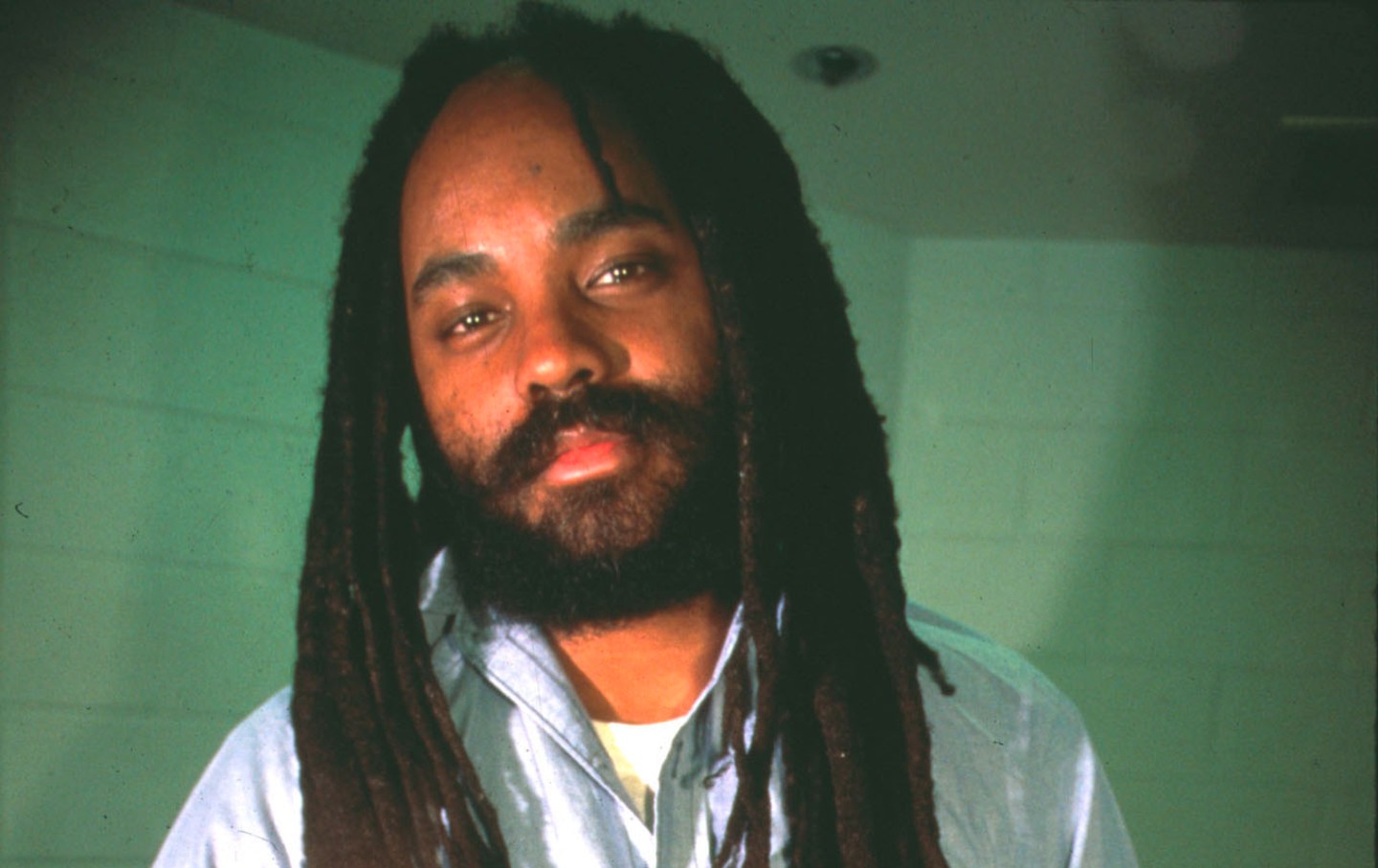
Mumia Abu-Jamal, seen here in a photo taken Dec. 13, 1995, from prison, was convicted in 1982 of murdering a Philadelphia police officer.
(Lisa Terry / Liaison Agency)
The mood was upbeat, or as upbeat as any meeting can be at Mahanoy State Correctional Institution. On October 16, alongside lawyer Noel Hanrahan, I visited the country’s most famous political prisoner, Mumia Abu-Jamal. A jury, informed that Abdul-Jamal’s political writings could be used to determine his guilt, sentenced the former Black Panther to death in 1982 for the murder of Daniel Faulkner, a Philadelphia police officer. It is not only committed radical activists, but also organizations like Amnesty International who believe that his trial and conviction were a sham and are calling for his case to be reopened. Today, Abu-Jamal sits on what he calls “death row in slow motion,” and yet the state has failed to silence his political voice or the movement to bring him home after 44 years of incarceration.
For Abu-Jamal to meet us and celebrate good news means he has to undergo a full body search. This is a prerequisite for all prisoners before and after visits. No exceptions. Abu-Jamal, 71, is not exempt because of his age or his stature as an “old leader.”
The meeting room, where all the family, friends and lawyers of these incarcerated men gather, resembles a high school cafeteria with vending machines against the walls. The only difference is that we have to sit around U-shaped tables that prevent inmates from sitting directly next to their loved ones. There is also an adjoining unsupervised play area for children with a collection of stained and sticky toys.
Current number
In the visitors’ room, guards watch Abu-Jamal closely. Until recently, he could only pretend to look back. Now he can. That’s because for nine months, Abu-Jamal, the author of 15 books, was blind. To regain his sight, he needed a five-second laser cataract operation. However, it took a legal battle and protests at the prison gates for him to obtain this procedure. The problem wasn’t just not being able to read or see anything other than bright, colored spots. For his own physical safety, Abu-Jamal had to keep his blindness a secret. When I interviewed him earlier this year for rolling stoneI had to agree, for his physical safety, not to report his lack of vision. Even for someone to whom many prisoners show great deference, he was vulnerable and could have become a target. So Abu-Jamal took care of it – walking direct lines in daily patterns: eat, work out, then listen (without looking) – to CSPAN in his cell. Again, this lasted nine months. (Abu-Jamal would insist that I write here that the criminal neglect of his health is a function of how all prisoners are treated.) Abu-Jamal needs follow-up care. He will have permanent vision loss without additional treatment, and there is no guarantee he will receive them. But that day, we celebrated the fact that he can now go back to finishing his doctoral thesis, starting on a pile of books, and just watching his own back.
That wasn’t the only reason for these good feelings. The night before, Abu-Jamal spoke, without notice or preparation, on the phone and into a microphone at an event commemorating the recently departed revolutionary Assata Shakur, the former member of the Black Panther Party and the Black Liberation Army who escaped from a New Jersey prison in a daring escape to Cuba 46 years ago.
The evening’s host, Marc Lamont Hill, received a call from Abu-Jamal, a friend and co-writer of Hill’s, randomly during the show. “Marc saw the number and took the phone up to the stage,” said WPFW program director Katea Stitt, who was on hand. “We heard the prison operator connect the call, and Marc asked Mumia if he wanted to say a few words. Without hesitation, Mumia said that not only was Assata Shakur born free. She died free. And he said this from behind bars with the clear voice of a free man; free because the state didn’t break him. And this packed room of people were hugging each other and sobbing could be heard.
Abu-Jamal was pleased with his comments and the reception his words received. Even that has been a struggle over the years, as his supporters and attorneys have fought to make sure his voice can be heard on appeals and in print. It’s great for the soul to know you’re not forgotten.
I also brought him a gift: my new favorite book, Black History is for Everyoneby Brian Jones. Under the rules of the Pennsylvania prison system, I was allowed to show Abu-Jamal the book, talk with him about it, and flip through the pages, but he would not be allowed to take it back to his cell. I would have to send it later, through a “security processing center”, and the package would be examined.
The book resonated with Abu-Jamal. One of Jones’ arguments is that the oft-heard phrase that “black history is American history,” while true, is a little too trite, because this social-patriotic sentiment excludes people from Marcus Garvey to Fanny Lou Hamer to Malcolm internationalists at heart. They rejected “patriotism” for political reasons
Jones also argues that black history has been and continues to be relentlessly attacked and banned precisely because there is a liberating power in a history that exposes the roots of why we have these savage inequalities in this country – inequalities exemplified by having the largest prison population in the world while its military cracks down on cities that go against the will of a grotesquely regime corrupted.
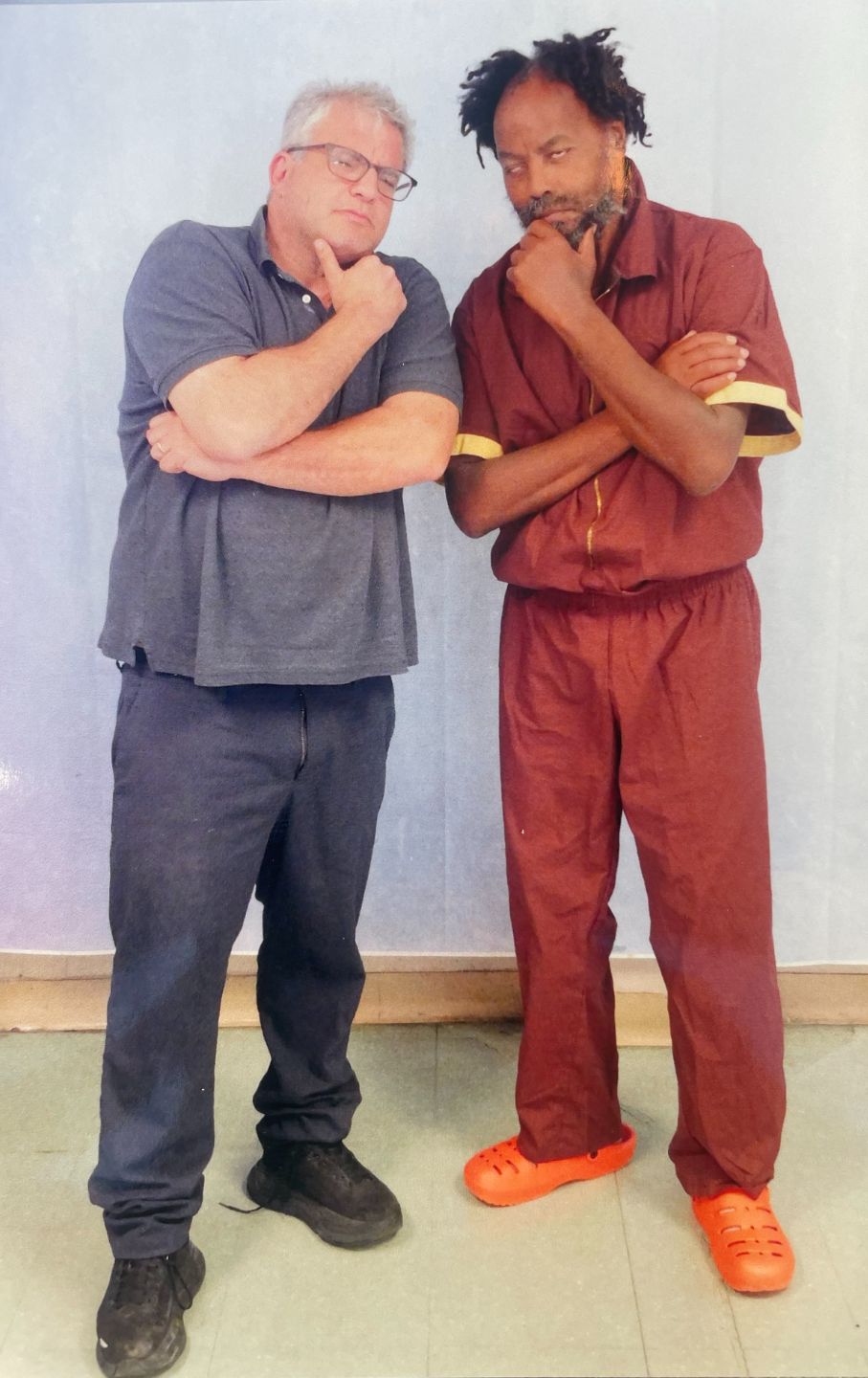
The prison, granting a right that Abu-Jamal fought for, then asked a prison employee to take our photos using the equivalent of a Polaroid camera. In one photo, I’m holding Jones’ book. They confiscated that one. There are strict rules: no pictures, no T-shirts with slogans, no peace signs, no fist salutes – you can’t even make a heart with your hands, because that could be a gang sign.
Popular
“Swipe left below to see more authors”Swipe →
Prison guards were exclusively white and were tattooed from their arms to their necks. They came to work in Frackville, which once had coal mining jobs and now has prison jobs. People whose parents may have worked together in the mines are now on opposite sides of the cage. It was hard not to think that if ever a community needed a story of liberation, it was Frackville, Pennsylvania: There is a rich tradition here of not settling for crumbs. A 10-minute drive from the prison, there’s even a statue commemorating the Molly Maguires, legendary radical Irish workers of the 19th century who campaigned for better working conditions in the mines by any means necessary. History is everywhere, and Jones’ book demonstrates that it must be taught.
After a farewell in front of the guards’ raised platform, we were each given two photos minus the confiscated one. Abu-Jamal, a visually impaired grandfather, had to undergo another body search on the other side of the metal doors.
After more than 40 years, legions of people still care about this man and his case. No matter what they do to break him, he, as Stitt says, “speaks with the clear voice of a free man.” I think he was excited to hear about the story of Jones’ release, because even behind bars, he is part of that story. Abu-Jamal goes uninterrupted, and boy, does that piss the bastards off.


