New rule expands Trump’s power to fire federal workers : NPR

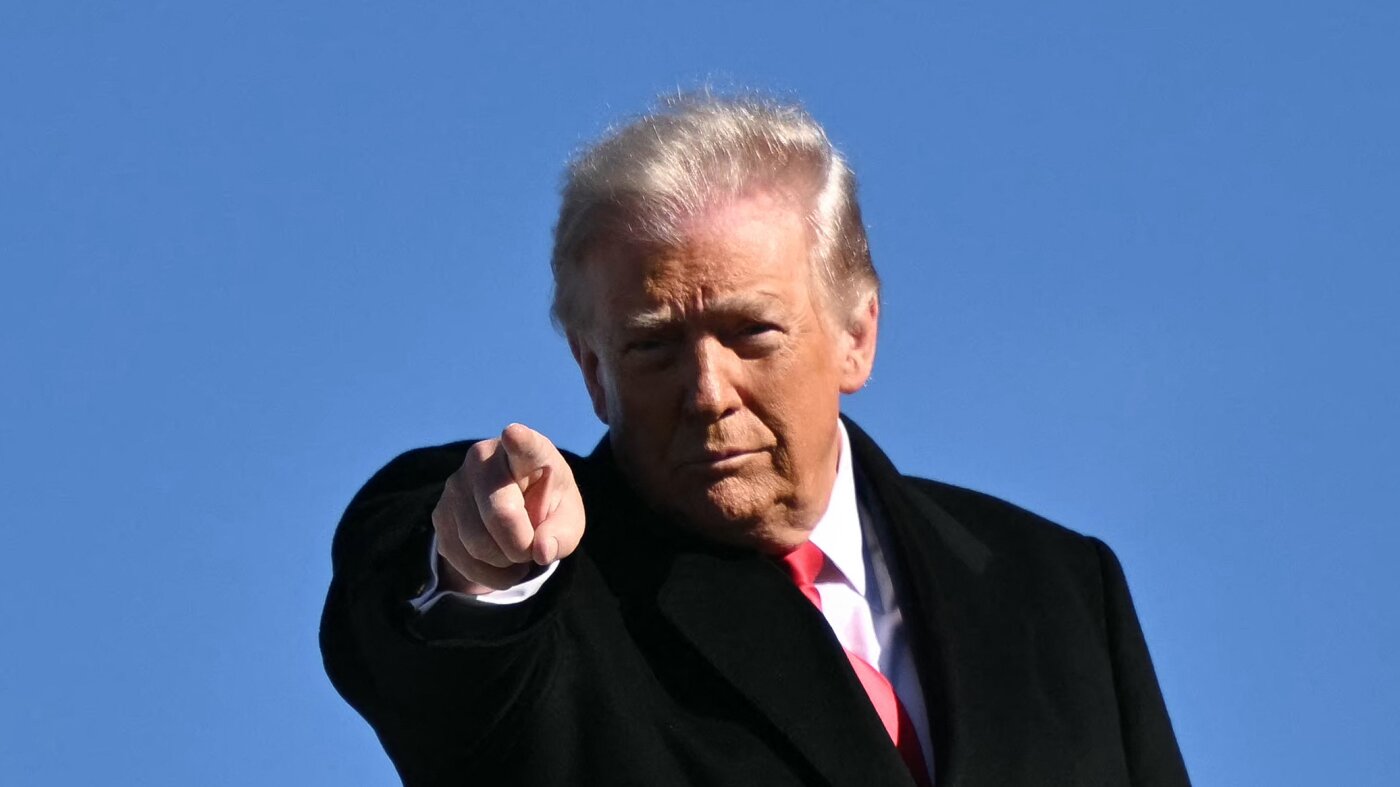

President Trump gestures as he boards Air Force One on January 13.
Mandel Ngan/AFP via Getty Images
hide caption
toggle caption
Mandel Ngan/AFP via Getty Images
In October 2020, President Trump unveiled a plan allowing him to fire large numbers of public officials for any reason if they obstruct his agenda.
Five and a half years later, that plan came to fruition, despite widespread public opposition.
Starting March 9, an unspecified number of federal employees could lose their current job protections and be converted to at-will employees, at Trump’s discretion. That’s according to a final rule released Friday by the Office of Personnel Management (OPM), the agency that manages many human resources functions for the federal government.

Under current law, the civil service is supposed to be apolitical, providing continuity of government from one presidential administration to the next. But over the past year, Trump has shown a willingness — and sometimes eagerness — to fire career federal employees he perceives as political opponents, like the rank-and-file Justice Department lawyers involved in the Jan. 6 lawsuits.
This rule would make firing these staff much easier. Titled “Improving Performance, Accountability, and Responsiveness in Public Service,” it allows the president to move federal employees in “policy influencing” roles to a new employee category called Policy/Career Calendar. OPM previously estimated that some 50,000 positions could be reclassified.
The rule explains that while federal agencies will review their workforces and ask OPM to recommend moving positions, the president will make the final decision on which positions to reclassify.
OPM received more than 40,000 comments during the public comment period, 94 percent of which opposed the rule. The administration has blamed much of the opposition on misunderstandings — about existing federal laws and the rule’s intentions.
The Trump administration has argued that the change is a necessary step to make the bureaucracy more efficient and more accountable, citing the widespread feeling that it is too difficult for the government to fire low-performing employees, as well as reports of federal employees “walking slow” or otherwise obstructing Trump’s directives.
Critics of the president say the rule further allows Trump — and any future president — to politicize public office, and they warn of the consequences for the American people.
“Our government needs serious improvements to make it more efficient and more accountable, but one thing that does not need to change is the idea that it exists to serve the American people and not any particular president,” Max Stier, president of the nonpartisan Public Service Partnership, said in a statement. “This new designation can be used to remove expert career federal employees who put law and service to the public ahead of blind loyalty and replace them with political partisans who will undoubtedly carry out the President’s orders.”

Max Stier is the president of the nonpartisan Partnership for Public Service.
Maansi Srivastava for NPR
hide caption
toggle caption
Maansi Srivastava for NPR
Currently, about 4,000 political appointees in the federal government can be fired at will, a number that Stier says is already much higher than in other democracies.
It is not known which positions or how many will be reclassified
It is still unclear which positions will be subject to reclassification. The rule applies to “positions of political influence,” which the 255-page document says would include supervisors of people in such positions.
In this rule, OPM emphasizes that “the vast majority” of individuals appointed under the scheduling/career policy will still be protected from prohibited personnel practices, including retaliation against whistleblowers. However, they will no longer be able to file complaints with the Merit Systems Protection Board, the federal agency that hears employee complaints about such actions. The Office of Special Counsel, which investigates whistleblower complaints, has no longer operated independently since Trump fired the Senate-confirmed head of that agency last year.

While reclassified employees would theoretically retain the right to file discrimination complaints with the Equal Employment Opportunity Commission, the rule notes that the president himself is not subject to federal employment anti-discrimination laws.
Legal challenges ahead
The rule, which was first announced last year, is already the subject of several lawsuits, including one filed by Democracy Forward. The legal organization has filed numerous lawsuits aimed at blocking the Trump administration’s overhaul of the federal government.
“This is a deliberate attempt to do through regulation what the law cannot do: disenfranchise and facilitate the firing of public employees for political reasons and thereby harm the American people,” Skye Perryman, the group’s president and CEO, said in a statement. “We have successfully fought this kind of power grab before, and we will fight again.”


