One-Celled Organisms Laid the Foundations for Complex Life — Here’s How


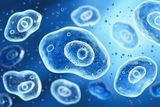
Key Points to Remember About Single Cell Organisms
- Single-celled organisms began to influence life once their descendants achieved multicellularity.
- Researchers once thought this multicellular transition was rather explosive, but it turns out the organisms only needed a few minor adjustments.
- Early in Earth’s history, bacteria altered the atmosphere, which helped spark multicellular life.
Earth, as we know it, is largely defined by multicellular life. Plants form the green backdrop – meadows, tundra, forest, jungle – on which animals roam, while fungi weave their mycelial threads into almost every square inch of the soil. But this living scene, with its eruption of biological diversity, emerged from a much older world, dominated by simpler organisms.
Life today is an elaboration of the basic rules established billions of years ago by our single-celled ancestors. Everything from the structure of DNA to the finer details of metabolism comes from these pioneers of biology, and some of them prepared the planet for more complex creatures by oxygenating the atmosphere.
“The special nature of single-celled ancestors has a big impact on the evolution of multicellularity,” says Matthew Herron, an evolutionary biologist in the National Science Foundation’s Division of Environmental Biology, who studies the transition to multicellular life.
Learn more: Did viruses help build complex life? A new discovery revives the question
The beginning of single-celled organisms
The vast influence of unicellular organisms (aka single-celled organisms) becomes evident once their descendants first achieve multicellularity. Scientists once thought that this transition required a radical overhaul of the genome – an explosion in its size and a profound reorganization.
But in recent years, Herron says, it’s become clear that when multicellularity evolves, “you take an existing single-cell genome and you make relatively minor changes to it.”
In other words, multicellular organisms do not need to reinvent themselves; they can simply reuse existing genes for radically new functions.
For example, single-celled organisms, like all living things, have some degree of phenotypic plasticity: the ability to change their physical characteristics and behaviors, or phenotype, in response to environmental changes, such as dogs growing thick fur in winter and humans gaining muscle by lifting weights.
With the advent of multicellularity, certain genes responsible for phenotypic plasticity have been used for cellular differentiation, the process by which stem cells develop into the many types of specialized cells that make up plants, animals and fungi, according to a study published in Biological assays.
This is exactly what happened in volvocine green algae, where a single-celled species like Chlamydomonas actions a common ancestor with Volvoxa closely related but multicellular green algae.
A 2020 paper led by Aurora Nedelcu, an evolutionary biologist at the University of New Brunswick, reported that ancient stress responses in Chlamydomonas took the cause of cellular differentiation into its Volvoxpaving the way for a more sophisticated biology based on the division of labor between specialized cells – perhaps the same path taken by our own ancestors.
From single-celled organisms to multiple organisms
Multicellular life has brought many innovations: leaves and flowers, eyes and wings. But the basic machinery that enabled these biological wonders was set in motion much earlier with the first eukaryotes, organisms whose cells contain a nucleus.
Volvoxfor example, already had mitochondria, the “central” organelle that generates most of the energy needed for cellular functions.
“Think about all the abilities they must have inherited from their single-celled ancestors and didn’t have to invent from scratch,” Herron says. At the most fundamental level, all multicellular organisms, from algae to humans, operate on an operating system evolved by unicellular life.
Another example is the ribosome, shared not only by all eukaryotes but also by all prokaryotes, such as bacteria. By following the genetic code, ribosomes build everything from enzymes to antibodies, making them factories for the types of molecules that will serve as food for future evolution.
These and other biological tools were perfected in the unimaginably distant past.
“When multicellularity evolves,” Herron says, “it always evolves from something that has been adapting to the environment for millions of years, hundreds of millions of years, maybe billions of years.” Everyone alive today reaps the rewards of this ancient and painstaking tinkering.
How bacteria made the world hospitable
These achievements took place at a time when Earth was a very different place. For the first half of our planet’s history, the atmosphere was devoid of oxygen, a gas essential to most life today, and especially to complex organisms like us.
Then, just over 2 billion years ago, single-celled cyanobacteria – which photosynthesize like plants but belong to an entirely different lineage – began flooding the atmosphere with oxygen. This era, known as the Great Oxidation Event (GOE), paved the way for the rise of multicellularity, according to the American Society for Microbiology.
“The evolution of multicellular forms,” write the authors of a 2013 paper in PNSA“coincides with the appearance of GOE and an increase in diversification rates.”
To the naked eye, these new proliferating microbes would not have seemed like a big advance over the old model. But more than a billion years later, after a long incubation, multicellular organisms finally begin to develop, becoming trilobites, strange fish, monstrous sharks, dinosaurs and, ultimately, human beings.
Once again, we and all our wonderful parents are credited with single-celled life for paving the way for us into the world, a world still governed by the biological laws they laid down so long ago.
Learn more: Earth’s ancient skies may have provided ingredients for life before it began
Article sources
Our writers at Discovermagazine.com use peer-reviewed studies and high-quality sources for our articles, and our editors review scientific and editorial accuracy


