One of the planet’s biggest cities is sinking so rapidly it’s visible from space

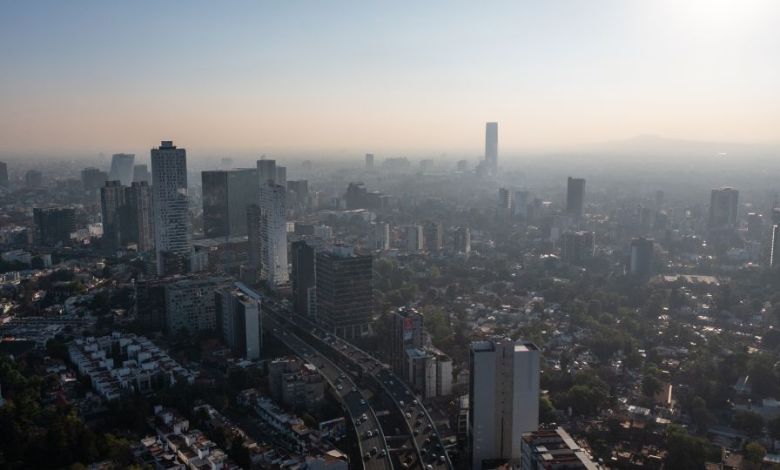
Mexico City is sinking at such an alarming rate that it is visible from space. Images from a powerful NASA radar system reveal subsidence rates of more than 0.5 inches per month, making the city one of the planet’s declining capitals.
The sprawling metropolis, also one of the world’s largest cities, spans a high-altitude lake and sits on an ancient aquifer, which provides about 60 percent of the drinking water for the city’s 22 million residents.
Over the years, this aquifer has been pumped so much that the land above it has subsided. Overexploitation has also contributed to a chronic water crisis that has left Mexico City facing a potential zero day, where taps run dry.
The city’s rapid sinking has been exacerbated by relentless urban development, with new infrastructure adding additional weight to the clay-rich soil.
The subsidence of Mexico City was first documented in the 1920s, and in the years since, residents have suffered the impacts, with fractured roads, tilted buildings and damage to the rail system.
New images from the NISAR satellite, a project between NASA and the Indian Space Research Organization, reveal the extent of the problem in surprising detail.
NISAR was designed to map some of the most complex processes on the planet and is capable of tracking subtle movements such as land subsidence. It is one of the most powerful radar systems ever launched into space, according to NASA.

New data from NISAR shows that parts of Mexico City subsided by about 0.8 inches per month (shown in blue) between October 25, 2025 and January 17, 2026. Uneven and seemingly minor elevation changes accumulated over decades, fracturing roads, buildings and water pipes. – David Bekaert/JPL-Caltech/NASA
Between October 2025 and January 2026, during Mexico City’s dry season, NISAR mapped the movement of the ground beneath the city. Its findings reveal that parts of the city are sinking at a rate of about 0.8 inches per month, or more than 9.5 inches each year.
The hardest hit areas include Benito Juarez International Airport, the city’s main airport.
A city monument reveals the impacts of the sinking. The 114-foot-tall Angel of Independence monument, built in 1910 to commemorate the centennial of Mexican independence, required the addition of 14 steps to its base as the ground deepened.

The Angel of Independence monument in Mexico City on April 1, 2026. – Carl De Souza/AFP/Getty Images
“Mexico City is a well-known hotspot for subsidence, and images like this are just the beginning for NISAR,” said David Bekaert, project manager at the Flemish Institute for Technological Research and member of the NISAR scientific team. “We’re going to see an influx of new discoveries from around the world.”
The satellite is also capable of tracking other planetary processes such as the sliding of glaciers or the growth of crops, as well as natural disasters such as volcanic eruptions.
For more CNN news and newsletters, create an account at CNN.com