Papworth transplant pioneer Sir Terence English dies at 93


Rachel McMenemyAnd
Louise Parry

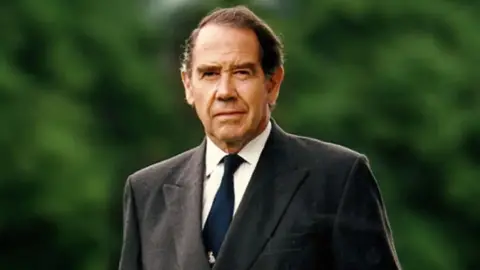 Sir Terence English
A pioneering surgeon who carried out the UK’s first successful heart transplant has died aged 93.
Sir Terence English had to fight for the right to carry out surgery at Papworth Hospital in Cambridge in 1979, after resistance from the public and the government.
The operation that paved the way for future transplants took place in August of that year on 52-year-old Keith Castle, who lived for more than five years thereafter.
Sir Terence’s family said he died at his home in Iffley, Oxford, on Sunday, six days after suffering a stroke.
Sir Terence was born in South Africa in October 1932.
He studied mining engineering at the University of the Witwatersrand in Johannesburg before deciding to pursue medicine at Guy’s Hospital in London.
He married Ann in 1963 and they had four children: Katherine, Arthur, Mary and William.
William said his father often attributed his success to Ann, allowing him to focus on his work while enjoying family life.
“He felt a real sense of debt and gratitude to our mother, because the support she gave him and the home allowed him to pursue the career he did.”
His daughter Mary said the family was “immensely proud” of him and his work.
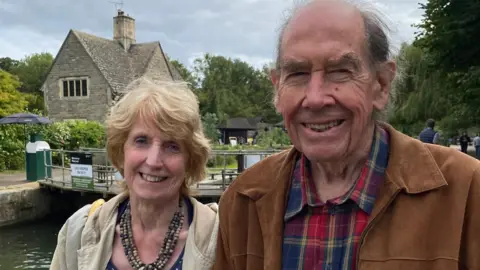 English family
Sir Terence struggled to gain government support for this procedure.
Speaking to the BBC in 2019, he said: “Before [Keith Castle’s] I had received enormous criticism about heart transplantation, including a letter from the Department of Health in late 1978 saying that there would be no funding and that the moratorium on heart transplantation would be maintained.
“I thought ‘shit’ and managed to get approval from the Cambridge Area Health Authority – and we moved on.”
A first transplant in January 1979 was unsuccessful.
While Sir Terence was retrieving the donor heart, the recipient suffered a cardiac arrest.
He was quickly resuscitated and the subsequent operation went well, but the patient never regained consciousness and died 17 days later.
Seven months later, he had another chance to prove that heart transplants could save lives.
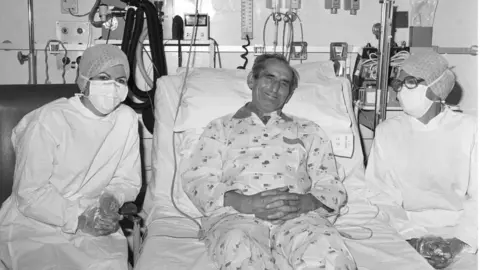 PA Media
Keith Castle, a builder from London, needed a new heart and, although he was “not the best candidate” – he was a smoker and suffered from peripheral vascular disease and a duodenal ulcer – Sir Terence believed the transplant would work.
As he entered the operating room, Sir Terence reflected on how he felt under immense pressure to succeed.
“I really had my back against the wall,” he said.
Mr Castle lived more than five years after his transplant and led the way for the future of heart transplants in Papworth and the UK.
“Looking back, after re-reading the material, the resistance to that [the heart transplant] was completely valid, but he proved them wrong,” William said.
He said his father’s “belief” was impressive, but he always said it was a team effort.
“And he always celebrated the Papworth team. That was the team that was important,” he added.
Royal Papworth thanked Sir Terence for helping it gain an international reputation in the field of heart transplantation and, later, heart-lung and lung transplantation.
In 1984, alongside Professor John Wallwork, Sir Terence carried out the first combined heart-lung transplant in Europe.
In 1991 he was knighted for his contributions to surgery and medicine.
Sir Terence retired in the mid-1990s and moved to Oxford.
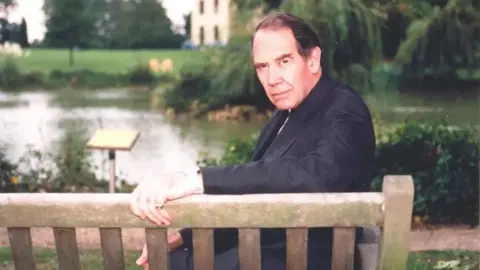 Royal Papworth
After his retirement, Sir Terence had several “additional careers”, his children said.
He was president of the British Medical Association and was involved in charitable work.
He was a trustee of IDEALS (International Disaster & Emergency Aid with Long Term Support) and a founding patron of Primary Trauma Care.
Both provide relief in areas affected by global conflict.
“He was a noted humanitarian who dedicated his services to surgical support for doctors in Pakistan and Gaza over the years,” Mary said.
“Dad was able to carry his lessons and learning to all parts of the world. He had a constant appetite for work and for using his time meaningfully,” she added.
He also contributed to the debate over medical assistance in dying through his work with Dignity in Dying, his family said.
Sir Terence was also a retired master of St Catharine’s College, Cambridge, and an honorary fellow of Worcester College, Oxford.
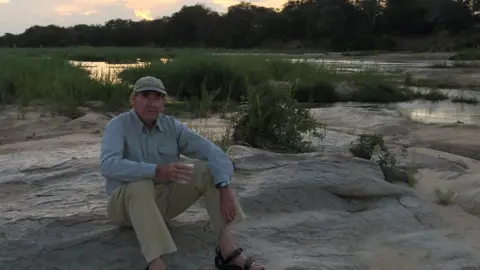 English family
His family also remembers a man who encouraged them to find their own passions and who showed immense care to his family, friends and patients over the years.
William said that while his father was “determined to work”, he also had an “incredible capacity for friendship and an ability to connect with people”.
On his 93rd birthday, William said his father received an email from a patient he had fitted with a heart valve 50 years ago, thanking him for his life.
“He said, ‘I don’t know if you remember me, but I think about you every day.’
“Dad responded by saying, ‘Happy birthday to your heart valve’ – and that’s his lasting legacy.”
William, who works in critical care medicine, said he also sees his father’s transplant legacy in his own patients.
“Organ donation is incredible, it revolutionizes people’s lives. That ripple effect when you watch someone receive an organ from a donor.”
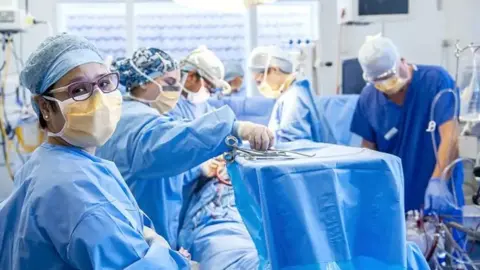 Royal Papworth
Outside of his work, Sir Terrence developed a passion for classic cars, world travel and an appreciation for the natural world.
He participated in car rallies, once driving from London to Cape Town.
“He originally did engineering, so he was always interested in cars.”
“He bought a Land Cruiser, he passed it down through the family, he thought it was a very important family heirloom to pass down,” William said.
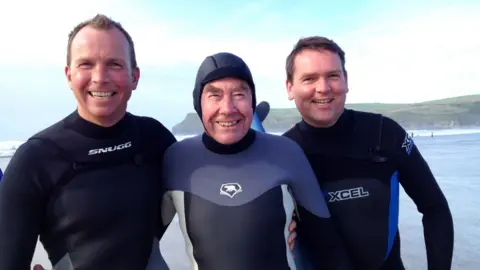 English family


