Poison-pill effort to cancel proposed billionaire tax hits voters’ mailboxes


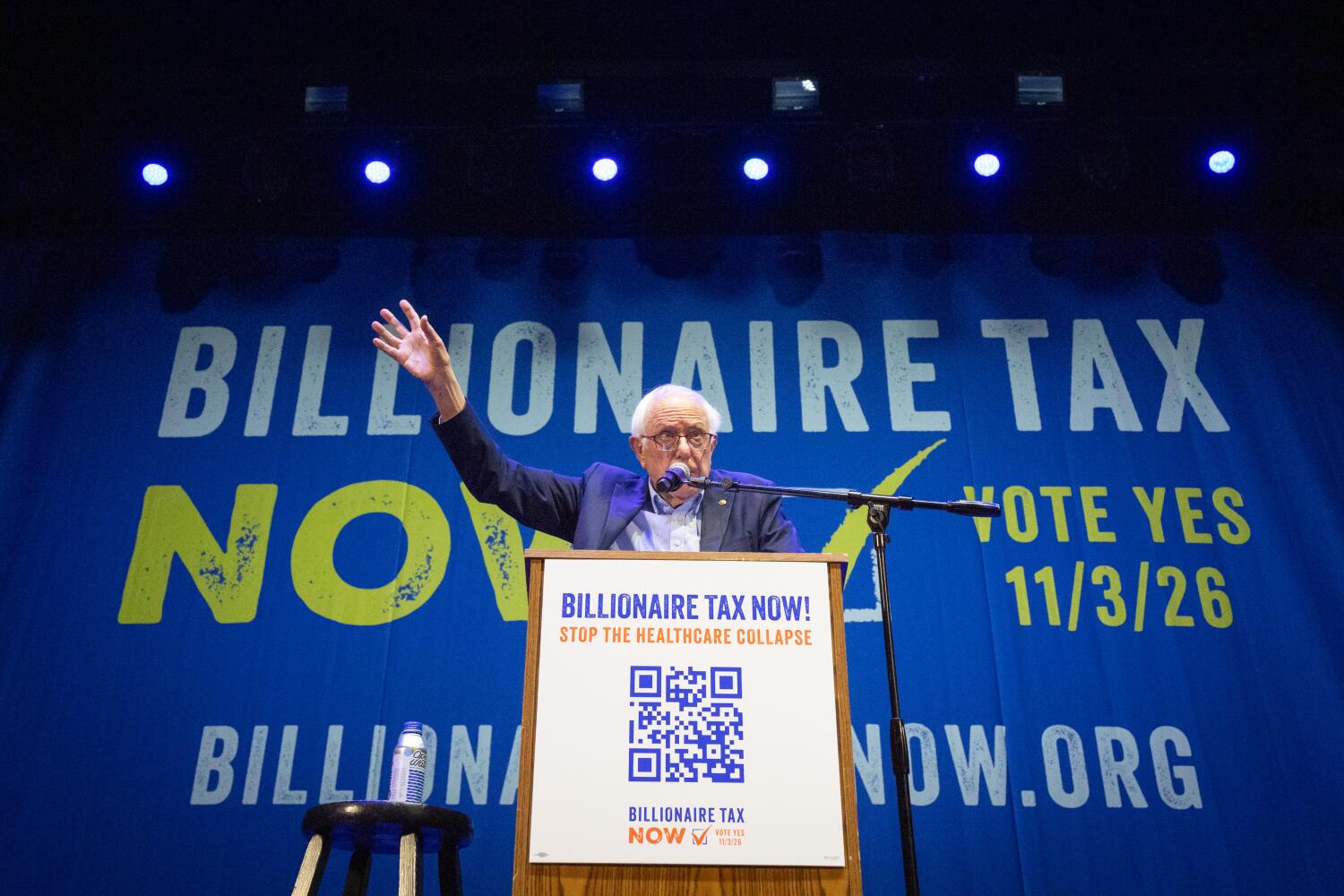
California voters are being asked to resort to a poison pill on the November ballot that would kill a controversial proposed tax on the state’s billionaires.
Neither proposition has yet made it onto the ballot – supporters of each proposition must gather the verified signatures of hundreds of thousands of voters. But petitions that have been mailed and texted to California voters in recent days demonstrate the stakes in a race that has attracted tens of millions of dollars in campaign spending.
“The government has wasted billions of our tax dollars on homelessness and numerous other failed programs, with little effect,” reads the new letter to voters. “We cannot afford any more waste!” »
The proposal aims to counter a one-time 5% tax on billionaires’ assets that would fund health care for the state’s neediest residents, but opponents say it would result in a loss of tax revenue as California’s wealthiest flee the state.
Letters and texts recently sent to voters describe the new proposal as an effort to create a more accountable, transparent and effective state government that would require an audit of new state taxes and ensure they comply with current law.
The fine print description of the proposed initiative included in the mailer clarifies that any new taxes enacted after Jan. 1 must be deposited into the state’s general fund and be consistent with current state tax policy, which is an indirect reference to an earlier voter-approved ballot measure requiring a significant portion of state tax revenue to be spent on education.
If competing proposals appear on a ballot and are accepted, the one receiving the most votes overrides the other. There are other proposed ballot measures aimed at thwarting the billionaires tax.
The letters and texts were funded by a committee called Californians for More Open and Effective Government, which was funded by another group called Building a Better California, according to the California Secretary of State’s office.
Earlier this year, the latter group received a $20 million donation from Google co-founder Sergey Brin, $2 million from former Google CEO Eric Schmidt, and $2 million from Stripe CEO Patrick Collison, among donations from other Silicon Valley executives, according to fundraising reports.
Attempts to reach spokespeople connected to the effort were unsuccessful Monday evening.
Suzanne Jimenez, chief of staff for SEIU-United Healthcare Workers West, the main union supporting the billionaires tax, denounced what she described as an effort by a small number of the state’s wealthiest residents to avoid paying their fair share.
“So far, these few billionaires are failing,” she said in a statement. “Despite the costly and wasteful tactics of a small group of billionaires that aim to deprive voters of choice on the billionaire tax this November, our growing coalition and volunteer base are on track to collect signatures and are gaining momentum. The public is abundantly clear that keeping emergency rooms and clinics open is more important than getting more tax breaks for billionaires.”
California’s budget is notoriously volatile because it relies heavily on taxes paid by its wealthiest residents. Income depends on capital gains on investments, bonuses paid to executives, and windfall profits from new stock offerings, all of which are extremely unpredictable.
The billionaires tax would cost more than 200 of the state’s wealthiest residents about $100 billion if a majority of voters support it on the November ballot.
The proposed tax would apply retroactively to billionaires’ assets starting Jan. 1 and has already prompted some of California’s wealthiest residents to leave the state. It also created a divide among Democrats. Some argue that it is necessary to address tax inequities that benefit the wealthy and harm everyone else. Among the supporters is Sen. Bernie Sanders (I-Vt.), who launched the billionaire tax proposal campaign in February.
But others, including Gov. Gavin Newsom, oppose the effort, saying policies that vary by state would push innovators and businesses out of California.


:max_bytes(150000):strip_icc()/Health-GettyImages-2129933750-101e9e27f6154388ad3b1e4fb574256d.jpg?w=390&resize=390,220&ssl=1 "15 Surprising Symptoms That Can Be Early Warning Signs of Cancer")
