Quebec’s premier announces his resignation ahead of provincial election this year

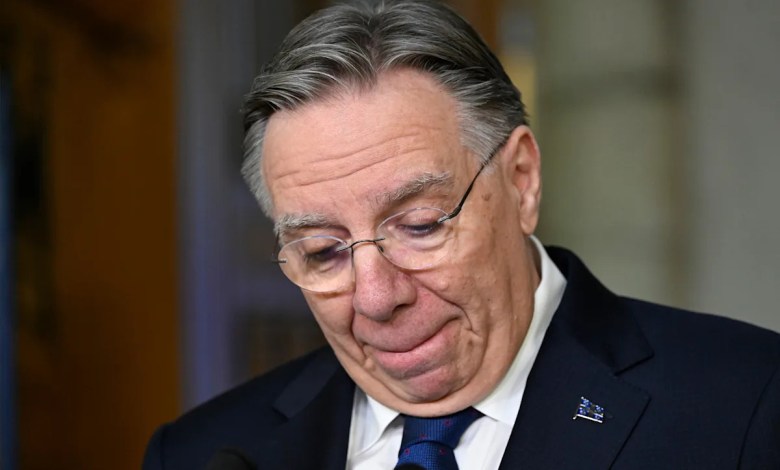
TORONTO (AP) — The leader of the French-speaking province of Quebec announced Wednesday that he is resigning because he is unpopular.
The Coalition Avenir Québec will have little time to choose a new leader to replace Prime Minister François Legault before the provincial elections scheduled for this fall.
Legault founded the party and has been premier of Quebec since 2018.
“I now see that many Quebecers hope and want a change and a change of prime minister,” Legault said.
“For the good of my party, and especially for the good of Quebec, I announce that I will resign from my position as Premier of Quebec. »
Legault said he would remain in office until a new party leader is named.
“He is currently the least popular prime minister in the country,” said Daniel Béland, a political science professor at McGill University in Montreal.
“He has been in power since late 2018 and was very popular at first, but his popularity started to decline in early 2023. People lost trust in him and his government due to, among other things, unpopular policies and poor public communications. »
The Coalition Avenir Québec sought more autonomy and power for Quebec within Canada.
Quebec’s separatist party, the Parti Québécois, could win the provincial election in the fall.
The province’s Liberal Party, a staunch supporter of Canadian unity, also needs a new leader after its previous leader resigned amid allegations of vote buying by party members.
Quebec’s identity has been controversial since the 1760s, when the British completed their takeover of what was then called New France. In the 1960s, the Parti Québécois was formed under the leadership of a television commentator turned politician named René Lévesque, who would lead the province for nine years.
Quebec, which is approximately 80% French-speaking, already enjoys significant autonomy. The province of 9.1 million inhabitants sets its own income tax, has its own immigration policy favoring French speakers and has legislation favoring French over English. Voters twice rejected sovereignty, but only by a razor-thin margin in the 1995 referendum.
“The presence of Donald Trump in the White House should give pause to those who think that a referendum on provincial independence is a good idea in the current context,” said Béland.


