
A pair of rare silver coins discovered by metal detectorists in Denmark were meant to offer 11th century Christians a bit of protection against Viking raiders.. According to the National Museum of Denmark, only 30 of these silver coins laden with Christian imagery have ever been found.
The coins were uncovered in northern and southern parts of Denmark’s Jutland peninsula. England minted the coin in 1099 during the reign of King Æthelred II,also known as “Æthelred the Unready” after the Anglo-Saxon king did not adequately prepare his country for Viking attacks. The nickname “unready” is also a bit of wordplay from the 12th century. According to History Extra, people pronounced the word Aethelred as Av-el-raid, meaning “noble council” or “good council.” By tweaking it with the Old and Middle English term “unræd,” which means “ill-counselled,” the nickname became a way for people to mock him.
Since Viking attacks and raids continued in England, King Æthelred II called for public fasting and acts of penance while commissioning a coin with strong Christian imagery.
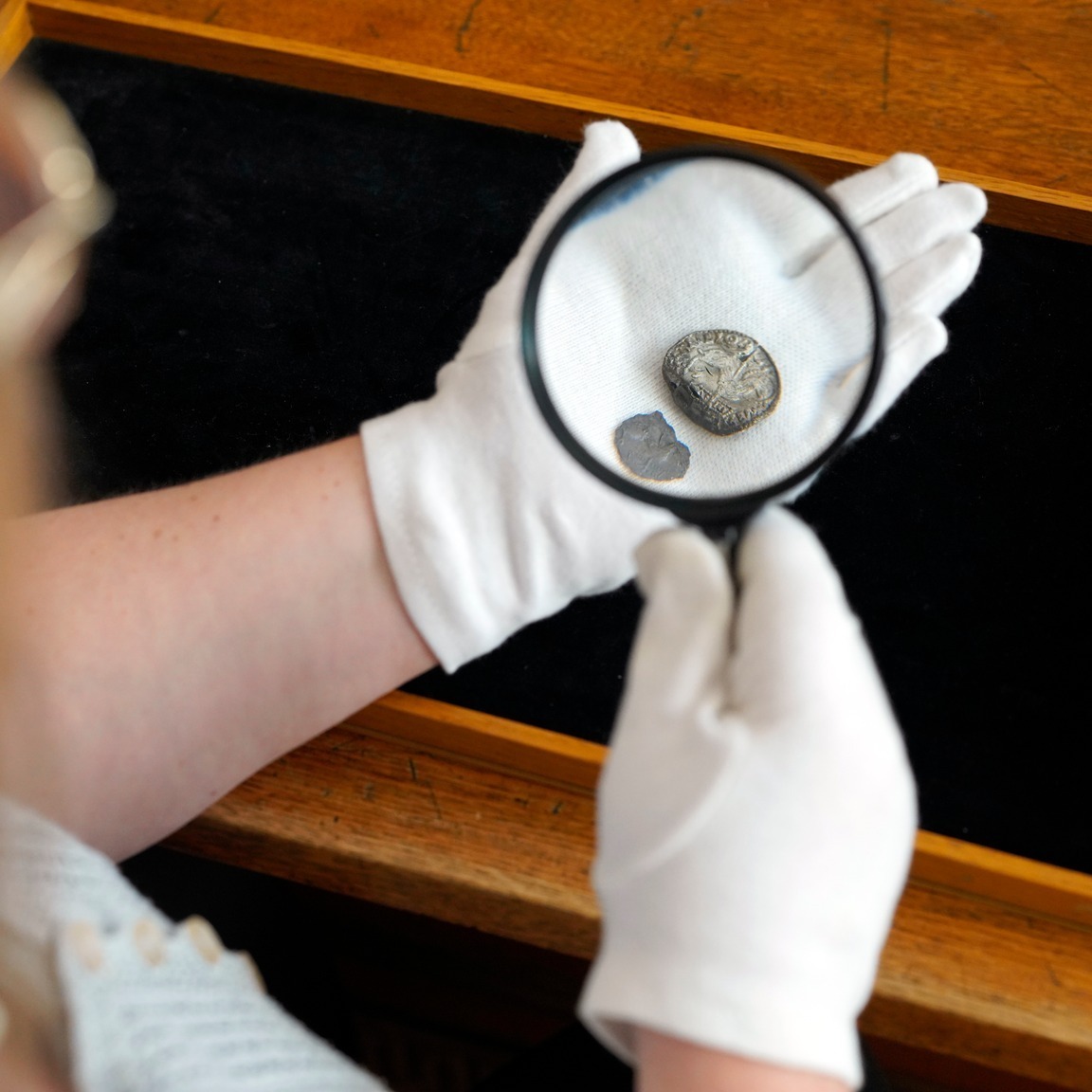
On the front, the “Lamb of God” or “Agnus Dei” coins depict a lamb pierced by a cross, representing Christ’s crucifixion. A tablet with the Greek letters alpha and omega are beneath the lamb. These letters represent symbols of God as the beginning (alpha) and the end (omega). The reverse side features a rising dove to symbolize the Holy Spirit. By comparison, the other English coins at this time featured the king’s portrait on one side, with a cross on the reverse.
However, these coins did not really work in protecting England from Vikings. The attacks continued and Vikings took many of these coins as tribute payments. Instead of immediately rejecting them, they may have used them in jewelry.
“What fascinates me most is how from such a small coin you can unfold a story about the English kings and Christianity in England, which draws threads to the Danish Viking kings, the Danish monetary system and even the establishment of the Danish state,” Gitte Tarnow Ingvardson, an archaeologist at the National Museum of Denmark, said in a translated statement. “Because it concerns the entire Viking community. Imagine that such a small coin holds so much history!”

2025 PopSci Best of What’s New


