
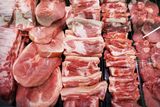
It’s almost barbecuing season, which means backyard grills will be lined with steaks and burgers for months to come. This is the continuation of a relationship between humans and red meat that has lasted for millions of years. As the story goes, red meat helped shape the human story by fueling growing bodies, nourishing developing brains, and offering a reliable source of calories when our survival depended on it.
However, according to a new review published in The Quarterly Review of Biology, the same food that once helped humans thrive may now be contributing to some of the biggest health and environmental challenges of the modern age.
By combining evidence from archaeology, evolutionary biology, epidemiology, and molecular science, the study suggests that red meat has become an evolutionary double-edged sword — once adaptive, but increasingly problematic in a world of industrial food systems and chronic disease.
How Early Humans Ate Red Meat
Modern ideas about prehistoric diets often imagine early humans feasting on giant slabs of meat. But the review suggests reality was likely a little different.
Long before the emergence of the genus Homo, early human ancestors appeared to have supplemented a mostly plant-based diet with animal products. Archaeological evidence suggests early humans gradually incorporated meat into their diets, not as the centerpiece of every meal but as part of a flexible survival strategy.
Importantly, the researchers argue that lean cuts of muscle meat — the kind preferred in many modern diets — may not have been the most prized part of an animal for our ancestors.
“The cultural prominence of red meat in modern Euro-American diets, typically centered on steaks and roasts, reflects ideals and biases that influence assumptions about early hominin diets,” said the authors in a press release.
Instead, calorie-rich tissues like fat, bone marrow, organs, and even brain matter were likely valuable because they provided dense energy and critical nutrients. Those fats may have been particularly important for infant brain development during a time when the human brain was rapidly evolving.
The review also challenges the popular belief that meat alone supercharges human brain growth, with the researchers noting that protein is not especially energy-dense. Rather than crediting red meat as a singular evolutionary driver, the team argues human success likely came from the ability to combine a wide range of plant and animal foods depending on opportunity and need.
Read More: Early Humans Mastered Plant Processing 170,000 Years Ago, Challenging the Paleolithic Meat-Eater Myth
How Agriculture Changed the Human Diet
Around 10,000 to 12,000 years ago, agriculture transformed the human diet. As farming spread, food supplies became more dependable, but diets also became less diverse. Hunter-gatherers who once ate a variety of foods increasingly relied on grains and cereals as they settled, a shift that came with nutritional tradeoffs.
Iron deficiency, which appears to have been relatively uncommon before this time, became more widespread as cereal-heavy diets interfered with iron absorption.
Still, the biggest dietary transformation may have come much later, as industrial food production made red meat more abundant, affordable, and central to meals than ever before.
Why Red Meat Can Be Harmful in the Modern World
Today, the global meat industry is worth roughly $1.3 trillion, and consumption continues to rise. But the review highlights growing evidence that our bodies — and our planet — may be paying a higher price.
Large epidemiological studies consistently associate red and processed meat intake with higher risks of cardiovascular disease, type 2 diabetes, colorectal cancer, and premature death. The International Agency for Research on Cancer classifies processed meat as a Group 1 carcinogen, while unprocessed red meat is considered probably carcinogenic.
The paper also highlights a uniquely human biological process called “xenosialitis,” in which a sugar molecule abundant in red meat, called Neu5Gc, may trigger chronic inflammation. Over time, that inflammation could contribute to atherosclerosis, cancer progression, and even cognitive decline.
When it comes to the planet, the factory farming industry is responsible for many environmental issues, including greenhouse gas emissions, deforestation, water contamination, and antibiotic resistance.
Yet, the authors stress that the paper is not a call to eliminate red meat entirely. Instead, they argue for more people to recognize that the role meat played in prehistoric survival bears little resemblance to how it is produced and consumed today.
“The nature, scale, and context of red meat consumption today differ drastically from those of our evolutionary past,” concluded the authors.
This article is not offering medical advice and should be used for informational purposes only.
Read More: One in Five Urinary Tract Infections Likely Originate From Contaminated Meat
Article Sources
Our writers at Discovermagazine.com use peer-reviewed studies and high-quality sources for our articles, and our editors review for scientific accuracy and editorial standards. Review the sources used below for this article:


.jpg?w=390&resize=390,220&ssl=1 "The Irish Drug Kingpin Daniel Kinahan Is Arrested in Dubai")


