Bird Watchers Uncover a Staggering 27 Percent Purple Martin Die-Off During the Great Texas Freeze


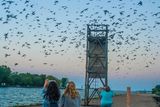
When a historic winter storm froze Texas in February 2021, thousands of birds died almost overnight. Today, researchers say the disaster may have wiped out more than a quarter of some local bird populations and the effects could linger for years.
A new study published in Ecology and evolution of nature examined what happened to purple martins after the Great Freeze of Texas, when two consecutive Arctic blasts brought snow, plunging temperatures and widespread power outages to the Gulf Coast.
Researchers estimate that the storm killed up to 27 percent of the purple martin breeding population in Texas and Louisiana, raising concerns that increasingly unpredictable weather events could trigger similar die-offs in the future.
“If birds are to have a future, we need to know more about how they survive new, unpredictable conditions, which can include surprisingly cold temperatures,” lead author Maria Stager said in a press release.
The Great Texas Freeze Hit Migratory Birds at the Worst Time
Purple martins migrate thousands of miles each year from their wintering grounds in South America to the United States Gulf Coast. Many adults arrive as early as January and February, making them one of the first migratory birds returning to the region. But in 2021, this early arrival put them directly on the path to a rare and prolonged cold outbreak.
For nine days, temperatures swept across Texas and neighboring states. Ice and snow have covered large areas, and the flying insects that purple martins depend on for food have disappeared.
Learn more: Simulation shows bird flu could become public health crisis after just two days
Citizen scientists helped reveal scale of mortality
Extreme weather events are notoriously difficult to study because they occur suddenly, and researchers rarely have baseline data to compare them to. In this case, scientists measured the impact, largely thanks to bird watchers across the region.
Purple martins are one of the few bird species that regularly nest in housing provided by people. Across Texas and Louisiana, enthusiasts maintain “swift houses” in their backyards and closely monitor the birds’ arrival each spring. When birds began to die during the freeze, many observers contacted the Purple Martin Conservation Association (PMCA).
“The purple martin is perhaps one of the most beloved and closely watched backyard birds,” Joe Siegrist, one of the paper’s co-authors, said in the release. “When we recognized this unprecedented research opportunity, we were able to mobilize our army of martin lovers across Texas and Louisiana to increase monitoring of storm mortality and preserve samples for collection.”
With the help of volunteers, researchers gathered records from hundreds of breeding sites in Texas and Louisiana. The data showed that adult swallows died at more than half of the nesting sites monitored, showing how widespread the mortality event had become.
The effects of the frost lasted beyond the storm
Even birds that survived the cold snap struggled in the months that followed.
During the 2021 breeding season, surviving purple martins delayed breeding and raised fewer chicks than usual. The following year, birds returning to the Gulf Coast arrived about two weeks later than usual.
Genetic analyzes also revealed differences between birds that survived and those that died during the freeze. The remaining population more closely resembled purple martins from further north, suggesting that the storm may have temporarily altered the genetic makeup of local populations.
By 2023, the migration calendar had largely returned to normal. If similar extreme weather events do not occur again soon, researchers estimate the population could recover within six to seven years.
But repeated disasters could be much more damaging. Even large, seemingly stable populations may struggle to rebound if mass die-offs become more frequent.
As weather becomes more unpredictable, events like the Great Freeze of Texas could increasingly shape the future of wildlife populations.
Learn more: Wildlife with weaker social bonds could face greater risk of extinction
Article sources
Our Discovermagazine.com editors use peer-reviewed research and high-quality sources for our articles, and our editors review the articles for scientific accuracy and editorial standards. See the sources used below for this article: