Santa Fe officials tell U.S. Sen. Luján tariffs, federal policy halting affordable housing progress

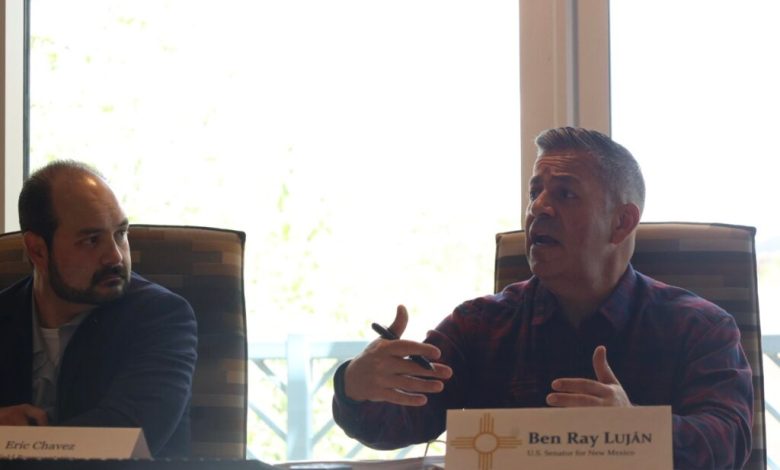
Tariffs, inflation and tax changes in the “One Big Beautiful Bill Act” are making new affordable housing development difficult in one of New Mexico’s least-affordable cities, Santa Fe-area housing officials told U.S. Sen. Ben Ray Luján (D-N.M.) at a roundtable Wednesday at a county government office.
Luján opened the roundtable asking the housing officials whether “federal policy is complementing what’s happening on the ground in New Mexico.” Many of the officials spoke about challenges they’ve faced receiving federal approval or funding, as well as navigating changes in the “One Big Beautiful Bill Act” President Donald Trump signed last July.
SUBSCRIBE: GET THE MORNING HEADLINES DELIVERED TO YOUR INBOX
Leandro Cordova, deputy Santa Fe County manager, told Luján that he suddenly faces a multi-million-dollar funding gap for Nueva Acequia, a complex that will create 160 new affordable housing units, including 53 units for seniors. He said that’s because the federal spending bill was so generous to top income earners and investors that they no longer need affordable housing projects for “tax havens”
“We’ve been working on this project for almost a decade, and we were so proud of where we were with it,” he said. “And then here we are now looking at how to close that gap. We’ll figure it out, of course. You don’t go this far and not figure it out, but it certainly was not exciting.”
Cordova said he hopes the county will break ground on the project in September as planned.
Ed Romero, director of the Santa Fe Civic Housing Authority, said navigating U.S. Housing and Urban Development funding and policy changes over the last decade has been a “rollercoaster” that makes planning and contracting difficult.
He also said the construction costs have increased 50% for affordable housing developments over the last 15 years or so, even though HUD only slightly increased subsidies the authority receives at properties it owns and rents to low-income tenants.
“So that subsidy that’s coming to the property is actually dragging us down,” he said. “Inflation has just gotten out of control.”
Luján told Romero that he is hearing concerns about tariffs — and especially the uncertainty they cause — from every small business owner he speaks to. That the tariffs are also causing uncertainty among those trying to increase affordable housing supply is concerning, he said.
“The uncertainty about what happens with one policy to the next [means] they cannot plan, and that’s just adding additional cost to their bottom line,” he said.