Scientists just discovered what is fueling cows’ potent burps


April 30, 2026
2 min reading
 Add us on GoogleAdd SciAm
Scientists Just Discovered What Powers Cows’ Powerful Burps
The ‘hydrogen body’, a recently discovered structure inside microbial cells in the gut of cows, may play a key role in methane production, a new study suggests
Johner Images/Getty Images
Both cattle and cows are notorious burpers. A single cattle can release up to 220 pounds of methane per year. The reason their burps are so powerful seems to have to do with a special structure inside the microbes living in their gut — something researchers call “the hydrogen body,” according to new research. The findings could help scientists trying to combat the amount of methane emitted by cattle – methane is a greenhouse gas and animals are one of the main agricultural sources of these emissions.
Like you, cattle have a microbiome. Among the microbes in their gut is a group of microorganisms called “rumen ciliates” that help cattle digest food and are named for the rumen, the stomach compartment they inhabit, and the cilia, or small hairs, that cover their surface. Scientists have suspected for years that these microbes were involved in the production of methane in the cows’ intestines, but exactly how they were involved remained a mystery.
New research may hold the key. In an article published Thursday in Science, Researchers describe how the hydrogenated bodies of rumen ciliates in the intestines of dairy cows remove oxygen and produce hydrogen, which other microbes then use to make methane.
On supporting science journalism
If you enjoy this article, please consider supporting our award-winning journalism by subscription. By purchasing a subscription, you are helping to ensure the future of impactful stories about the discoveries and ideas shaping our world today.

Three-dimensional fluorescence of the rumen ciliate Prostome of Isotricha.
Chuanqi Jiang, Jinying He and Che Hu / Institute of Hydrobiology, Chinese Academy of Sciences
The study offers a “mechanistic breakthrough” in our understanding of methane emissions from cows, says Ermias Kebreab, professor of animal sciences and associate dean at the University of California, Davis, who was not involved in the study.
Methane is a major greenhouse gas, nearly 30 times more effective than carbon dioxide at trapping heat in the atmosphere. Worldwide, livestock production is estimated to be responsible for nearly 15 percent of greenhouse gas emissions, most of which are methane.
To identify the hydrogen body and confirm its role in methane production, the authors of the new study combined genetic analyzes of hundreds of rumen hair genomes with detailed imaging of the microbes, as well as actual measurements of methane from dairy cows.
“We were somewhat surprised to see how clearly this structure links cell biology to methane emissions,” says Jie Xiong, co-author of the study and professor at the Institute of Hydrobiology of the Chinese Academy of Sciences. The team found that rumen ciliates with more hydrogen-producing structures helped generate more methane than microbes with fewer hydrogen bodies.
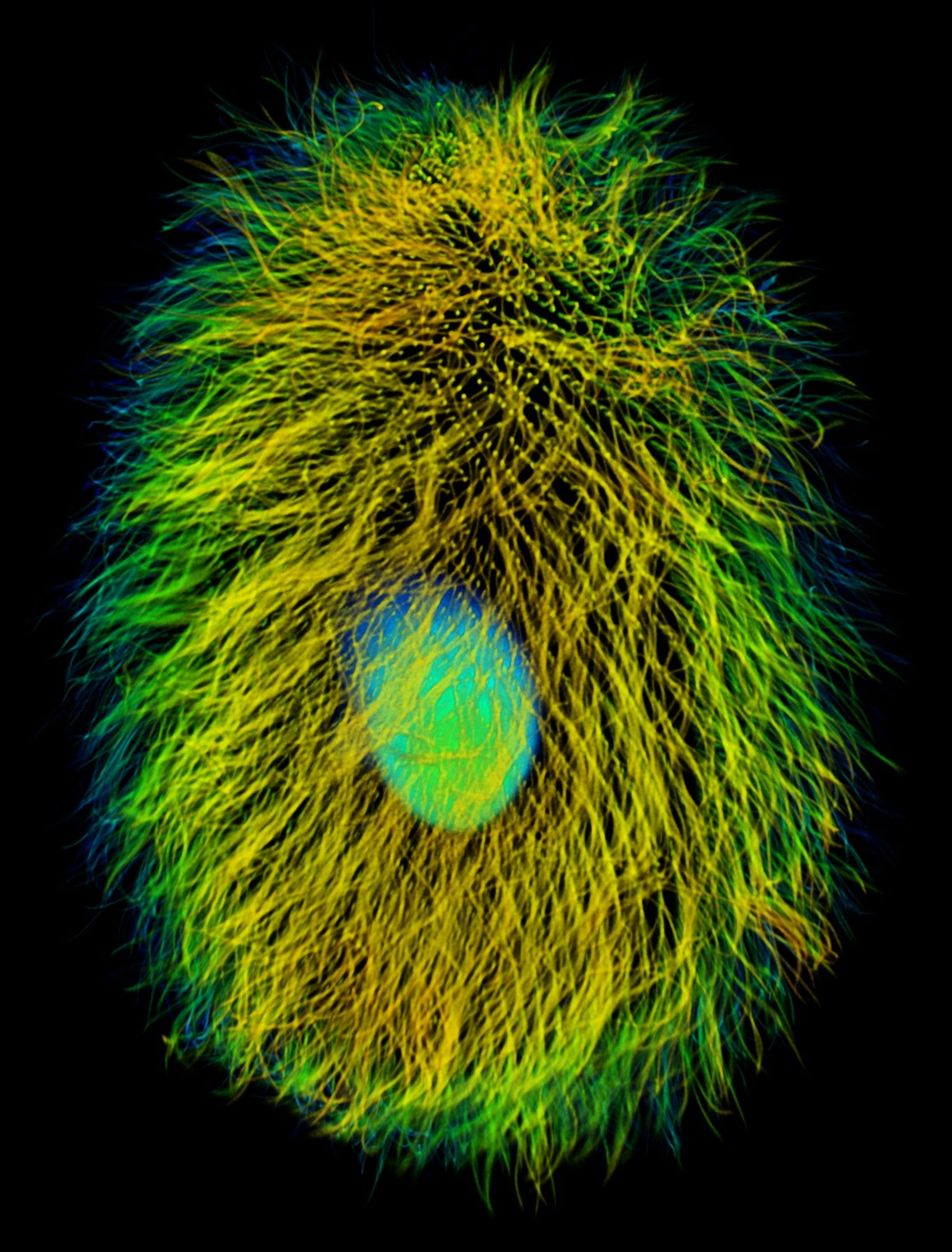
3D fluorescence of the rumen ciliate Dasytricha ruminantium.
Chuanqi Jiang/Jinying He/Che Hu/Institute of Hydrobiology, Chinese Academy of Sciences
The results agree with previous research showing that methane-producing microbes called methanogens that can also live in the cattle gut tend to congregate near microbes that produce hydrogen, Kebreab says, “but this shows the mechanism by which hydrogen is produced.”
Knowing exactly where the hydrogen inside cattle comes from could help develop new ways to alleviate their methane-rich burps, Xiong says, including changing how the hydrogenated body itself functions.
“Although these ideas are still in their early stages, our work provides a clearer mechanistic framework that could guide future efforts to reduce methane emissions in ruminants,” says Xiong.
It’s time to defend science
If you enjoyed this article, I would like to ask for your support. Scientific American has been defending science and industry for 180 years, and we are currently experiencing perhaps the most critical moment in these two centuries of history.
I was a Scientific American subscriber since the age of 12, and it helped shape the way I see the world. SciAm always educates and delights me, and inspires a sense of respect for our vast and magnificent universe. I hope this is the case for you too.
If you subscribe to Scientific Americanyou help ensure our coverage centers on meaningful research and discoveries; that we have the resources to account for decisions that threaten laboratories across the United States; and that we support budding and working scientists at a time when the value of science itself too often goes unrecognized.
In exchange, you receive essential information, captivating podcasts, brilliant infographics, newsletters not to be missed, unmissable videos, stimulating games and the best writings and reports from the scientific world. You can even offer a subscription to someone.
There has never been a more important time for us to stand up and show why science matters. I hope you will support us in this mission.


