Ships are paying millions more for fuel at L.A., Long Beach ports. The costs won’t stay there

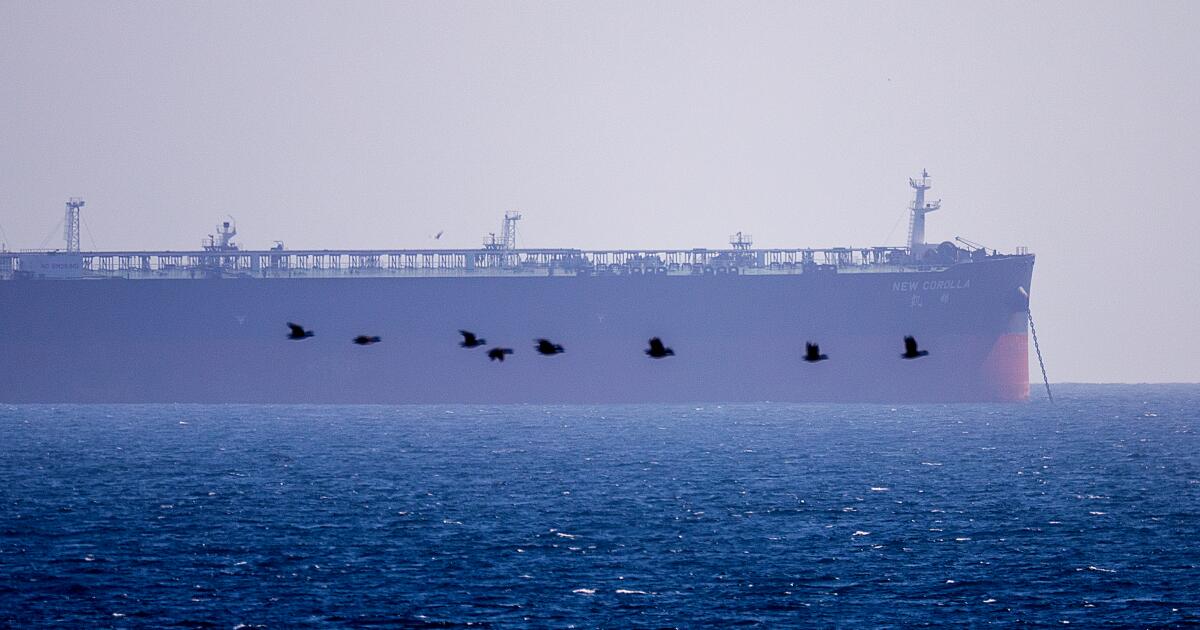
The massive ships that sail through the ports of Los Angeles and Long Beach face extreme fuel costs as oil prices rise, often paying millions of dollars more to fill their titanic tanks.
The cost of refueling in Los Angeles County is nearly 20% higher than other major ports in the United States and around the world. Tariffs at the ports of Los Angeles and Long Beach have also increased more than at other ports since the start of the Iran war.
With some ships requiring the equivalent of millions of gallons of fuel after dropping off and picking up their cargo, the additional costs add up. Shipping companies are taking steps to reduce fuel consumption and avoid costly routes, but much of that extra cost will eventually be reflected in the prices of the many products transported in the hundreds of thousands of containers that pass through ports each month.
“If someone asks you to ship something, you’ll do it anyway, you’ll just quote them a higher price,” said Mike Jacob, president of the Pacific Merchant Shipping Assn. “Higher supply chain costs ultimately have to be paid for by someone.”
The price of gasoline for automobiles has jumped by more than 50%, making everyone’s travel more expensive. Truckers are struggling with sky-high diesel prices, and rising aviation fuel prices have driven up airfares and even led to the closure of Spirit Airlines.
Rising shipping fuel costs are also expected to continue to contribute to inflation, even if the conflict with Iran were resolved immediately.
The closure of the Strait of Hormuz since late February has prevented the free flow of much of the world’s oil supply, and uncertainty surrounding the conflict has kept oil prices volatile. A fragile ceasefire continues despite violence across the strait in recent days.

Even if the war in Iran ends immediately, rising transportation fuel costs are expected to continue to contribute to inflation. Above, an oil pump in Santa Fe Springs on May 4, 2026.
(Kyle Grillot/Bloomberg)
As with other types of fuel in the state, taxes, fees and environmental restrictions can increase the cost of fuel for vessels. California is also more affected than other states by supply disruptions because it relies on oil delivered from other states and countries.
Less than a week ago, the last tanker to pass through the Strait of Hormuz before the outbreak of war arrived at the Port of Long Beach and delivered 2 million barrels of crude oil to the Marathon Petroleum terminal. Without more ships arriving from the Persian Gulf, California will lose an average of 200,000 barrels of oil per day from that region.
California depends on the Middle East for 30% of its crude oil, said Gene Seroka, executive director of the Port of Los Angeles, including oil that passes through the Strait of Hormuz.
“They’re evaluating all possibilities, including trying to be more fuel efficient and raising prices,” he said of major shippers,” Seroka said. “They can pass the costs on to the U.S. importer and exporter and ultimately to their customers, whether they’re U.S. consumers, factories or others who buy and sell these products.”
For container ships, fuel now costs about 25% of the total price of a trip from Asia to Los Angeles, Seroka said.
Data shows that fuel used by ships is more expensive in California, as is gasoline and jet fuel. The average price of ultra-low sulfur fuel oil has risen 70 percent to $925 per ton in the world’s major ports since the start of the war. The price at the ports of Long Beach and Los Angeles jumped nearly 88% to $1,080.
“Fuel is our No. 1 expense in operating a vessel,” Jacob said. “There are some things we can do to alleviate this problem, but these fuel prices end up being reflected in rates.”
When fuel is expensive, cargo ships often drive more slowly to burn it more efficiently, he said. And major shipping companies have already implemented fuel surcharges to cover higher costs.

For container ships, fuel now costs about 25 percent of the total price of a trip from Asia to Los Angeles, said Gene Seroka, executive director of the Port of Los Angeles. Above, part of the port on May 5, 2026.
(William Liang / For Time)
Amazon announced a 3.5% fuel and logistics surcharge last month and the U.S. Postal Service charges an 8% fee on some packages, its first-ever fuel surcharge. Hapag-Lloyd, a German shipping company, reported that its fuel costs have increased by $50 million per week.
Maersk, a Denmark-based shipping company, implemented an emergency fuel surcharge in late March, citing a difficult fuel market.
“We have undertaken a significant redistribution of fuels to compensate for shortages in the Middle East and are obtaining alternative sources from different locations and suppliers,” the company said.
The extra fees will not immediately cover the higher costs, so shipping companies say their profits will be affected. Matson, a shipping company with offices in Concord, California, addressed soaring fuel prices during its investor call earlier this week. The company specializes in shipping to Hawaii and is a member of the Pacific Merchant Shipping Assn.
“We expect fuel price volatility to impact our near-term earnings due to the lag between when we incur fuel costs and when we can fully recover those costs through our fuel surcharge,” Matt Cox, Matson’s chief executive, said on Monday’s call.
Despite rising costs, activity has not slowed dramatically at the ports of Los Angeles and Long Beach, which together handle more than $600 billion in goods annually. The Port of Long Beach handled 774,935 containers in March, an increase of more than 6,000 from February. Activity at the Port of Los Angeles declined 3% year over year in March.

A driver checks his cargo container at the Port of Los Angeles in Wilmington on March 4, 2026.
(Genaro Molina / Los Angeles Times)
The Port of Long Beach’s operations, however, are not completely immune to the impacts of the global oil shortage, said General Manager Noel Hacegaba.
“Fuel supplies are tightening and traffic jams are increasing at fueling centers,” Hacegaba said. “Shippers are adjusting how they move goods to manage costs and avoid congestion. »