As a long-time Pixel owner, last year’s release took me by surprise. I didn’t think the series needed a refresh, but I was quickly won over. This year, the Google Pixel 10 is more of the same, and some critical upgrades make me feel like I don’t need the Pro version anymore.
To be honest, I wasn’t terribly excited about the Pixel 10 series. Smartphone upgrades have gotten very minimal year-over-year, and it seems like more and more features are being moved to the higher-priced models. So I was very happy to see that while the Pixel 10 isn’t a huge change, it had just enough to be worthwhile.
- Brand
-
Google
- SoC
-
Google Tensor G5
- Display
-
6.3-inch Actua OLED, 20:9
- RAM
-
12 GB RAM
Looking to upgrade to a Pixel but not sure if you need all the bells and whistles of the more expensive models? You won’t be disappointed with the standard Pixel 10 model. Coming in striking colors, Gemini features, and seven years of updates, you can’t go wrong with this purchase.
- Now has a telephoto camera like the Pro models
- Qi2 magnets with PixelSnap
- High-end premium feeling hardware
- Flagship performance
- Battery life is just okay
- Most of the AI features aren’t useful
Price and Availability
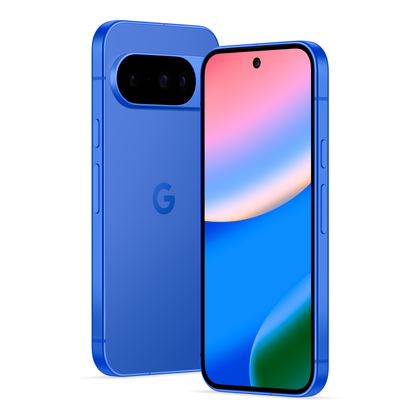
The Pixel 10 is available from the Google Store, Best Buy, Amazon, all U.S. carriers, and many other retailers across the country. It starts at $799 for the 128GB model and $899 for the 256GB. The phone can be purchased in four colors: Indigo, Frost, Lemongrass, and Obsidian. The model featured in this review is 128GB in Porcelain.
- Brand
-
Google
- SoC
-
Google Tensor G5
- Display
-
6.3-inch Actua OLED, 20:9
- RAM
-
12 GB RAM
- Storage
-
128 GB / 256 GB
- Battery
-
4970mAh
- Operating System
-
Android 16
- Front camera
-
10.5 MP Dual PD selfie camera
- Rear camera
-
48 MP wide with Macro Focus | 13 MP ultrawide | 10.8 MP 5x telephoto lens
- Connectivity
-
Wi-Fi 6E, Bluetooth v6
- Dimensions
-
6.0-inches x 2.8-inches x 0.3-inches
- Colors
-
Indigo, Frost, Lemongrass, Obsidian
- Charge speed
-
Up to 55% in about 30 minutes
- IP Rating
-
IP68
A Familiar Design That Still Works

Last year marked a bit of a design change for the Pixel series, so Google isn’t reinventing the wheel with the Pixel 10. It’s essentially the exact same design as the Pixel 9. The Pixel 10 still has the signature polished metal frame, glass back, and the distinctive camera bar. The squared-off edges and the overall feel in your hand are still really nice. It’s been especially nice using the phone without a case.
Pixelsnap is Google’s answer to magnetic wireless charging—what most people know as “MagSafe.” It’s built on the new Qi2 wireless charging standard, and it fundamentally changes how you can charge your phone and use accessories. There are magnets built right into the back of the Pixel 10, and when you bring a compatible charger or accessory close, it snaps right into place with a satisfying thud.

This is why I’ve been able to enjoy using the Pixel 10 without a case. I bought into MagSafe accessories a few years ago, and I’ve been relying on cases to make it work with Android phones. I don’t have to do that anymore with the Pixel 10. It feels very freeing, though I may eventually cave and get a case for some extra protection down the line.
Overall, there aren’t really any visual differences between the Pixel 9 and Pixel 10. The one solitary difference is an extra camera in the camera bar, but that’s not easy to spot. My only gripe with this design is that dust likes to collect around the camera bar. Otherwise, it’s a very attractive phone.
A Perfectly Fine Display

While the design of the Pixel 10 is the same as the Pro models, everything else obviously is not. That starts right up front with the display. The standard Pixel 10 has a 6.3-inch 1080p display with up to 120Hz refresh rate. For comparison, the Pixel 10 Pro has a 1280p display. I find that 1080p is perfectly fine for a phone of this size, and I had no problems with the display in general.
There have been some complaints about vignetting in bright light, but I can’t say that I’ve noticed that myself. Switching to the “Natural” color profile seems to be the fix, so I went ahead and did that anyway. This is certainly not the absolute best smartphone display you’ll find on the market, but there’s not really anything wrong with it.
Pixel UI Remains the Star, Not AI
The Pixel 10 is the first phone to launch with Google’s full Android 16 experience. That means it has the brand new Material 3 Expressive design, which I happen to really enjoy. The UI just feels very playful. Buttons are big, animations are bouncy, and loading indicators are delightfully squiggly. Not everyone will like the aesthetic, but I’m fully on board.
AI is, of course, a big focus of the software as well. Last year, I was happy to see some genuinely useful AI features. So far, that hasn’t been the case with the Pixel 10. I’ve written about the disappointment of the new Daily Hub, and I’m apparently not alone—Google has already pulled it from Pixel 10 devices.
Magic Cue was one AI feature that Google spent a lot of time talking about and demoing during the Made by Google event with Jimmy Fallon. I’ve had it enabled since day one, and it hasn’t appeared a single time in over two weeks of using the Pixel 10. I’m afraid this is another AI feature that sounds good on paper, but isn’t actually useful for the average person.
Overall, the strength of Google’s Pixel software remains to be in the non-AI features. Things like Call Screening, Calling Cards, customizing the size of the Quick Settings toggles, themed icons, fun wallpaper customization options, and more. Google desperately wants AI to be the focal point of the software experience, but it doesn’t have to be.
Flagship Performance Trickles Down

One of the best things about the Pixel 10 series is that all three models get the same processor. That’s the new Tensor G5, which is Google’s first custom chipset made by TSMC. It promises to run cooler than previous Tensor chips—a common complaint from Pixel owners. The standard Pixel 10 has 12GB of RAM, compared to 16GB for the Pro model.
While I don’t have a Pro model with a bit more RAM to compare it to, performance has been very good for me. The camera opens quickly, multitasking is snappy, and I never felt like I was overwhelming the phone with anything. The fact that you don’t really have to have to sacrifice performance with a non-Pro Pixel 10 is a big selling point.
Battery Life is Mostly Okay

The Pixel 10 has a 4970mAh battery, which has provided what I would consider firmly “okay” battery life. I was able to easily get through the day with enough power left for some bedtime scrolling. However, if I fell asleep before putting the phone on the charger overnight, I’d need to charge it right away in the morning. On one particular day, I used the hot spot feature for around an hour and still made it through.
So, you shouldn’t need to worry about topping it off during the day, but also don’t expect to be amazed by how much juice is left when you turn in for the night.
More Pro Features for the Pixel 10 Cameras

Besides PixelSnap, the Pixel 10 feature I was most excited about was the addition of a telephoto camera. It’s bothered me for a long time that the second camera on budget/non-Pro phones is always an ultrawide. I rarely ever use ultrawide cameras, but I find myself using telephoto cameras very often.
The Pixel 10’s telephoto can’t do the same crazy Super Res 100X Zoom that the Pro models can, but it’s still a respectable 5X. Optical zoom is always better than digital zoom. The main camera is a solid 48MP f/1.7, though the sensor is quite a bit smaller than the Pixel 10 Pro. That hasn’t stopped me from being happy with the results from the Pixel 10 cameras. I’ve used Pro Pixels and I’ve used non-Pro Pixels, but I’ve never been disappointed with the camera performance.
The Competition

If you’re in the market for a reasonably priced Android flagship without all the “Pro” or “Ultra” bells and whistles, the Pixel 10’s closest competitor is the Samsung Galaxy S25. Both feature high-end performance and similar features across the board for $800, but there are some key differences.
First, they both have triple camera setups with ultrawide and telephoto cameras. However, the Pixel 10 is slightly better in all three camps if you get down to the real knitty-gritty. The Pixel 10 has a substantially bigger battery: 4,970mAh vs 4,000mAh. Other than that, it comes down to your preference in software aesthetic and features between Samsung’s One UI and Google’s Pixel UI. Both will be updated for longer than you’re likely to use them.
Should You Buy the Google Pixel 10?

Last year, after I reviewed the Pixel 9, I switched to the Pixel 9 Pro. I was happy with the standard Pixel 9, but the better cameras ultimately pulled me away. I don’t have that same feeling after my time with the Google Pixel 10.
I’m honestly a bit shocked by how much more Pro-like Google made the Pixel 10. It seems companies these days are eager to upcharge for as many features as possible. Sure, the Pixel 10 Pro is better in a lot of categories, but there’s not one thing that I can point to as being massively better. To me, it’s worth saving $200. This is the best flagship-but-not-really-a-flagship phone on the market.
- Brand
-
Google
- SoC
-
Google Tensor G5
- Display
-
6.3-inch Actua OLED, 20:9
- RAM
-
12 GB RAM
Looking to upgrade to a Pixel but not sure if you need all the bells and whistles of the more expensive models? You won’t be disappointed with the standard Pixel 10 model. Coming in striking colors, Gemini features, and seven years of updates, you can’t go wrong with this purchase.