Sonny Rollins, trailblazing jazz saxophonist, dies at age 95


Sonny Rollins, the tenor saxophonist and restless genius whose bold, distinctive tone and constant experimentation kept him at the forefront of jazz for more than 50 years, died Monday at the age of 95.
Spokeswoman Terri Hinte said in a statement that Rollins died at his home in Woodstock, New York. She cited no specific cause of death, but said he was largely housebound for the past two years due to various physical problems.
From his beginnings as a teenage phenom to his more measured solo work and experiments with free jazz, Rollins was revered for his improvisational talent. He was one of the last living greats of the bebop era and, along with John Coltrane and Charlie Parker, one of the most influential saxophonists of his era.
Rock fans got a dose of his music with the Rolling Stones’ 1981 album “Tattoo You,” which features Rollins’ melancholy sax solo on the ballad “Waiting on a Friend,” conceived after seeing Mick Jagger dance.
Despite his enduring success, Rollins was never entirely satisfied with his art, sometimes taking long breaks from his playing and constantly adopting new, eclectic styles.
He has always described himself as “a work in progress”, saying he is not one of those artists who settles into just one way of playing.
Ed Perlstein/Redferns/Getty Images 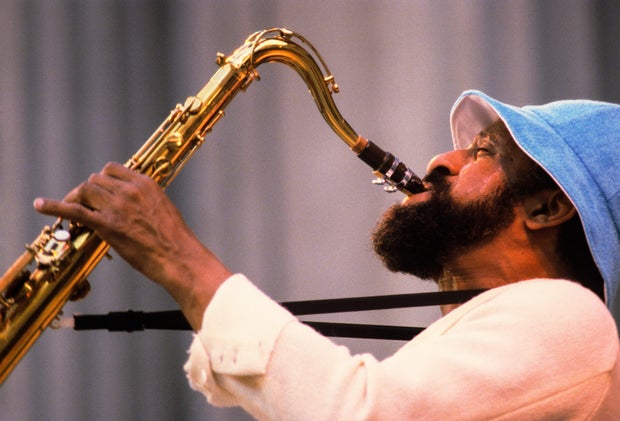
Although his early bebop work was the most popular with his fans, Rollins never looked back, saying he found it “excruciating” to even listen to the flaws in his old recordings.
“I don’t consider myself a musician who has learned as much as I want to learn,” he told the Associated Press in 2007.
In the 1990s and 2000s, Rollins released a series of critically acclaimed albums. He maintained a rigorous training regimen and continued to tour into his 80s. Pulmonary fibrosis, a thickening and damage to the lungs, would eventually force him to retire. He gave his last concert in 2012 and stopped performing altogether in 2014.
Although he missed the adoration of crowds, he missed the game more.
“I did a few concerts early on where I was outdoors in the afternoon,” he told the New York Times in 2020. “I was able to look up into the sky and I felt a communication; I felt like I was part of something. Not part of the crowd. Something bigger.”
His 2001 album “This is What I Do” won him a Grammy Award for Best Jazz Instrumental Album. He won again in 2006 for Best Jazz Instrumental Solo for “Why Was I Born?”
“Why Was I Born” is from the album “Without a Song: The 9/11 Concert,” a live recording of a concert in Boston just four days after the September 11 attacks. Rollins, who had been evacuated from his apartment a few blocks from Ground Zero, had performed the concert at the request of his wife and manager, Lucille. She died in 2004.
“I realized this is the way life is,” he said. told CBS Newsreturning to the attacks a decade later. “I don’t know why. I don’t know why this happens. I don’t know why people kill each other, hate each other. But it’s part of life. … I don’t know why. But it’s part of the way the world is. So, I had to accept it. And this incident helped me accept and learn a lot of things about life.”
His survivors include a nephew, Clifton Anderson, and nieces Vallyn Anderson and Gabrielle DeGroat.
Christian Rose/Roger Viollet via Getty Images 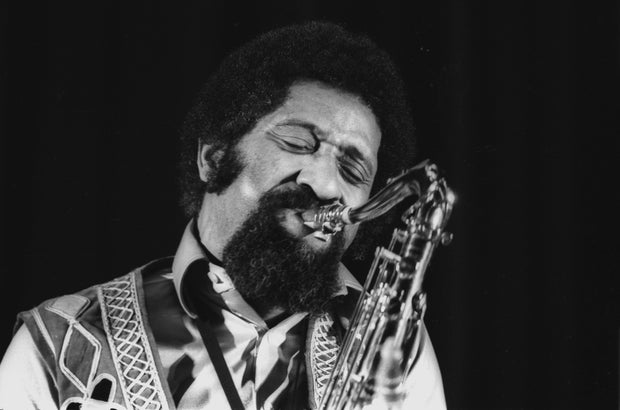
Theodore Walter Rollins was born into a musical family in Harlem on September 7, 1930. His father, a petty officer, played the clarinet, his sister played the piano, and his older brother was a violinist.
“We listened to the Apollo Theater and we heard all the big bands that came to New York. So I kind of soaked up a lot of music when I was a baby. And then, of course, I fell in love with the saxophone,” he told CBS News in 2011.
“As a child, I knew I would be a top musician,” he said. “…I loved music so much that I think it consumed me. And I knew it would be what I was meant to do in life.”
When he was eight, his parents insisted he study piano, but, as he recalls, “it didn’t take.” Instead, he said, he would rather play baseball outside. But at the age of 11, Rollins became fascinated with the saxophone and persuaded his parents to buy him one, an alto.
He struggled to afford lessons and was largely self-taught, but Rollins quickly became a star, switching to tenor sax and playing clubs at night.
Rollins got his first big break in his late teens when he was invited to join Thelonious Monk’s band. He was soon playing with Miles Davis and Bud Powell, who introduced him to the world of recording before he even finished high school.
But like many jazz musicians in the late ’40s and early ’50s, Rollins’ rising star all but faded when he became addicted to heroin at age 19. As his addiction continued to worsen, Rollins served two stints in prison – 10 months in 1950 and three months in 1953 – and eventually found himself on the streets in Chicago. In 1954, Rollins checked himself into a hospital in Lexington, Kentucky, for drug treatment.
“It’s a place I don’t want to go back to… But it was an experience. It was a good experience. I mean, I can look back now and say it was a valuable experience, because I came out on top. But, of course, it was difficult,” he told CBS News in 2011.
“I started to have a deeper philosophy of what life was,” he told the AP in 2007. “It was from that moment on that my consciousness woke up.”
Christian Rose/Roger Viollet via Getty Images 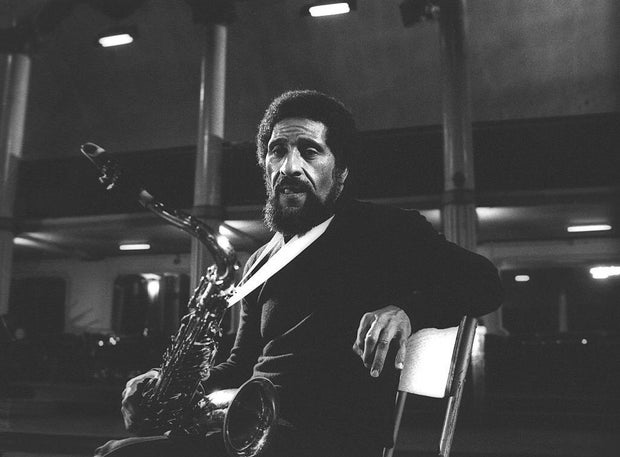
After being released, he returned to Chicago and signed on as a member of the Max Roach-Clifford Brown quintet. In 1956, he recorded a solo album, “Saxophone Colossus”. His stripped-down, hard bop sound announced him as one of jazz’s leading saxophonists and has remained one of his most influential works.
Over the next two years, Rollins took a different approach, switching to a piano-less trio on three more landmark albums: “Way Out West,” “A Night at the Village Vanguard” and “Freedom Suite.”
Then, at the height of his popularity, Rollins retired, spending the next two years training alone in a solitary doghouse above the East River, on a footbridge of the Williamsburg Bridge.
“The thing I’m most proud of in my career is the fact that I was able to see beyond being popular and all that,” he told the AP in 2007, “and do what my inner self told me to do.”
During his absence, jazz moved away from the fast, tightly woven sound of bebop and toward the more frenetic and chaotic free jazz. When Rollins chose to return to the stage in 1961, he embraced the new sound – a decision that divided his fans. By the mid-1960s, Rollins was touring Europe extensively, alternating between more traditional and avant-garde approaches. He contributed to the soundtrack of “Alfie,” the 1966 British film that made Michael Caine a star.
It was during a trip to Japan that Rollins discovered Zen Buddhism, which led to another long sabbatical that would last until the early 1970s.
When he chose to record again in 1972, he was now considered a legend and gained mainstream acceptance. He received a Guggenheim Fellowship that year and was inducted into the Downbeat Hall of Fame the following year. He appeared on the “Tonight Show” and began playing concert halls rather than nightclubs.
Jean-Paul Filo/CBS via Getty Images 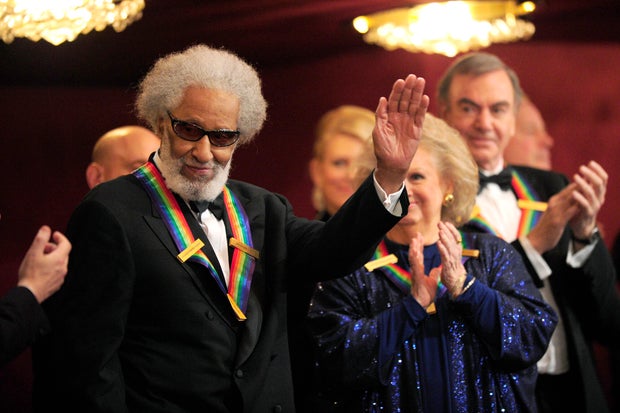
In 2011, at age 81, he became a Kennedy Center laureate.
He leaves behind many unreleased recordings and has stated that he did not intend to leave behind instructions on what to do with them.
“After I leave this planet, I won’t have any say in what happens, so I don’t worry about that,” he told the New York Times in 2020. “And, boy, I’m anxious about my music; I won’t have to worry about it anymore. Thank God.”


:max_bytes(150000):strip_icc():format(jpeg)/Health-Stocksy_txp21856698W5h300_Medium_4329119-6861a908fb5346bea17dd46915bfe3c4.jpg?w=390&resize=390,220&ssl=1 "A Complete Weekly Workout Plan for All Fitness Levels")
