Southwestern drought likely to continue through 2100, research finds


This article originally appeared in Inside Climate News, a non -profit non -supported press organization that covers the climate, energy and the environment. Register for their newsletter here.
Drought in the southwest of the United States should last for the rest of the 21st century and potentially beyond while global warming moves the distribution of heat in the Pacific Ocean, according to a study published last week by researchers from the University of Texas in Austin.
Using sediment nuclei collected in the rocky mountains, paleoclimatology recordings and climatic models, researchers have found the warming driven by greenhouse gas emissions can modify atmospheric and navy heat models in the northern Pacific Ocean in a way that is known as the negative phase of the PDO Pacific (PDO) Fluctuations in maritime surface temperatures which lead to a decrease in winter precipitation. But in this case, the phenomenon can last much longer than the usual 30 -year cycle of the ADA.
“If the sea surface temperature schemes in the North Pacific were only the result of stochastic processes [random] Variabilty in the past decade or two, we would have just been extremely unlucky, like a really bad roll of the dice, “Said Victoria Todd, the lead author of the Study and a Phd Student in Geosciences at University of Texas at Austin.” But if if we hypothesize, this is a Sea Surface Temperatures in the North Pacific, this will be Susted into the future, and we need to start look at this as a shift, Instead of just the result of bad luck.
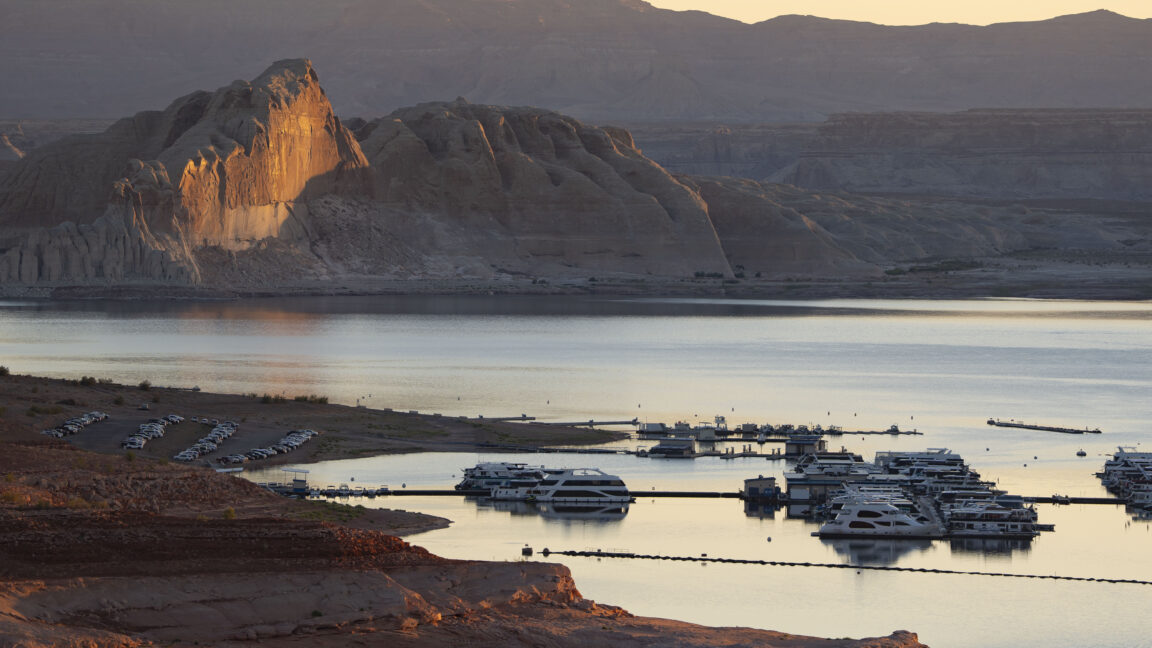
Currently, the southwest of the United States is experiencing a megadrughought, which leads to the aridification of the landscape, a drying of decades of the region caused by climate change and overconsumption of water in the region. This has led to major rivers and their basins, such as the rivers of Colorado and Rio Grande, seeing reduced flows and a drop in water stored in underground aquifers, which obliges states and communities to count with a strongly reduced water supply. Farmers have reduced the amount of water they use. Cities are looking for new water supplies. And states, tribes and federal agencies engage in tense negotiations on how to manage the decline in resources like the Colorado river in the future.


