Stars Can Appear Red, Blue, and Yellow, But You’ll Never See One That’s Green


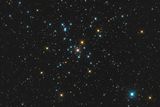
When you are looking for a cloudless night, note that stars can sometimes show themselves to be different colors? You can even notice yellow, red, orange and blue stars – not just white.
The color of a star can range from yellow to blue, but you will never see a green star in the night sky. And there are reasons behind their coloring. Find out more about the reasons why the stars shine different colors and the best way to see some of the brightest.
What determines the color of a star?
The surface temperature of a star dictates its color. These colors generally range from the hottest to the coldest: blue, white, yellow, orange and red, similar to the fire. Blue stars, the hottest, generally have a surface temperature range of around 10,000 to 50,000 Kelvin (K).
The sun in our solar system is a yellow star, with a surface temperature of almost 6,000 k, even if its real color is white. Due to the atmosphere of the earth, the sun often appears to us yellow.
It is not the only thing that the atmosphere of the earth is disturbing. Have you ever wondered why some stars seem to sparkle? The earth’s atmosphere deforms the light that crosses it and gives certain stars a sparkling effect.
Learn more: If the color of the sun is white, why does it seem yellow?
Where and when to spot the colorful stars
If you want to see a red star, find Betelgeuse in the Orion constellation. If you want to see blue stars, search Rigel, also in Orion. Capella, the sixth brightest star seen from the earth, shines a bright yellow in Auriga. And Antares burns a reddish-orange color in the heart of the scorpion.
Before going outside in the middle of the night to try to spot these stars, there is little that you need to know. The first being is that you must move away from light pollution if you want the best chances of seeing these stars.
The second, although you can notice stars with naked eye, having a telescope or twins is a great way to improve your viewing experience.
Finally, and probably the most important, you should know when these stars are in the sky near your location. Depending on the time of year, it can be more difficult to see these stars. According to the BbcThe winter sky often offers the brightest stars, so visualization during this season can increase your chances of having them a good overview.
Why we don’t see green stars
While looking for colorful stars, the only color you will not see is green. This is linked to the way our eyes perceive color.
Human eyes contain cells sensitive to light called stems and cones. The stems are the brightness detectors and are blind to the color. Our eyes have three types of cones that help us see the color: red cones, blue cones and green cones. When the light strikes them, each is triggered by a different quantity; The red light – let’s say, from a fire truck – really triggers the red cone, but the blue and green cones remain rather calm.
Most objects do not emit (or do not reflect) a single color, so the cones are triggered by variable quantities of light. The orange color, for example, triggers the red cones to answer about twice as much as the green cones, but leaves the blues not affected. When the brain receives the signal from the three cones, it says: “It must be an orange object”. If the green cones receive as much light as the red cones and the blue cones receive no light, we interpret this as yellow. And so on.
Therefore, the only way to see a star as green is that it emits to emit almost exclusively a green light. However, the stars always produce more than a wavelength of light. Any star mainly emitting green will also emit a large amount of red and blue, which makes the star in white. Changing the temperature of the star will make it appear slightly orange, yellow, red or blue, but you simply cannot become green. Our eyes simply won’t see it that way.
This article is a republished version of Ther Article published previously.
Learn more: The companion of the Red Supergiant is discovered, resolving a secular mystery
Article Sources
Our Discovermagazine.com writers use studies evaluated by high -quality peers and sources for our articles, and our publishers examine scientific precision and editorial standards. Review the sources used below for this article:


