Stop thinking Korean cars are unreliable—These 5 SUVs quietly prove otherwise


For years, Korean cars have struggled to shake off an outdated reputation for questionable reliability. Even as Hyundai, Kia, and Genesis dramatically improved build quality, technology, and refinement, many buyers continued to assume Japanese brands were the safer long-term choice. However, modern reliability data is starting to tell a very different story.
Today, some of the most dependable mainstream SUVs and sedans on the market come from South Korea, with several models now posting reliability scores that rival, and sometimes exceed, established competitors from Toyota, Honda, and Nissan. Better engineering, proven powertrains, longer warranties, and simpler hybrid systems have all helped these vehicles quietly become some of the smartest long-term buys in their segments.
The biggest surprise is that many of these Korean models don’t just compete on reliability alone. They also offer upscale interiors, generous standard features, impressive efficiency, and pricing that undercuts much of the competition. For buyers willing to move past old stereotypes, these SUVs and sedans prove that Korean automakers have evolved into genuine leaders in value, comfort, and long-term dependability.
In order to give you the most up-to-date and accurate information possible, the data used to compile this article was sourced from various manufacturer websites and other authoritative sources, such as the EPA. Models are ranked based on their reliability score, according to J.D. Power.
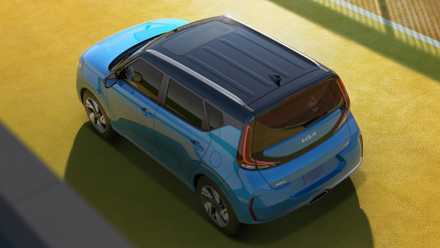
The quirky crossover that proves Korean SUVs can rival Toyota in reliability
A fun design hiding surprisingly rock-solid engineering.
5
2026 Hyundai Santa Fe
Reliability score: 81/100
If you’re looking for an affordable three-row SUV, it doesn’t get much better than the Santa Fe. Despite costing well under $40,000 and undercutting its rivals by thousands, it offers a surprisingly luxurious interior. It also comes with a more spacious standard third-row than you might expect. Build quality here is high and owners have reported very few major issues over the last couple of years.
Performance and efficiency


- Base Trim Engine
-
2.5L Smartstream I4 ICE
- Base Trim Transmission
-
8-speed automatic
- Base Trim Drivetrain
-
Front-Wheel Drive
- Base Trim Horsepower
-
277 HP @5800 RPM
- Base Trim Torque
-
311 lb.-ft. @ 1700 RPM
- Make
-
Hyundai
- Model
-
Santa Fe
- Segment
-
Midsize SUV
Like many of Hyundai’s other offerings, the Santa Fe can be had with a gas-only, hybrid, or plug-in hybrid powertrain. The non-hybrid is quicker off the line, but the hybrid improves efficiency by a lot. As you might expect from Hyundai, driving verve is low but comfort is high. We appreciate that the Korean automaker has skipped a CVT in their hybrid models in favor of a traditional automatic transmission.
Pros
- Unique, upscale styling
- Lots of standard features
- Tons of interior space
Cons
- Gas-only models are thirsty
- Dull to drive
- Third row isn’t adult-friendly
4
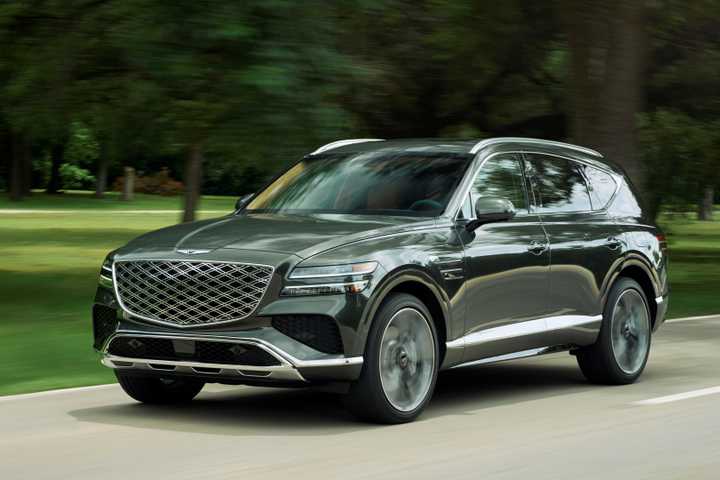
2026 Genesis GV80
Reliability score: 83/100
Genesis is a brand that has seemingly set out to do what Lexus is doing but better. The GV80, which was one of the first models the brand launched, demonstrates this perfectly. It undercuts its rivals by quite a lot, delivers an extremely plush cabin, and mixes comfort and performance expertly well. While it doesn’t yet have the long-term reputation of Lexus models, it is off to a really good start with a high reliability score over the last five years.
Performance and efficiency

- Base Trim Engine
-
2.5L I-4 ICE
- Base Trim Transmission
-
8-speed automatic
- Base Trim Drivetrain
-
Other
- Base Trim Horsepower
-
300 HP @5800 RPM
- Base Trim Torque
-
311 lb.-ft. @ 1650 RPM
- Base Trim Fuel Economy (city/highway/combined)
-
20/26/22 MPG
- Base Trim Battery Type
-
Lead acid battery
- Make
-
Genesis
- Model
-
GV80
The GV80 comes equipped with either a turbocharged four-cylinder or a twin-turbocharged V-6, both of which offer some exceptional performance. More importantly, the Genesis delivers a sublime ride and features tons of sound deadening to keep the cabin quiet. Much like Toyota and Lexus, Genesis makes use of a number of proven mechanical parts from its parent company, Hyundai.
Pros
- One of the best interiors on the market
- Absolutely packed with standard features
- Thousands more affordable than its rivals
Cons
- Not quite as agile as some rivals
- Optional third row is tight
- Needs more time to prove its long-term reliability

The Ioniq 9 Black Ink proves Hyundai finally cracked the affordable luxury formula
Hyundai’s flagship three-row EV gets a darker Black Ink makeover and the kind of upscale feel you’d normally expect from far pricier SUVs.
3
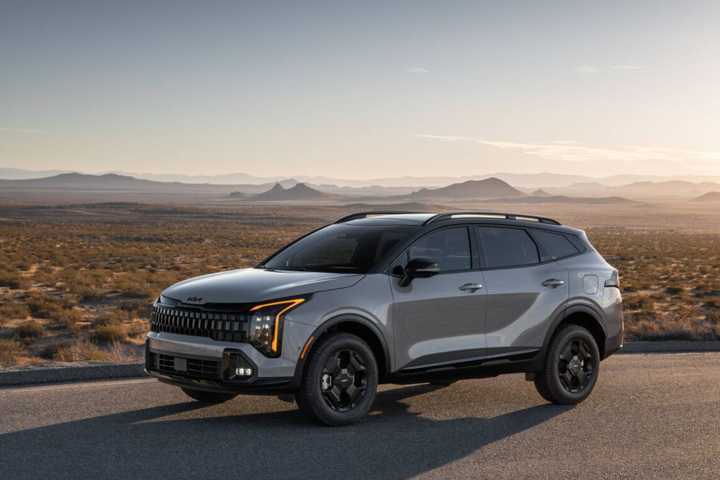
2026 Kia Sportage
Reliability score: 84/100
The Kia Sportage is one of the brand’s most popular models, and it continues its upward trend every year. The 2026 model was given a refresh, with updated styling that feels more at home in the Kia lineup. It retains its mechanical components, meaning it may not be the most exciting car to drive, but it is comfortable and loaded with kit from the word go.
Performance and efficiency

- Base Trim Engine
-
2.5L I4 ICE
- Base Trim Transmission
-
8-speed automatic
- Base Trim Drivetrain
-
Front-Wheel Drive
- Base Trim Horsepower
-
187 HP @6100 RPM
- Base Trim Torque
-
178 lb.-ft. @ 4000 RPM
- Base Trim Fuel Economy (city/highway/combined)
-
25/33/28 MPG
- Base Trim Battery Type
-
Lead acid battery
- Make
-
Kia
- Model
-
Sportage
The Sportage comes in a number of different forms, with the gas-only model sold alongside a hybrid and plug-in hybrid, all of which have been around for some time. Kia has gone through a lot of effort to keep things simple, and simplicity is often synonymous with reliability. The gas-only model does without a turbocharger, and hybrid models opt for a traditional automatic transmission instead of a CVT. Hybrids also use a traditional all-wheel drive setup instead of eAWD, unlike a lot of the Sportage’s rivals.
Pros
- Choice of almost every powertrain type
- Extremely practical
- Class-above ride quality
Cons
- Acceleration is below par
- A little mundane behind the wheel
- PHEV model is a little unrefined
2
2026 Hyundai Sonata
Reliability score: 86/100
The Sonata perfectly demonstrates just how far Hyundai’s design department has come over the last five years. Where the old model felt a little gaudy and too clearly showed off its budget roots, the new model looks pretty fantastic and is impressively upscale. If you’re looking for a quiet, comfortable, and affordable family sedan, the Sonata checks all the right boxes.
Performance and efficiency

- Base Trim Engine
-
2.5L Smartstream I4 ICE
- Base Trim Transmission
-
8-speed automatic
- Base Trim Drivetrain
-
Front-Wheel Drive
- Base Trim Horsepower
-
191 HP @6100 RPM
- Base Trim Torque
-
181 lb.-ft. @ 4000 RPM
- Base Trim Fuel Economy (city/highway/combined)
-
28/38/32 MPG
- Make
-
Hyundai
- Model
-
Sonata
- Segment
-
Midsize Sedan
Most Sonatas either come with a naturally aspirated four-cylinder or a hybrid setup. The N-Line model does add a turbocharger to the mix to put down a whopping 290 horsepower. In any setup, the Sonata isn’t exactly a sharp sports sedan, though, instead aiming to be a comfortable cruiser. Once again, the brand does without a CVT, which reduces engine drone.
Pros
- Great looks, inside and out
- Even base model is well equipped
- N-Line model is quite quick
Cons
- Subpar handling
- Second row space is mediocre
- Some plasticy bits throughout the cabin
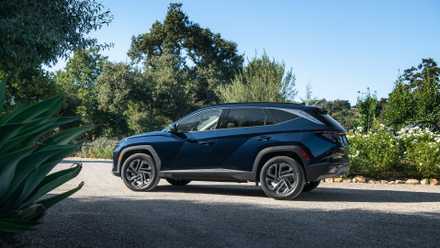
Forget Mercedes-Benz—This affordable Korean Hybrid SUV feels surprisingly luxurious
You don’t need to pay for a luxury badge to get a luxury experience behind the wheel.
1
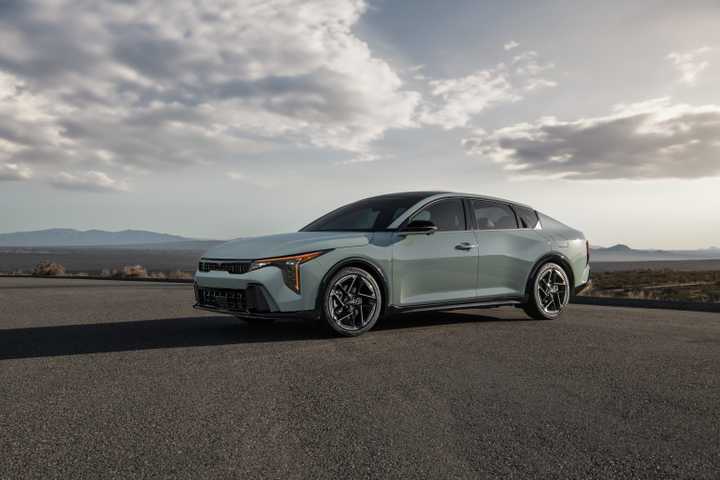
2026 Kia K4
Reliability score: 86/100
It may have a different name and some new looks, but under its disguise, the K4 is essentially a heavily updated Forte. While it has been modernized, the K4 shares a lot of its components with the now discontinued sedan, which is why authorities feel confident scoring its reliability so highly. We think this is a fantastic effort by Kia to bring their smallest and cheapest offering into the fold alongside the rest of their lineup.
Performance and efficiency
- Base Trim Engine
-
2L Inline 4
- Base Trim Transmission
-
CVT
- Base Trim Drivetrain
-
Front-Wheel Drive
- Base Trim Horsepower
-
147 HP @6200 RPM
- Base Trim Torque
-
132 lb.-ft. @ 4500 RPM
- Base Trim Fuel Economy (city/highway/combined)
-
30/40/34 MPG
- Make
-
Kia
- Model
-
K4
- Segment
-
Subcompact Sedan
The K4 comes standard with a 147-horsepower four-cylinder engine under the hood, sending power to the front wheels. Unfortunately, this model is only offered with a CVT. The GT-Line Turbo model, however, gets a 1.6-liter turbocharged inline-four that puts down 190 horses. The turbocharged model gets a more traditional eight-speed automatic.
Pros
- Brilliant curb appeal
- Spacious rear seat
- Packed with modern technology
Cons
- Bland driving dynamics
- Gutless base engine
- Reluctant automatic transmission
Korea’s reliability is high, they just need more time to convince buyers
When Toyota and Honda entered the market in the United States, the public said that their cars were built cheaply and wouldn’t last. Now, they are considered among the most reliable brands in the world. Hyundai and its subsidiaries are seemingly looking to follow suit. They were off to a rough start, but it does seem like they’ve turned things around in a big way, and they now will need to convince buyers that things are different.