VLAN sounds like an enterprise-grade, Cisco-certified, command-line-interface nightmare reserved for network engineers. We have been conditioned to believe that network segmentation is “advanced networking,” when in reality, it is the simplest way to secure your network.
If you can organize a filing cabinet, you can understand a VLAN and if you care about the fact that your smart fridge, your child’s Wi-Fi toys, and your work laptop are all currently sitting on the same digital playground screaming at each other, then VLAN might save you.
Why your standard home network is a nightmare
The “open field” problem
To understand the VLAN, we have to first understand the standard, flat network. Imagine a standard home router. You plug it in, create a Wi-Fi name (SSID) called “ABC_Family_WiFi,” and you set a password. You then proceed to connect every single gadget you own to that one network. This includes your phone, laptop, smart TV, smart bulb, fridge, and baby monitor.
Physically, or wirelessly, they are all connected to the same SSID and logically, the router treats them as a community of friends. They can all talk to each other. This is called a “flat network.” The problem with this flat network is that most of these devices do not need unrestricted access to each other and many probably should not have it.
The cheap smart bulb you just connected is a computer with a processor, memory, and a Wi-Fi chip. It was likely manufactured by a company with zero long-term security update policies and is a ticking time bomb. If a hacker exploits a vulnerability in that cheap light bulb (and this happens constantly), they aren’t just gaining control of your light bulb. They have just landed on your “ABC_Family_WiFi” runway. From there, they can see everything which might include your NAS with all the family photos, or deploy ransomware on your unpatched laptop.
In a flat network, you’re essentially inviting a stranger who enters through the doggy door to rummage through your filing cabinet, safe, and bedside table. You trust every device to behave, but trust is not a security strategy.
 Quiz
QuizVLANs and home Wi-Fi security techniques
Trivia challenge
Think you know how to lock down your home network? Test your skills on VLANs, firewalls, and beyond.
VLANsWi-Fi SecurityNetworkingEncryptionBest Practices
What does VLAN stand for?
Correct! VLAN stands for Virtual Local Area Network. It allows you to segment a physical network into multiple logical networks, improving both security and traffic management without needing separate physical hardware.
Not quite — the answer is Virtual Local Area Network. VLANs are a foundational concept in network segmentation, letting you logically separate devices even when they share the same physical switches or access points.
What is the primary security benefit of placing IoT devices on a separate VLAN in a home network?
Exactly right! Isolating IoT devices on their own VLAN means that if a smart bulb or thermostat is compromised, attackers cannot easily pivot to your laptops or NAS drives. It creates a logical barrier between trust zones in your home.
The correct answer is network isolation. By placing IoT devices on a separate VLAN, you contain any potential breach to that segment. A hacked smart TV, for example, would have no path to your personal files or banking sessions on the main network.
Which Wi-Fi security protocol is currently considered the most secure for home networks?
Correct! WPA3 is the latest and most secure Wi-Fi security protocol. It introduced Simultaneous Authentication of Equals (SAE), which protects against offline dictionary attacks and improves forward secrecy compared to WPA2.
The correct answer is WPA3. While WPA2 is still widely used and reasonably secure, WPA3 offers stronger protections including resistance to brute-force attacks and better security on open networks via Opportunistic Wireless Encryption (OWE).
What is a ‘guest network’ feature on a home router primarily designed to do?
Spot on! A guest network creates a separate Wi-Fi segment so that visitors can access the internet without being able to see or interact with your main devices like printers, NAS drives, or smart home hubs. It is a simple but effective security layer.
The right answer is isolation. Guest networks keep visitor devices in their own bubble, preventing them from accidentally — or intentionally — accessing your private files, smart home devices, or other networked equipment on your main LAN.
What is MAC address filtering, and what is its main limitation as a security measure?
Well done! MAC address filtering lets you create an allowlist of devices that can join your network. However, MAC addresses are transmitted in plain text and can be easily spoofed by an attacker who sniffs the air for a valid address, making this a weak standalone defense.
The correct answer is that MAC filtering allows only pre-approved hardware addresses but can be bypassed via spoofing. Because MAC addresses are visible in unencrypted Wi-Fi frames, a determined attacker can clone a legitimate device’s address and gain access.
In VLAN terminology, what is a ‘trunk port’?
Correct! A trunk port carries traffic from multiple VLANs over a single physical link by tagging frames with VLAN IDs, typically using the 802.1Q standard. This is essential when connecting managed switches or access points that need to serve several VLANs at once.
The right answer is that a trunk port carries multiple VLANs using 802.1Q tagging. Without trunk ports, you would need a separate physical cable for every VLAN, which would be impractical. Tagging lets one cable do the work of many by labeling each frame with its VLAN ID.
What does enabling DNS over HTTPS (DoH) on your home network help protect against?
Exactly! DNS over HTTPS encrypts your DNS queries so that your ISP, router, or anyone monitoring local traffic cannot easily see which domain names you are resolving. Without it, DNS lookups travel in plain text, leaking your browsing habits even if the sites themselves use HTTPS.
The correct answer is privacy from DNS snooping. Traditional DNS queries are unencrypted, meaning anyone on the same network — or your ISP — can log every domain you visit. DoH wraps those queries in HTTPS encryption, making passive surveillance significantly harder.
Which of the following is the best reason to disable WPS (Wi-Fi Protected Setup) on your home router?
Correct! The WPS PIN method uses an 8-digit PIN that is effectively split into two 4-digit halves, reducing the attack surface to just 11,000 combinations. Tools like Reaver can crack WPS PINs in hours, handing an attacker your full Wi-Fi password. Disabling WPS removes this risk entirely.
The real reason to disable WPS is its well-documented vulnerability to brute-force attacks. The WPS PIN can be cracked in a matter of hours using freely available tools, giving attackers your actual Wi-Fi passphrase. It is one of the easiest wins in home network hardening.
Your Score
/ 8
Thanks for playing!
What a VLAN actually is
Logical networks on shared hardware
In traditional networking, a LAN typically refers to a physical boundary. If you have a router in your house, everything plugged into the back of it, or connected to its single Wi-Fi signal, is considered one network. VLAN or Virtual LAN technology decouples the logical network from the physical hardware. It is a logically independent network that exists on top of shared physical infrastructure.
When you setup VLAN, you take a single physical router with a single Wi-Fi chip. You configure it to broadcast different network names (SSIDs), for example, Main and IoT. In the configuration interface, you assign a numeric identifier, the VLAN ID, to each network. For example, Main gets ID 10 and IoT gets ID 20.

Stop connecting smart bulbs to your main Wi-Fi: The safer way to set them up
Here’s the easiest way to make your home network more secure (without a VLAN)
When your laptop connects to Main every packet of data leaving your laptop is tagged in the router’s internal logic with the number 10. When a smart bulb connects to IoT, its packets are tagged with the number 20.
The routing hardware maintains a strict enforcement mechanism. It views traffic on VLAN 10 and VLAN 20 as belonging to two entirely separate virtual interfaces. The fundamental rule of this system is that traffic does not cross between VLANs unless a specific routing rule is explicitly created.
The cheap smart bulb does not see your laptop because, from a network topology standpoint, they are on distinct, separate networks that do not have a routing path defined between them.
The UI revolution
Debunking the “complexity” myth
The reason VLANs have a reputation for being complicated is historical gatekeeping. For decades, setting this up required mastering a Cisco IOS terminal where a single missing switchport mode access command would break everything.
That era is over and the “Prosumer” and mesh networking market has democratized the VLAN.
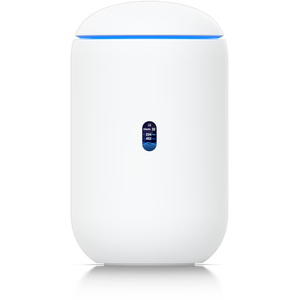

9/10
- Brand
-
Unifi
- Range
-
1,750 square feet
- Wi-Fi Bands
-
2.4/5/6GHz
- Ethernet Ports
-
4 2.5G
Modern systems (from brands like Ubiquiti’s UniFi, TP-Link Omada, or even some advanced Netgear and Asus routers) have turned VLANs into a visual drag-and-drop or simple drop-down menu experience. The interface phrases it in plain English often without mentioning the word “VLAN” at all.
It usually looks like this:
- Step 1: Go to “Networks.”
- Step 2: Click “Create New Network.”
- Step 3: Name it “IoT Devices” and set ID.
- Step 4: Check a box that says “VLAN” or “Network Isolation.”
- Step 5: Go to Wi-Fi settings, create a new SSID, and assign it the network ID.
That’s all you need to setup a functional VLAN. The router’s operating system will do all the heavy lifting, assigning tags, writing firewall rules, and segmenting traffic.
Why this isn’t just a “techie” obsession
Security is already about boundaries
We need to reframe how we talk about network security at home. We don’t consider locking our front doors “a complicated hobby for locksmiths.” We consider basic adulting and network segregation to be the digital equivalent of locking your bedroom door even when your front door is locked.
Most consumer IoT devices have significant security problems and are common targets for attacks. Once compromised, they often end up as part of botnets used for DDoS attacks, spam distribution, or cryptocurrency mining. You may have seen stories about smart fridges, cameras, or washing machines suddenly consuming hundreds of gigabytes of internet traffic, which is often the result of malware or botnet activity rather than normal operation.

I’ll never connect my fridge to Wi-Fi
You shall not get my Wi-Fi password
Cheap IoT devices are subsidized by your data, built with the cheapest possible components, running truncated versions of Linux that haven’t seen a security patch since they left the factory floor. Welcoming them onto your main network without a VLAN is the equivalent of letting a suspicious stranger sleep on your couch just because they knocked on the door.
Security that does not depend on user attention
Unlike traditional security software that depends on constant updates, alerts, and background scanning, VLANs reduce risk by changing how devices are allowed to communicate in the first place.
One of the most practical things about VLANs is that they require very little ongoing maintenance once configured properly. They are not like antivirus software constantly demanding updates or throwing pop-ups in your face. Once the SSIDs are created and devices are assigned to their appropriate isolated networks, the protection becomes part of the network’s structure itself, which is why VLAN is one of the simplest ways to introduce real isolation into a home network without changing how most devices are actually used.

6 Networking Uses for the Linux nc Command
It has more in its arsenal than you think.