Strikes From Two Eocene Asteroids May Not Have Changed Earth’s Climate Long Term


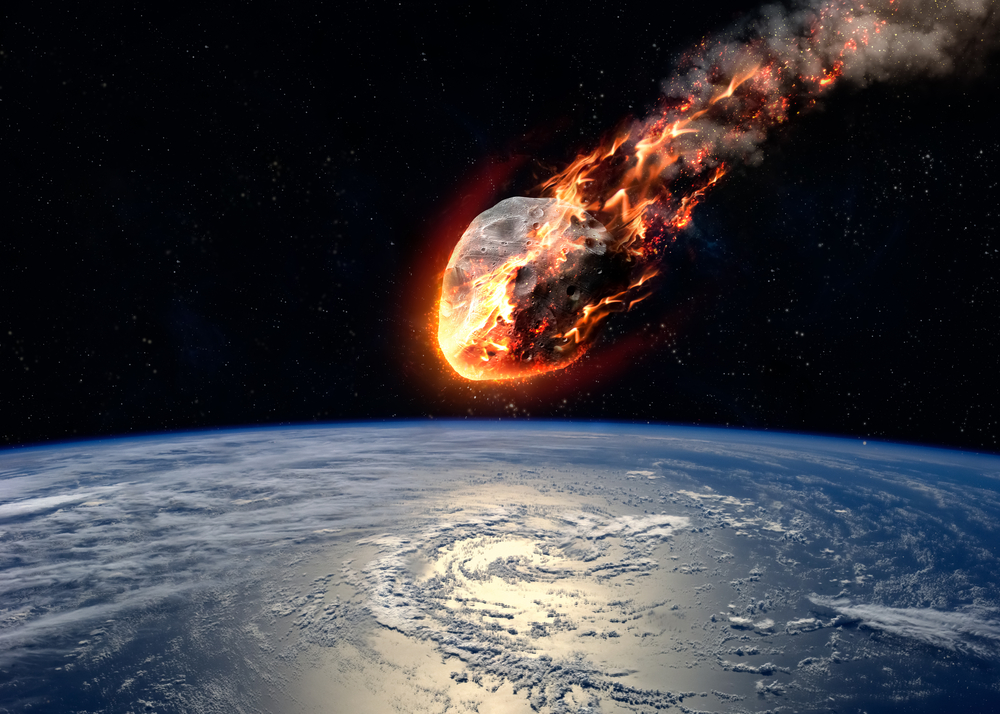
Throughout the history of the earth, the planet was struck by several asteroids, certain so large, such as the climate of chicxulub, that the earth’s climate was modified to the point of a mass extinction event.
However, after having analyzed tiny fossilized sea creatures, a recent study Earth & Environment Communications have found that two massive asteroids strike about 35.65 million years ago did not cause change in the long -term land climate.
Create major craters
Image of the microscope of silica, or microspherules, found in the rock. (Image credit: Natalie Cheng / Bridget Wade)
For this study, a research team from the University College London (UCL) examined the impacts of two main asteroids at the end of the Eocene era (about 33 to 33 million years ago).
One created a crater 25 to 55 miles wide in the bay of Chesapeake, the fifth largest crater on the earth. The other created the Popigai crater 60 miles wide in Siberia, Russia – the fourth largest on earth.
According to the study, the asteroid of the Popigai crater was approximately 3 to 5 miles wide – perhaps the size of Mount Everest – while the other asteroid was approximately 2 to 3 miles wide. In comparison, the chicxulub factor had a width of about 6 miles.
Asteroids have probably struck the earth to around 25,000 years and have not caused waves of sustainable environmental changes.
Learn more:: A meteorite that struck Scotland a billion years ago changed life on Earth
Indices in fossils
(Credit: Natalie Cheng / Bridget Wade) Image of the silica droplets microscope, or microspherules, found in the rock, this time cropped to be a landscape image and with an ordinary black background.
To determine the impact that these asteroids had on the climate at the time, the research team analyzed the isotopes of carbon and oxygen in small fossilized dissected creatures called foraminifera.
The research team compared two types of foraminifera, one from the bottom of the ocean – benthic foraminifera – and the one who lived closer to the surface – Planktonic foraminifeon. The deep sea drilling project revealed that fossils from 3.5 to 3.9 million dollars in the Gulf of Mexico during a excavation.
Thanks to the 1,500 samples, the researchers determined the temperature of the ocean during their lifetime.
“What is remarkable about our results is that there was no real change after the impacts. We expected the isotopes to move in one direction or another, indicating warmer or cooler waters, but that did not happen. press release.
“However, our study would not have recovered short -term changes on tens or hundreds of years, because samples were every 11,000 years. On a human time scale, these asteroid impacts would be a disaster. They would create a wave of massive shock and tsunami, there would be general lights and a large amount of dust Sun, “continued in a press version.
The impacts of chicxulub asteroids on the climate of the earth would have had a 25 -year time scale.
Smaller asteroid impacts
According to the research team, during the study, they also found evidence of other smaller asteroids striking the earth at the end of the Eocene. Some asteroids seemed to have struck in the form of “thousands of tiny glass droplets or silica”. The silica is probably sprayed from the heat of the asteroid, then formed in solid droplets and fell back on earth.
“Since the impact of chicxulub probably led to a major extinction event, we were curious to determine whether what appeared as a series of important asteroid impacts during the Eocene also caused lasting climate change. We were surprised to discover that there were no significant climatic answers to these impacts,” said Natalie Cheng, Geosciences and a co-authority of the study.
“It was fascinating to read the history of the earth climate from chemistry kept in microfossil. It was particularly interesting to work with our selection of foraminifera species and discover beautiful microspherules specimens along the way, “said Cheng.
This article is a republished version of this Article published previously here.
Find out more: A Hydrothermal system may have helped life after a chicxulub impactor
Article Sources
Our writers at Discovermagazine.com Use studies evaluated by high -quality peers and sources for our articles, and our publishers examine scientific precision and editorial standards. Review the sources used below for this article:
A graduate of Uw-Whitewater, Monica Cull wrote for several organizations, including a focus on bees and the natural world, before coming to Discover Magazine. His current work also appears on his travel blog and his Common State magazine. His love of science came to watch PBS shows like a child with his mother and spend too much time at Binging Doctor who.


