Suddenly obsessed with space after Artemis II? Here are some exciting events to watch out for.

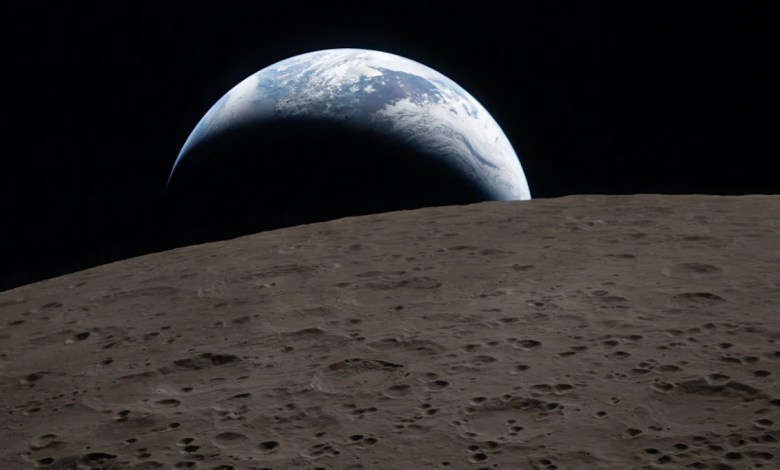
The Artemis II mission was inspiring, moving, sometimes funny, and, most of all, it reminded us how magical space exploration can be. As joyous as it was to see the crew land safely in the Pacific Ocean last week, it was soon followed by the sad realization that their record-breaking voyage had come to an end.
But that doesn’t mean there’s nothing exciting about space.
In fact, we are in the midst of an extraordinary period of interplanetary progress that will redefine humanity’s relationship with the solar system.
These are some of the main reasons to keep your eyes glued to the skies for the near future.
What’s next for Artemis?
Although revolutionary and inspiring in its own right, Artemis II was a test flight. Its primary goal was to allow NASA to test the systems it would need to pursue much more ambitious goals: putting humans back on the Moon and, ultimately, Mars. The astronauts will tell us more about their experience during their first press conference since returning to Earth on Thursday. One of the things they’re sure to discuss is how their mission set the stage for the next one — and all the missions that follow.
Artemis III, scheduled to launch in mid-2027, was originally planned to be the mission that would return astronauts to the lunar surface, but NASA changed its plans earlier this year. Artemis III’s new mission will be to connect the Orion spacecraft to the lunar landing system it will need to land safely on the moon’s surface, and Artemis IV will land on the moon.
Two companies, Elon Musk’s SpaceX and Jeff Bezos’ Blue Origin, are developing their own lunar landers in a multibillion-dollar competition to be the one to put NASA astronauts back on the Moon. Currently, NASA plans to test “one or both” of the company’s landers during the Artemis III mission.
Assuming all goes well, NASA plans to launch Artemis IV on its return mission to the Moon in early 2028. Artemis V is also expected to travel to the Moon later in the year. The agency hopes these missions will serve as a springboard for sending humans to Mars in the 2030s.
More Moon exploration

Blue Ghost lunar lander.
NASA is not the only space agency planning to explore the Moon. China has launched a series of increasingly ambitious missions over the past decade under its Chang’e program, named after the Chinese moon goddess. Its next mission, Chang’e 7, is scheduled for the second half of this year. It will take four separate spacecraft – an orbiter, a lander, a “jumping” probe and a rover – to conduct the first ground search for water (in the form of ice) on the Moon. China has set a goal of sending its own astronauts to the Moon by 2030. If they succeed, they will be the first non-Americans to walk on the lunar surface in history.
Several private companies have also set their sights on the Moon, vying to become NASA’s partner in its future lunar missions. More than a dozen companies are developing spacecraft that could one day deliver supplies, scientific tools and technology to NASA astronauts on the Moon. Blue Ghost, a lunar lander from Texas-based Firefly Aerospace, became the first commercial spacecraft to successfully land on the Moon early last year. At least four more similar launches are planned before the end of 2026, including a second Blue Ghost landing.
Visits to other planets

A spacecraft exploring the Martian Moons.
Humanity is still several years away from traveling in person to another planet, but robots are now capable of making these journeys. For example, the Japanese space agency plans to launch a probe later this year that will land on Phobos, the larger of the two moons orbiting Mars. The probe will collect samples from the surface before returning to Earth. If successful, it will be the first time that material from the Martian satellite has been brought back to our planet.
Another probe developed by the company Rocket Lab and a team from the Massachusetts Institute of Technology should be launched this summer and will head to Venus. The Venus Life Finder will send instruments into Venus’ toxic atmosphere to search for signs of organic molecules, which could be signs of life.
Later this year, the BepiColombo space probe is expected to finally settle into Mercury’s orbit, ending its eight-year journey through the inner solar system. Once it arrives, the probe will split into two orbiters that will send back data to shed new light on one of Earth’s least understood neighbors.
Encounter meteors

Hera and her asteroid target.
A Chinese probe is currently heading toward a small asteroid orbiting Earth, known as a quasi-moon, and hopes to get there this summer. Like Japan’s Mars probe, the Chinese spacecraft will send samples to Earth to help scientists better understand the asteroid, which is believed to be a piece of our moon that was torn off by some sort of lunar impact.
Then, around November, a European Space Agency probe will reach the asteroid Dimorphos to study the consequences of humanity’s first-ever attempt to alter the trajectory of an object in space.
Dimorphos was struck by a NASA spacecraft in 2022 while testing a new planetary defense strategy that could one day theoretically redirect an asteroid that poses a major threat to Earth. The new probe will provide data on the results of this test, which changed Dimorphos’ trajectory by more than 25 times compared to the minimum required.
All-new views of the galaxy

Two powerful new telescopes are expected to offer unprecedented views of the cosmos within about a year. One of them is the Chinese space agency’s Xuntian telescope, currently scheduled for launch in late 2026. With a field of view 350 times wider than that of the Hubble Space Telescope, Xuntian will be able to image up to 40% of the sky over 10 years.
NASA plans to launch its own telescope by May 2027. The Nancy Grace Roman Space Telescope, named for the agency’s first chief astronomer, is designed to provide new insights into some of space’s greatest mysteries, including the nature of dark matter and critical questions about astrophysics.


