Supreme Court allows Trump’s cuts to NIH grants over DEI policies


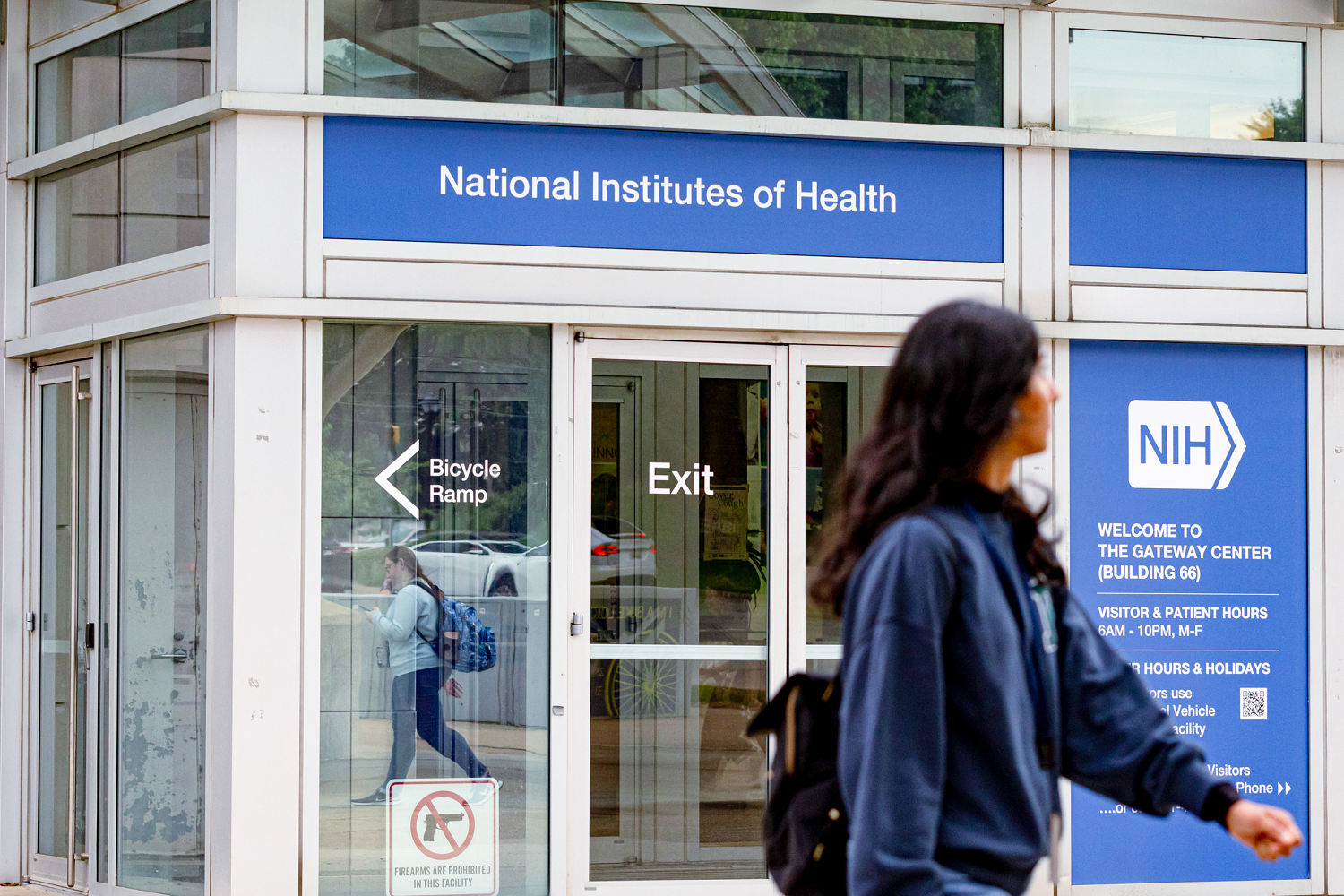
Washington – The Supreme Court granted the Trump Administration’s major reductions on Thursday to the National Institutes of Health Grants as part of the Federal Government campaign against diversity, actions and inclusion policies.
But in a mixed decision, the court left a different party in place of the decision of the judge of the lower court which rejected the administration’s orientation document which introduced the policy, which raises if it can be applied in the future.
The judges, on a 5-4 vote, partly granted an emergency request filed by the administration aimed at suspending a decision of the federal judge based in Massachusetts.
The court did not fully explain its reasoning, but the majority said that the groups seeking to challenge the financing reductions must bring separate proceedings in a different federal place – the court of federal complaints.
Conservative judge Amy Creey Barrett was the decisive vote in the preparation of the decision. Four judges, all the conservatives, said that they would have granted the Trump administration in full, while four others – the conservative judge John Roberts and the three Liberals of the Court – would have denied it in full.
“As ordered today’s order, the district court probably lacked competence to hear the challenges of dismissals, which belong to the court of federal complaints,” wrote Barrett in a competing opinion. But, she added, “the government is not entitled to a suspension of judgments insofar as they leave the orientation documents”.
The National Institutes of Health is a collection of agencies in the Ministry of Health and Social Services which receives billions of dollars from Congress to finance medical research in universities, hospitals and other institutions.
The Attorney General of Massachusetts, one of the more than a dozen states that challenged the research financing cuts, described the decision of the Supreme Court as “evil and deeply disappointing”.
“Even if the court did not dispute that the Trump administration’s decision to reduce critical medical and public health research is illegal, they ordered beneficiaries of this funding – hospitals, researchers and the state – to skip more hoops to recover it. All the time, our research institutions, our savings and residents who depend on this medical research said,” Massachuset Andreaa Joy Campbell said in a statement. “
When President Donald Trump returned to functions in January, he promised to end the so-called diversity, equity and inclusion, or Dei, saying that rather than promoting equality as expected, they are a form of discrimination, mainly against whites. He also targeted policies recognizing transgender rights, including access to gender transition.
The NIH then examined subsidies and determined that more than 1,700 of them did not comply with Trump guidelines and finished them, including studies on HIV prevention and gender identity among adolescents.
Sixteen states, led by Massachusetts and the American Public Health Association, among others, challenged this decision.
After a trial, the American district judge William Young, in the Massachusetts, judged that the government had not followed the correct legal processes in the implementation of the policy, in violation of a law called the law on administrative procedure.
By rushing to implement Trump’s agenda, the NIH “simply moved too quickly and broke things, including the law,” wrote Young.
He also said that Dei was “an indefinite enemy”, noting that government lawyers had not been able to explain exactly what it meant.
Young found that there was “omnipresent racial discrimination” and “in -depth discrimination” against gay, lesbians and transgender people in the way the subsidies were selected for the dismissal. He also found “an unmistakable discrimination model with regard to women’s health problems”.
Young refused to suspend its decision, as is the 1st Court of Appeals circuit, based in Boston, which also maintained intact subsidies.
By asking the Supreme Court to intervene on behalf of the Trump administration, the Solicitor General D. John Sauer argued that the case was similar to another which appeared in the Massachusetts in which a judge blocked the Trump administration plans to end the teacher training subsidies for anti-dei reasons.
The Supreme Court in April blocked this decision on a vote of 5-4.
“This request presents a particularly clear case for this court to intervene and prevents the wandering district courts from continuing to ignore the decisions of this court,” Sauer wrote.
States lawyers have pushed Sauer’s account, claiming that it “hardly resembles reality”, with the power of Young, an example of a “mill” of a court intervening when the government violates the law.
The judges disagreed on Thursday to find out if the April decision paid the result in the last case.
In short notice, Roberts, who dissipated in the previous case, said that it was different, with the conclusions of Young “well within the framework of the jurisdiction of the district court”.
But conservative judge Neil Gorsuch, his own separate opinion, criticized Young for having failed to respect the decision of April.
“The judges of the lower courts can sometimes disagree with the decisions of this court, but they are never free to challenge them,” he wrote.
The Trump administration has regularly turned to the Supreme Court when its broad use of executive power is disputed in court, and it has prevailed in the majority of cases. Trump and his allies also harshly criticized the judges who governed against him.


