Swooping and Pooping: These Seabirds Only Defecate in Mid-Air and it’s Helping the Ocean


The poop is a large company in the open ocean. It is a vital source of nutrients for many aquatic plants, and helps to kidnap large amounts of atmosphere. But studying poop and poop behavior in the ocean is not easy.
Fortunately for us, then that Japanese researchers reviewed almost 36 hours of video sequences to determine how a common sea bird is.
How sea birds poop at the rate
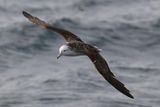
In a new study published in Current biologyA team from the University of Tokyo has joined video cameras in the belly of 15 striated shearwaters (Calonier Leucomelas), sea birds that live in the peaceful ocean, to monitor their defecation practices.
The team found that birds have a tight routine: they poop at least once every 10 minutes and almost never floating on the water. The team suspects that this regular behavior maintains the feathers of clean sea birds, while acting as a fertilizer useful for the ocean below.
Leo Uesaka, a researcher in an atmosphere and oceanic at the University of Tokyo and co-study co-author, had the intention of becoming a full-time videographer of birds of birds. Instead, he wanted to record how the striated sharewater takes off from the surface of the ocean.
“Striped shearwaters have very long and narrow wings, good for slipping, not beating,” Uesaka said in a press release.
This physiology means that birds must spend a lot of energy to take off. Despite this, Uesaka noticed that birds would sometimes take off for less than a minute. When they did it, they defecated and then returned to the sea. He also observed that the flying birds were defined regularly, now a pace of defecation every four to 10 minutes, whatever they had eaten.
“I thought it was funny at first, but it turned out to be more interesting and important for marine ecology,” said Uesaka.
Learn more: Ants are poop and they even use toilets to fertilize their own gardens
Study the bird’s poop
Uesaka recorded hours of sequences from the striated shearwaters and noted 195 excretion events at an average rate of 5.2 in hour. Only one of them occurred while the bird was floating.
“This means that the risk of excreting on the surface of the sea prevails over efforts to take off. There must be a strong reason behind this,” said Uesaka.
They have theorized that airborne defecation helps keep the feathers of the birds clean, allows them to avoid predators attracted by the smell of poop, such as sharks or seals, or could facilitate the thrust of the excrement.
Regular poop helps the ocean
Although the exact reason why the poop of shearwaters in the sky is not clear, Uesaka’s research has shown that it is probably an essential contributor to the ocean ecosystem. The size and regularity of bird faeces mean that they excrete by 30 grams every hour – about 5% of their total body mass.
There are approximately 424 million members of ProcellarThe biological taxon which includes shearwaters. This means that these ocean birds cacent six TitanicThe value of the excrement in the ocean every day.
Previous research has shown how the excrement of sea birds fertilize coastal land and water with their high nitrogen and phosphorus content. But the shearwaters are pelagic, which means that they spend most of their lives on the open ocean. Although their poop is likely to be an essential contributor to plankton and other marine creatures eaten fecal materials far from the shore, it is only by a detailed analysis of the way in which the birds defender that we can calculate the importance of this contribution.
Uesaka wants to deepen its research using GPS cameras to build a seagull poop card through the ocean to fully map the way in which the excrement fertilizes our waters.
“The excrement is important,” he summed up. “But people don’t really think about it.”
Learn more: Ocean Gardeners: Why the shit of whales counts more than ever
Sources of articles
Our Discovermagazine.com writers use studies evaluated by high -quality peers and sources for our articles, and our publishers examine scientific precision and editorial standards. Review the sources used below for this article:


