Texas food banks are rationing meals for flood survivors because of Trump’s cuts


Early in the morning of July 4, while torrential rains beat the center of Texas, the dangers of sudden floods became imminent. In Kerr County, the Guadalupe river increased by 26 feet in 45 minutes, resulting in the death of 106 people. While the catastrophic flood was swept away in the region, the number of deaths climbed at least 132.
Later in the day, President Donald Trump signed the Big Beautiful Bill law. The law has emptied public safety and health care safety nets, including the additional nutrition aid program and Medicaid, while codifying massive tax alternatives for richer individuals and large companies. Devastation in Texas has therefore become the first major catastrophe to expose the serious effects of Trump’s in -depth disinvesting of resilience to disasters – and new food and hunger policies of its administration.
Charitable groups such as food banks and pantry are generally used as front-line distributors in food and water in the event of a crisis, working in tandem with other national and global rescue organizations and government agencies. Now, however, due to the policy and funding decisions adopted by the Trump administration in the past six months, the main food banks that meet the needs of residents of the Texas center have less food to distribute.
Towards the start of Trump’s second term of the second term, the Ministry of Agriculture has stopped the flow of part of the money that pays for product deliveries such as meats, eggs and vegetables called “bonus products” through the emergency food aid program, or tefap, to charitable organizations such as food banks. TEFAP is one of the main ways in which states and federal governments have assured that foods reach communities in need as a result of climate -powered disasters such as a hurricane or a heat wave.
In March, the USDA also decided to put an end to future financing cycles for the local program of cooperation agreement for the purchase of food purchase and the local program of the cooperation agreement for food for schools. These two programs, which are also designed to support emergency food providers such as food banks, were to distribute more than a billion dollars this exercise to states, tribes and territories.
In April, the financing cuts led the Central Texas Food Bank to cancel 39 food charges – the equivalent of 716,000 meals – which should be delivered until September, said Beth Corbett, vice -president of business and advocacy of the organization. The state of Texas has lost more than $ 107 million for programs that have enabled food banks and schools to buy food locally due to administration financing cuts, Monitor Austin and Kut reported. San Antonio Food Bank has also suffered similar losses to its inventory.
The president and chief executive officer of San Antonio Food Bank, Eric Cooper, told Grist that he was consumed by not being able to meet the emergency food demand caused by the tragedy of floods in center of Texas.
“Before this catastrophe, we simply do not have the volume of food in our warehouse that we must have,” said Cooper, noting that they “find it difficult to follow” the demand intensified by the deluge. “We had to try to pivot a little to ration part of what we have through the population we serve so that we can stretch [our supply]”, He added.” Usda cuts have made maintenance more difficult. The flood will make things even more difficult. The pending sections seem impossible. »»

Disaster 101: Your guide for the preparation, relief and recovery of extreme weather conditions
More than a week after the floods, more than 160 people remain unaffected and, on Sunday, another series of heavy rains has interrupted certain rescue efforts. The food bank, which has pantry and distribution sites in 29 Texan counties, now acts as the central community anti-handling center at the service of some of the hardest affected expanses of Hill Country. Throughout last week, the bank distributed more than 160,000 pounds of food relief to households in affected counties – a fusion of heated meals and ready to eat, grocery, water pallets and snacks, which assimilates about $ 300,000 in value and offers up to 120,000 meals. During the upcoming recovery period, they expect to distribute around 40,000 pounds of food each day, a quantity that feeds between 300 and 500 families.
According to Cooper, this volume is much more than the bank which distributes normally. They already see a 10% increase in demand – a rapid increase in the space of just over a week. “We do what we can make sure that people are not hungry, but it was difficult,” he said. The biggest problem they show up, he noted, is how federal funding cuts have obstructed their ability to fully respond.
“I feel like the parent whose child asked for what was for dinner tonight, and not knowing, unable to confirm completely, that I have it.”
With more than 5 million residents facing food insecurity, 17.6% of the total state population, Texas lead the rest of the nation in hunger rates. The region struck by floods is no exception. Among the six counties of Hill Country most seriously affected by the floods are the county of Tom Green, which houses around 120,000 inhabitants. The preliminary estimates of the food for America show that, depending on the location trends and new people registering for the distributions of the San Antonio Food Bank, around 1,872 people in the region now run a risk of hunger due to the expected economic impacts of the floods. About 20,080 residents living in Tom Green already confront food insecurity – almost 17% of the population.
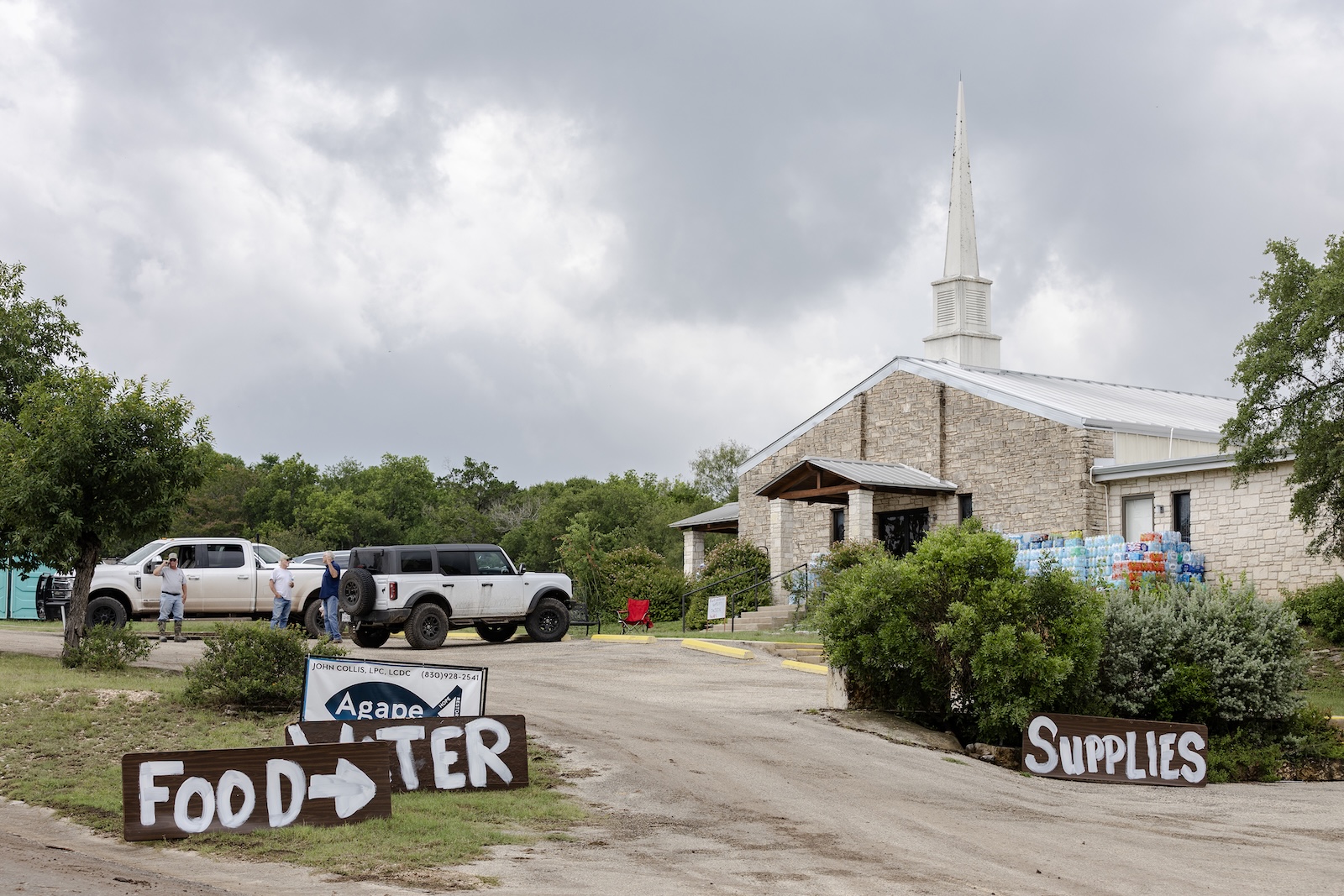
Jim vondruska / getty images
But most of the destruction caused by the floods was observed in the county of neighboring Kerr, where around 9,310 people are already struggling with food insecurity, according to the latest public Feeding America. With a total population of more than 53,000 people, the cities found in this Texas rural belt of the South Center include places like Hunt, a community not made up of society on the Guadalupe river, with a permanent population which is around 1,300. About 876 residents of Hunt – more than half – are now confronted with a risk of deeper food insecurity due to the FEEDING America shared with Grist.
Hunger is generally intensified in disaster areas due to the lasting economic repercussions of an extreme meteorological event. Poverty rates – and problems with food access – an increase in areas considerably affected by floods and storms, because many Americans are less able to afford the assembly costs necessary to prepare for a disaster or recover damage they cause.
Last week, the USDA issued floods related to households already registered with Snap but not yet announced wider food aid through programs such as D-SNAP, or additional nutritional aid program in the event of a disaster. In places delighted by floods like Hunt, humanitarian organizations intervene to provide assistance where the government is not.
The World Central Kitchen has set up its main distribution site in Hunt. Their team of ten people in the field has given more than 12,100 meals across Hill Country and began to coordinate with local food banks to assess their longer -term resource needs.
“There is an influx of aid here because of this national tragedy,” said Samantha Elfmont, who directs global food emergency operations for World Central Kitchen. “We are now in this period of” How do we support the community much longer than July? ” »»
The last series of torrential precipitation complicated these efforts: during the weekend, the hunting site was flooded, they therefore also work to evacuate the team and the food truck.
It is important to obtain a hot meal for people in shock from floods not only for the physical recovery of a disaster, but also for the process of emotional recovery, said Elfmont. “People often think about health and shelter,” she said, but “emergency food helps people cross trauma.”
Grist has a complete guide to help you stay ready and informed before, during and after a disaster.


