The fight over science funding: Congress vs. the OMB


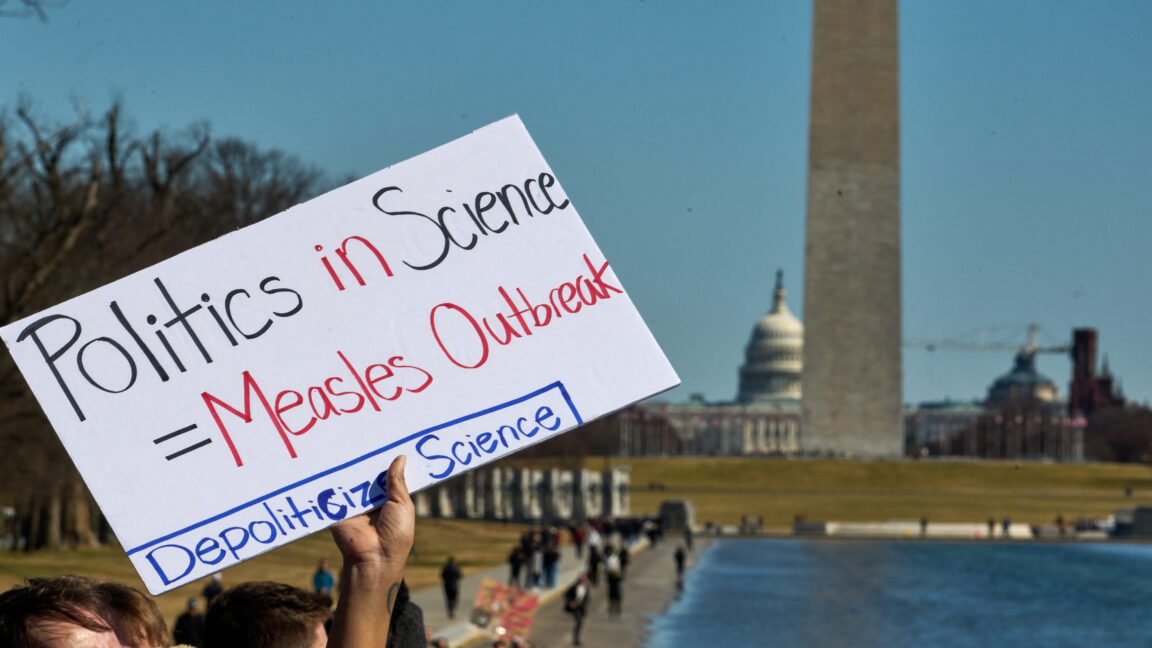
The 2025 project document has described additional ideas, such as eliminating scientific research to EPA, something that has since produced. He also suggests that the search for climate change solutions is part of a “partisan political program”. Thus, its hostility to scientific results has spread far beyond the biomedical fields.
But what about the congress?
It is prudent to conclude that this faction, which now directs the government, considers science and scientists as ideological opponents and actively seeks to reduce their number, both by putting current subsidies and eliminating the financing of educational programs.
What had been less clear was if the congress had adopted a similar perspective. In the past, the financing of science had benefited from large bipartite support. Even in cases where the Republican presidents have tried to reduce research for budgetary reasons, the Republicans in the Congress did not go, in many cases, joining the Democrats to provide scientific agencies budgetary increases.
However, this seemed to be ended this spring with the passage of Trump’s budgetary plan in 2026 by congress with almost uniform republican support. This passage made the massive cuts of science proposed by Trump the official policy of the United States, which seemed to indicate that the era of Bipartisan support was over.
But the American budget process is somewhat eccentric, involving two stages: the first is the passage of a budget which presents the plans to spend money, and the second is the real appropriation of the funds. And, while the Republicans voted according to the parties of the parties to support Trump’s priorities in what was called the major bill, the Senate, during the credits process, behaved as if it were back to the Bipartite era, the committees choosing to finance scientific agencies at levels similar to the 2025 budget adopted under Biden.
Upcoming fights
The new independence of the congress with regard to science comes with some warnings. The first is that these credits voted above all took place in votes of smaller committees, rather than before the complete Senate. This support may be withered when votes with higher profiles will take place. Although these specific financing choices would probably receive generalized democratic support in the closely divided Senate, there is a good chance that these will be grouped other budgetary priorities which limit or eliminate the will of the Democrats to continue. And then there is the question of whether this bipartite extends to the house, where the shorter terms in power have tended to lead to a room with a much greater population of radicals.


.jpg.png?w=390&resize=390,220&ssl=1 "Your Weekly Horoscope: October 12 to October 18, 2025")