The Hantavirus Is Also a Climate Warning


Environment
/
May 14, 2026
Higher temperatures, like next summer, lead to more infectious diseases.
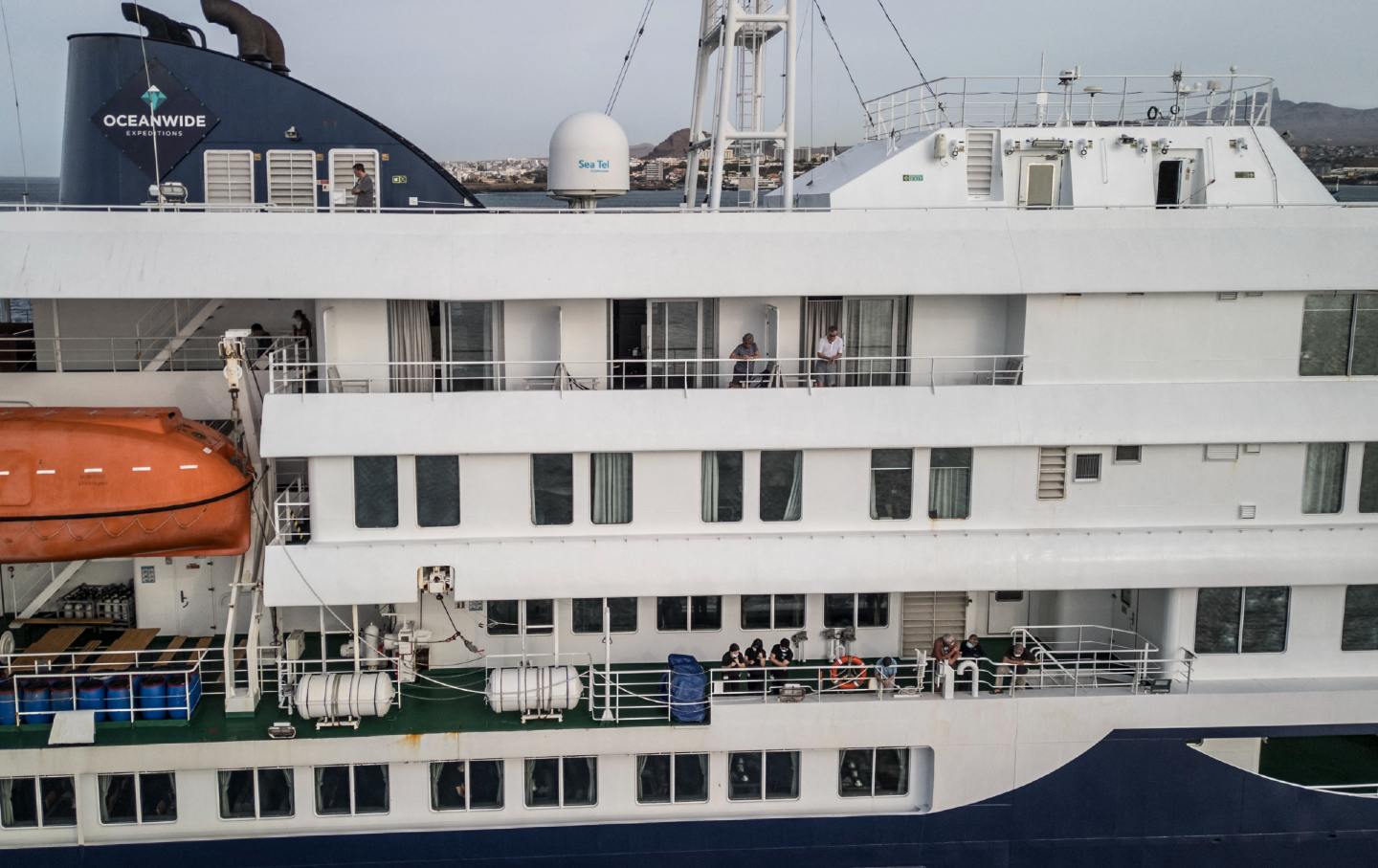
Passengers watch as invisible healthcare workers help patients onto a boat from the MV cruise ship. Hondiuswhile stationary off the port of Praia, the capital of Cape Verde, on May 6, 2026. Evacuations were taking place due to a deadly hantavirus outbreak.
(AFP via Getty Images)
Signs now indicate that hantavirus is not the next pandemic. But with 2026 expected to be the hottest year on record, the hantavirus outbreak is a warning of what public health experts have long said: A hotter planet is a deadlier planet.
Rising global temperatures and the consequences they cause (more intense heat waves, more violent storms and the wider spread of infectious diseases) endanger human health in multiple ways. The world’s largest medical societies have been sounding the alarm since 2009, when the journal The Lancet has called climate change “the greatest global health threat of the 21st century.” The LancetThe 2025 report reveals that climate change is responsible for “millions of unnecessary deaths per year”, with excessive heat alone killing 546,000 people.
The Associated Press and CNN appear to be the first major news outlets to make a climate connection to the hantavirus outbreak on a cruise ship that left Argentina on April 1. CNN reported that hantavirus has long been present in the far south of South America, but its frequency has recently increased in Argentina, where cases “nearly doubled over the past year, with the country recording 32 deaths along with its highest number of infections since 2018,” according to Argentina’s Health Ministry. Citing local public health researchers, the AP reported that “higher temperatures expand the virus’s reach because … rodents carrying hantavirus can thrive in more places.” A historic drought that drove animals out of their normal habitats in search of food was followed by intense rains. “When precipitation increases, food availability increases, rodent populations increase and … the risk of transmission between rodents — and eventually to humans — also increases,” Raul González Ittig, a researcher at state scientific body CONICET, told the AP.
Three cruise ship passengers died from hantavirus and nine contracted the virus. The World Health Organization has stressed that the risk to the general public is very low and that there is no danger of a pandemic similar to the Covid-19 contagion that shook the world in 2020.
The link between hantavirus and climate change remains far from definitive; Further research is needed to determine the significance of the role that climate change has played in this particular outbreak. Journalists can help by reporting on this research as it unfolds and asking public officials what steps they are taking to keep communities informed and safe.
Current number

Journalists can also alert our audiences to a broader warning that scientists have long been sounding. As recently explained by Journal of the American Medical AssociationHigher temperatures allow mosquitoes, ticks and rodents carrying infectious diseases to spread into previously inhospitable areas, increasing the threat to humans from malaria, cholera, Lyme disease and other diseases.
Higher temperatures are exactly what the coming months will bring to much of the Northern Hemisphere. This year is expected to be the hottest in history, thanks to an El Niño phenomenon that is raising global temperatures, already amplified by climate change. In addition to directly threatening human health, this heat will also make droughts and wildfires more likely.
Too often, media coverage of extreme weather disasters has been silent on the role of climate change; for example, most reporting on the megafires that ravaged Los Angeles in 2025 focused on the roaring flames but ignored what helped spark them in the first place. CCNow’s recent white paper on the state of climate journalism praised AP and CNN for their sustained commitment to climate coverage at a time when “climate silence” has plagued many other news organizations, particularly in the United States. This commitment is what allows the AP and CNN to see the climate connection to breaking news like hantavirus and inform their audiences accordingly. As hotter and more extreme weather faces much of the world in the coming months, these articles from AP and CNN offer an exemplary model for how all journalism can improve.
From the illegal war against Iran to the inhumane fuel blockade against Cuba, from AI weapons to crypto corruption, we live in a time of staggering chaos, cruelty and violence.
Unlike other publications that reproduce the opinions of authoritarians, billionaires and corporations, The Nation publishes stories that hold the powerful accountable and center communities too often denied voice in national media – stories like the one you just read.
Every day, our journalism weeds out lies and distortions, contextualizes developments that are reshaping politics around the world, and advances progressive ideas that fuel our movements and incite change in the halls of power.
This independent journalism is only possible with the support of our readers. If you would like more urgent coverage like this, please donate to The Nation Today.


