America’s national parks have never been more popular, and summer 2026 is shaping up to be the most chaotic in years. The National Park Service reported a record-breaking 331.9 million visitors in 2024. Now, a major policy shift is pouring fuel on the fire. The U.S. Department of the Interior has lifted timed-entry reservation requirements at three of the country’s most congested destinations: Yosemite, Arches, and Glacier National Parks, effective immediately and through the peak summer season.
Conservation groups are sounding the alarm. The National Parks Conservation Association warned that without any constraints in place, visitors to Arches can expect traffic jams, packed parking lots, and crowded trails. Officials say the change prioritizes accessibility, but many outdoor advocates say it simply trades one problem for another.
If you were already thinking twice about fighting the crowds this summer, here is a look at the parks most likely to test your patience, paired with better alternatives that deliver the same scenery and a fraction of the stress.
1. Yosemite National Park

Yosemite National Park, California, USA – June 26, 2021: Crowds of people in Yosemite National Park Lower Fall Trail.
(David Rodríguez Sánchez via Getty Images)
Yosemite is one of the great natural wonders of the world, but visiting in peak summer without a reservation system is a different experience entirely. The park drew nearly 3 million visitors in summer 2025, and in 2026 it will no longer offer the advance reservations that helped manage those crowds. During a previous period when the system was suspended, visitors reported spending more than two hours in car lines just to reach the entrance. The park is promising extra staff and traffic diversions, but the math is the same: more people, same roads, same parking lots.
Visit instead: Devils Postpile National Monument

Exposed lava tubes which make up the infamous Devil’s Postpile
(Robert Gillespie via Getty Images)
About 90 minutes from Yosemite, Devils Postpile offers pristine Sierra Nevada scenery, the 101-foot Rainbow Falls, and a rare geological formation of columnar basalt. You get the granite peaks, pines, and mountain air without the gridlock. It is one of the most underrated stops in California and rarely crowded even at peak times.
2. Arches National Park

Arches National Park, Utah – People walking on one of the footpaths within Arches National Park.
(georgeclerk via Getty Images)
Arches draws more than 1.5 million visitors annually and holds the record for the highest concentration of natural stone arches on Earth. Timed-entry reservations that helped control those numbers in 2025 are now gone. Park officials suggest visiting after dark to take advantage of its International Dark Sky certification, which is genuinely great advice if you happen to be traveling without kids on a flexible schedule. For most families planning a daytime summer road trip through Utah, it is not a realistic option.
Visit instead: Natural Bridges National Monument

Escalante Natural Bridge, Escalante River Canyon, Escalante, Utah, USA
(SergeYatunin via Getty Images)
Natural Bridges sits in southern Utah not far from Arches and was actually the first official Dark Sky park in the country. You will find massive stone bridges, canyon hiking, and ancient Ancestral Puebloan ruins with almost none of the congestion. A loop through Natural Bridges combined with a stop at Monument Valley makes for one of the best road trip days in the Southwest, and you will not spend half of it looking for parking.
3. Glacier National Park

“Logan Pass, Glacier National Park, USA – September 2, 2006: Vehicles and people in the crowded parking lot at the Logan Pass Visitor Center on Labor Day weekend”
(suesmith2 via Getty Images)
Glacier has been making headlines for the wrong reasons heading into 2026. The combination of surging crowds and the visible effects of climate change on its alpine ecosystem has put the park under scrutiny. The vehicle reservation system for the iconic Going-to-the-Sun Road has been eliminated, replaced by parking limits and “active management” during peak hours. Lodges book out months in advance, nearby towns spike in price all summer, and smoke from regional wildfires can push large crowds into the same narrow weather windows.
Visit instead: North Cascades National Park

Adult male hiker with red jacket on Ragged Ridge taking in the view of Upper Fisher Creek Basin. Mount Logan is in the distance. North Cascades National Park Washington
(Alan Majchrowicz via Getty Images)
North Cascades in Washington State is one of the most geologically dramatic parks in the country and consistently ranks among the least visited in the lower 48. It actually contains more glaciers than any U.S. park outside of Alaska, which means it delivers Glacier’s defining landscape without Glacier’s crowds or logistics headaches. Dense forests, turquoise rivers, and rugged peaks await, and you are unlikely to share the trail with more than a handful of people.
4. Great Smoky Mountains National Park

Gatlinburg, Tennessee, USA – October 2, 2025:Busy main street in the downtown district.
(Dee via Getty Images)
Free to enter and centrally located on the East Coast, the Smokies pull more annual visitors than any other national park in the country. Traffic along Newfound Gap and the Cades Cove loop can grind to a complete stop for hours, and autumn weekends are in a category of their own. The gateway towns of Gatlinburg and Pigeon Forge, while fun in their own right, add noise and expense just outside the park boundary. Wildflower season and misty mornings are genuinely beautiful here, but by mid-morning on a summer Saturday the experience tilts heavily toward brake lights and crowd management.
Visit instead: Cumberland Gap National Historical Park

View from Pinnacle Overlook and the Kentucky Mountains, 25E in the Background
(JillLang via Getty Images)
Cumberland Gap sits at the junction of Kentucky, Virginia, and Tennessee and offers the same forested Appalachian scenery the Smokies are known for, with almost none of the traffic. The Pinnacle Overlook delivers sweeping three-state views, Gap Cave adds an underground adventure, and the park is pet friendly. It is an easy addition to any Southern road trip and rarely requires any advance planning to enjoy.
5. Yellowstone National Park

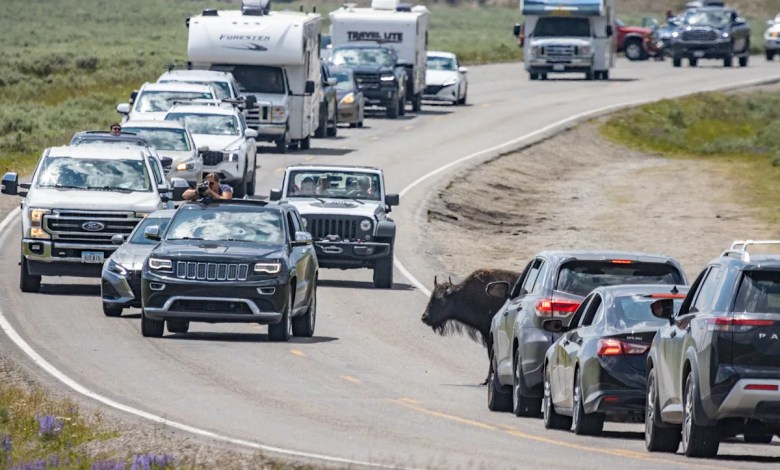
Bison Jam on Grand Loop Road in Yellowstone National Park, Wyoming, with many people visible.
(Moonstone Images via Getty Images)
Yellowstone remains one of the most extraordinary places on the planet, but summer visits require patience in amounts that not everyone has budgeted for. Boardwalks around the geyser basins feel crowded by mid-morning, parking near Old Faithful is a genuine competition, and bison jams on the main roads can cost you an hour of driving time before you have even reached your destination. Gateway towns are expensive, lodges inside the park book up a year or more in advance, and road construction projects have added further delays in recent seasons.
Visit instead: Lassen Volcanic National Park

Lassen Volcanic National Park
(BurneyImageCreator via Getty Images)
Lassen Volcanic in remote Northern California offers the same geothermal features that make Yellowstone famous: geysers, volcanoes, fumaroles, and boiling mud pots. What it does not have is the tourist infrastructure and crowds that come with Yellowstone’s fame. If you want dramatic volcanic landscapes and geyser photos without other visitors wandering into every frame, Lassen delivers. The park sees a fraction of Yellowstone’s traffic and has the added bonus of feeling genuinely remote.
Tips for Visiting Any Park This Summer
Even lesser-known parks will see increased interest as more travelers look to escape marquee destinations. A few things that will help wherever you go: arrive before 8 a.m. or after 4 p.m. when parking opens up and trail traffic thins considerably. Book campsites months in advance through Recreation.gov, as demand continues to far outpace supply at popular sites. Check current park conditions before you leave home, as weather, road closures, and fire activity can change plans quickly.
There are more than 420 units in the National Park System, and half of all visits are concentrated in just the top 25. That means most of the system is wide open. The country’s best outdoor experiences are not all behind velvet ropes, and this summer, the alternatives have never looked better.


