The post The Rise and Fall of Colombia’s Infamous “Cocaine Hippos” appeared first on A-Z Animals.
Colombia is currently between a hippo and a hard place as the region prepares to cull its most notable invasive species. Widely known as “cocaine hippos” due to their original introduction to the country by the infamous Pablo Escobar, these massive animals are causing trouble for locals and native wildlife. The hippos continue to reproduce unhindered, with populations growing beyond manageable levels. And now, the species poses significant threats to the ecosystem.
In April 2026, Colombian authorities officially approved a plan to euthanize hippos as the only realistic option for population control. However, animal rights activists are actively fighting the decision. In a nation that has seen its share of tragedy, some say this will be yet another traumatic event on a long list.
The Rise of Colombia’s “Cocaine Hippos”
Drug lord Pablo Escobar was notorious for his odd practice of importing illegal animals, one of which was the hippopotamus. In the 1980s, Escobar imported four hippos to keep at his personal zoo. They thrived at Hacienda Nápoles for more than a decade. But when Escobar died in 1993, no one was tasked with caring for the animals. As a result, they escaped and roamed the Magdalena River Valley, where they reproduced in Colombia’s favorable climate, leading to a surge in the invasive hippo population.

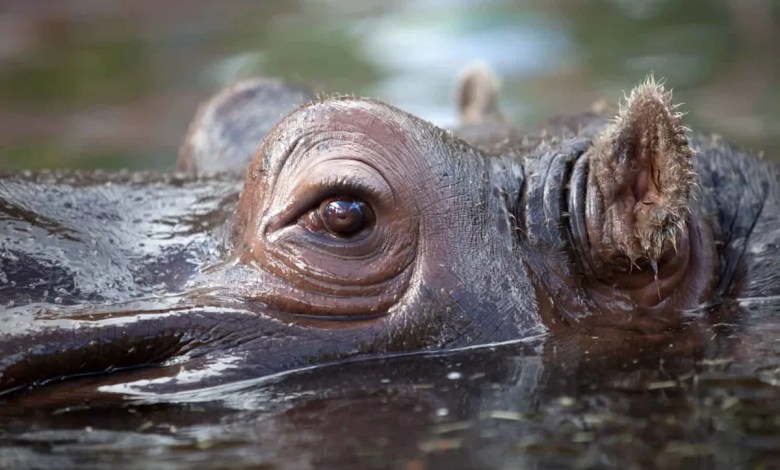
Hippos remain partially submerged, which makes them challenging to spot right away.
©Memo Ossa/Shutterstock.com
Over the last three decades, the hippos have done irreparable damage. Experts predict that, left unchecked, the invasive hippo population may soar into the thousands. To stop this from happening, Colombian wildlife experts have tried everything from contraception to zoo transfers. In a dire effort to keep the animals from reproducing in 2021, officials used darts loaded with GonaCon, a wildlife contraceptive vaccine. The problem is that three doses are necessary for effectiveness, and only a fraction of the population was treated. It seems that no matter how many hippos are left infertile or shipped off to zoos in Mexico or India, the population continues to rise. With few options left, euthanizing the animals is the only recourse available, according to officials.
The Damage Done
Hippos are not small creatures. They’re capable of causing significant damage, from trampling crop fields to disrupting ecosystem balance, and now, their numbers have grown so much that they’re a threat to other native species. For the locals, the hippos are more than a nuisance. They’ve become dangerous animals to contend with, especially in small villages. Few things can deter them from farmland, and there are even fewer ways to predict their aggression. As fields become overrun, locals also worry about defecation. Feces end up in rivers and aqueduct systems, spreading bacteria that could sicken humans.

Hippos defecating in riverways pose a major water safety issue in Colombia.
©Memo Ossa/Shutterstock.com
Since the hippos primarily inhabit rivers, locals must also be cautious when boating. For the native species inhabiting the river, the hippos become their biggest enemy. Hippos compete for food sources such as fish and can kill smaller mammals, including manatees, otters, and turtles. With no natural enemies of their own, the hippos continue to thrive. At this point, they sit at the top of an unnatural food chain in Colombia. Their population within the nation is an ironic, cruel twist of fate, as the common species is vulnerable in many other parts of the world, such as Africa. This adds another ethical layer to the proposal to euthanize.
But Is It Ethical?
Though the decision involves only euthanizing 80 of the estimated 200 hippos roaming Colombia, the government is being challenged by animal rights activists, who claim the authorized killing of any hippos is unethical. Their belief is that the current issue is a result of human negligence. As a result, the hippos themselves are innocent, with no blame for anything other than acting in their nature. The hippos have also become a tourist attraction in the villages near Hacienda Nápoles, which further compounds the issue. Some residents offer hippo tours and hippo-themed souvenirs, which supplements their income.

Animal rights activists are fighting to protect Colombia’s invasive hippo population.
©Guillermo Ossa/Shutterstock.com
Not every government official is on board with the decision, either. Senator Andrea Padilla also described the mass euthanization as cruel, saying that killings and massacres will never be acceptable. Animal rights activists supported this sentiment, stating that for a country that has already seen so much violence, more of it is not a solution. Unfortunately, there are few options left. For example, the cost to transfer 70 hippos out of Colombia is a hefty $3.5 million, and all other management methods have failed.
The post The Rise and Fall of Colombia’s Infamous “Cocaine Hippos” appeared first on A-Z Animals.