There is such a thing as ‘settled science’ — anyone who says otherwise is trying to manipulate you | Kit Yates


“Science is never settled” has become a go-to slogan for populists seeking to legitimize politically convenient but marginal scientific positions. In 2020, Republican MAGA Rep. Nancy Mace was asked if she agreed that climate change is the result of human-caused greenhouse gas emissions. She replied: “My opponent said the science is settled on this. Well, the science is never settled. The scientists will tell you that.”
In February, Senator Roger Marshall argued that more money should be spent investigating the widely debunked links between autism and vaccines, saying “I’m a doctor. Science is never settled. That’s what makes us scientists.”
The expression has also crossed the Atlantic. When asked if President Donald Trump was right to share widely demystified claims about a link between Tylenol use during pregnancy and autism, The leader of the British Reform Party, Nigel Farage, replied: “I have no idea.” Asked if he would “side with the medical experts who say this is dangerous nonsense,” he replied: “When it comes to science, I don’t side with anyone…because the science is never settled.” »
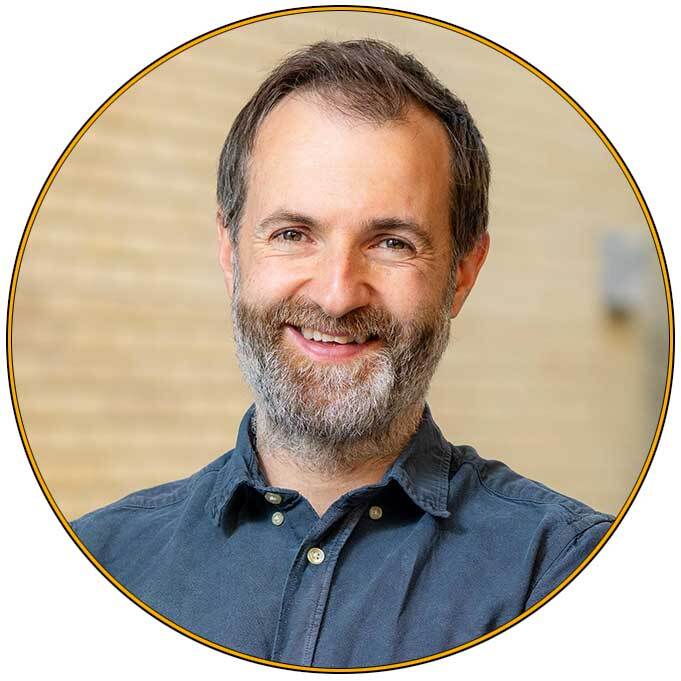
Kit Yates is Professor of Mathematical Biology and Public Engagement at the University of Bath in the UK.
Myth of overturned consensus
One of the favorite tropes of climate deniers is that 1970s scientists predicted “global cooling” — an impending ice age. It’s a smart argument, because if you can suggest that the exact opposite of global warming was once the prevailing view, surely you are questioning the current consensus on climate science?
Despite the media attention and numerous discussions around this idea, global cooling has never been the subject of scientific consensus. Literature reviews of the time show that Until 50 years ago, global warming dominated scientific thinking about the Earth’s short-term climate future.. That climate change is the result of greenhouse gas emissions is now widely agreed among scientists.
There are, however, scientific examples in which consensus positions have been modified or updated. Gravity is a classic case. Galileo established that the acceleration due to gravity is the same for all objects near the Earth’s surface. But it is only when Newton that we had a universal theory of gravitation.
Newton’s theory unified the behavior of objects falling to Earth with the movements of the planets. For years, every measurement seemed to confirm it, and the theory became known as a “law” that nature was supposed to obey without exception.
But as experiments developed and instruments improved, the boundaries of Newton’s “law” began to fray. When dealing with strong gravitational fields like those near a black hole, or when performing high-precision calculations or over short astronomical distances, Newton’s law was not sufficient. In the 20th century, Einstein’s general relativity filled many gaps – resolving a series of apparent astronomical anomalies and describing how light bends near a black hole.
Yet even the relativistic interpretation of gravity is not perfect. We know, for example, that it must collapse into a black hole.
The theories of Galileo, then Newton, were first replaced, and we know that Einstein’s is not correct in all situations. Does this mean that these previous theories are useless and are not examples of established science? Certainly not.
In contexts where these theories have been rigorously tested and found to give the correct answers (with a given degree of accuracy), they remain valid. They’re not wrong – just special cases of more general theories, valid in a given context. area of legitimacy in which they were initially postulated and tested.
Likewise, anything that replaces Einstein’s theory will have to include it as a special case. The example of gravity shows that scientific knowledge can evolve while remaining considered frozen in its domain of legitimacy. We can cite other consensuses, such as evolution Or germ theoryas an established science that has developed and become widespread over time.
Scientific “facts”
There are also issues that most would call definitively settled. That The Earth is round, not flatis perhaps the most obvious. But whether we choose to call it a “fact” or not depends on how we define the word. If we demand 100% certainty, science cannot provide it. If you want certainty, you have to turn to mathematics, where knowledge is constructed by deduction of axioms (a fundamental set of premises), independent of the world.
In contrast, science, based on evidence and induction, can only offer increasing confidence. A key premise of the scientific method is openness to new evidence. If you consider yourself 100% sure, then no amount of new evidence, no matter how convincing, will change your mind. This is not good science.
However, if you accept that science provides evidence hypotheseshe can offer what we could call indisputable evidence – so strong that contesting it is not a tenable position. Overturning a worldview that is not flat would require such a massive reconsideration of what we understand about reality that it would make it virtually impossible.
So “established science” does not mean that we know something with absolute certainty, but that the weight of evidence is heavily in favor of that interpretation. Perhaps more importantly, if someone wants to change the current design, the burden of proof is on them.
All scientific knowledge is accompanied by uncertainty. This is the mark of good science. But uncertainty doesn’t mean we can’t say with certainty that entropy always increases (the second law of thermodynamics) or that The Earth revolves around the Sun.
Science embraces uncertainty and is open to revision when new information emerges, but that doesn’t mean we shouldn’t take a stand when the evidence piles up on one side of the scale. Issues that have been rigorously tested can still be considered fixed.
Not being 100% sure is not the same as being 50-50. Admitting doubt is not the same as confronting both sides of a one-sided issue. The fact that scientists recognize uncertainty is no reason to defend a false balance. But these are the fallacious positions that populists take when they say “I have no idea” or “I don’t side with anyone” on scientific issues.
So when you hear a politician dismiss scientific consensus with phrases like “the science is never settled,” don’t mistake what he or she is saying as an argument for intellectual humility. They are outright trying to undermine inconvenient truths. Truths which can evolve and be nuanced over time, of course – but whose foundations are sufficiently solid to remain robust in their domain of legitimacy, even if the structure develops around them.
Notice on Live Science gives you insight into the most important science questions affecting you and the world around you today, written by experts and leading scientists in their fields.