They boarded a luxury cruise ship. Then hantavirus took a deadly toll

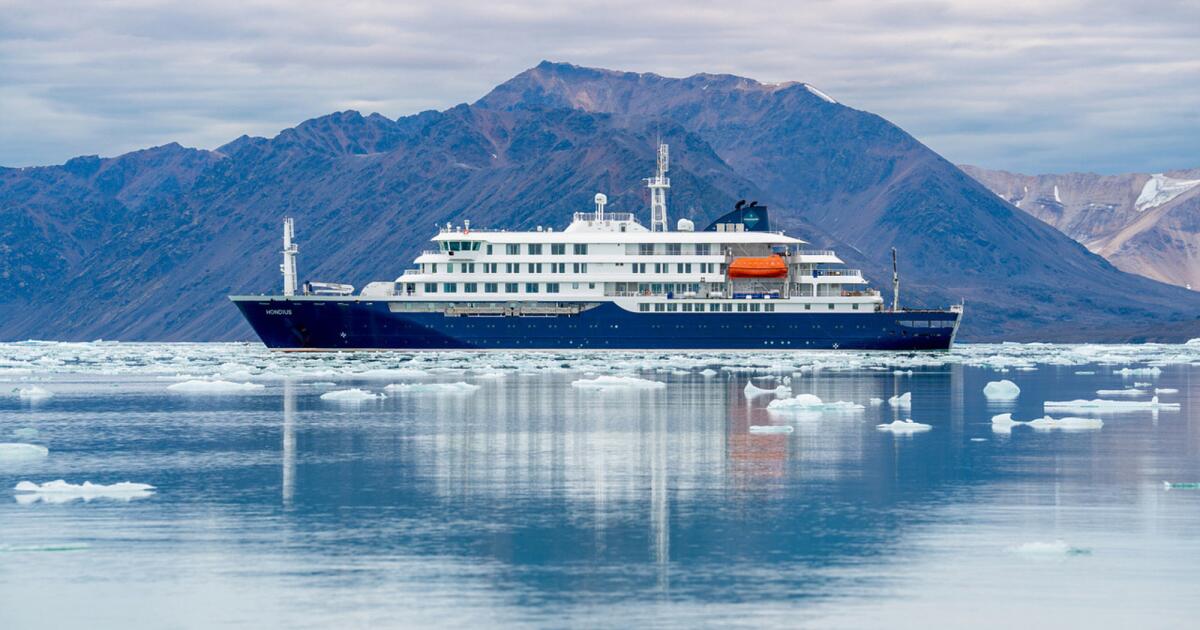
Hantavirus is believed to have spread aboard a luxury cruise ship, killing three passengers and sparking new concerns as a once-obscure disease with an extraordinarily high mortality rate rises amid climate change.
Authorities are still trying to determine what happened aboard the ship, which cost up to $28,845 for a 46-day voyage that included a visit to the Antarctic Peninsula and stops in Tierra del Fuego, on the southern edge of Argentina.
In addition to the three deaths, a fourth passenger was evacuated to a South African hospital and was in intensive care, and two crew members fell ill. The Dutch-flagged ship remained off the coast of Cape Verde, an island nation about 400 miles west of Senegal, where it was due to dock Monday.

Hantavirus is quite rare in the Americas, but its high mortality rate makes it a disease of extreme public health concern, according to the World Health Organization. Hantavirus is more prevalent in Asia and Europe, where the circulating strains are less deadly, with a case fatality rate of between less than 1% and 15%.
Hantavirus is most commonly spread by inhaling virus-contaminated particles, such as dried mouse urine, saliva, or feces.
But there is a strain of hantavirus – known as the Andes virus – that can be transmitted from human to human and has been transmitted in Thailand and Argentina.
It is unclear what strain of hantavirus affected the ship.
The first death on board the ship occurred on April 11 somewhere in the Atlantic Ocean, and the cause of the man’s death could not be determined on board, the ship’s owner said. The body was carried off the ship on April 24 as the ship docked on the island of St. Helena, about 1,100 miles off the coast of Africa, and the man’s wife accompanied his remains.
The woman fell ill during the return trip and later died. The cruise ship operator was informed of the woman’s death on April 27. The couple were of Dutch nationality. The same day, another passenger, a British national, became seriously ill on board the ship and was medically evacuated to South Africa. This patient was confirmed to have hantavirus.
A German passenger died on Saturday on board the ship. And on Monday, the ship’s operator said two crew members – one British and one Dutch – had acute respiratory symptoms, one mild and one severe, but both requiring urgent medical attention.
Possibilities that could explain the suspected outbreak include the presence of rodents on board the ship and people’s exposure to the virus, or person-to-person transmission, according to Dr. Peter Chin-Hong, an infectious disease expert at the University of San Francisco.
“Could a cruise member have cleaned an area and accidentally sprayed rodent droppings? said Dr. Elizabeth Hudson, regional chief of infectious diseases at Kaiser Permanente Southern California. “Was there a shore excursion that passengers and crew participated in where they were exposed to aerosolized rodent droppings?”
Because hantavirus is so rare, it’s hard to say what effect these deaths might have on the cruise industry. COVID-19 hit the industry hard, but it was a global pandemic with a virus spreading rapidly through human-to-human contact. A key question for investigators is how the virus spread.
The MV Hondius is operated by Oceanwide Expeditions, which has a fleet of four vessels and bills itself as a cruise ship ecotourism operator offering trips to the Arctic and Antarctic. The MV Hondius can accommodate 170 passengers in 80 cabins.
As of Monday, there were 148 people on board, including 17 American passengers. One deceased passenger remained on board.
The MV Hondius left Ushuaia, the capital of Tierra del Fuego on Argentina’s southern border, on March 20 for a round trip to the Antarctic Peninsula, returning to port 11 days later. On 1 April, the ship departed Argentina and returned to Cape Verde, with stops on the Atlantic Ocean islands of South Georgia, Tristan de Cunha and Saint Helena.
Strains of hantavirus in the Americas are attracted to the small blood vessels in the lungs and cause the blood vessels to leak — which is bad, because the lungs need air, Chin-Hong said.
“So people can’t breathe,” he said. “It’s like you’re drowning. The lungs are leaking, so fluid fills up in the lungs.”
There are 50 species of hantavirus. The virus in the Americas tends to cause cardiopulmonary syndrome, a disease that affects both the heart and lungs, said Dr. Gaby Frank, director of the Johns Hopkins Special Pathogens Center.
Hantavirus is associated with a mortality rate of up to 50% in the Americas. This is the cause of death of Gene Hackman. Betsy Arakawa, wife of 65 yearsin their home in Santa Fe, New Mexico. Arakawa died days before Hackman, 95, died of heart disease. There were signs of rodent entry into some structures on the couple’s property. Last year, three people in Mammoth Lakes died after contracting the hantavirus. There were traces of mice where all three people who died had worked, and one person had numerous mice in their home, according to the public health office in Mono County, home to Mammoth Lakes.
There is no specific vaccine or antiviral medication against hantavirus. In the Americas, doctors can help infected people by placing them on a life support machine called ECMO, for extracorporeal membrane oxygenation, which breathes for the patient by oxygenating the blood. “It’s very, very intense, and that’s why the mortality rate is so high,” Chin-Hong said.
Some experts expect hantavirus to become more of a concern in the future in some parts of the world due to climate change, as rising temperatures are favorable for animals and insects that carry diseases, such as the increase in Lyme disease as the climate becomes more hospitable to the ticks that transmit it.
With precipitation patterns changing as global temperatures warm, “one would then expect the rodent population to increase over time,” Chin-Hong said. “With climate changing over time, one would expect the rodent population to increase over time,” Chin-Hong said. Examples include people suffering from or dying from rat-borne diseases, such as leptospirosis, after Hurricane Maria hit Puerto Rico in 2017.
In the United States, an average of 30 cases of hantavirus are reported per year, a figure that has remained relatively stable. But “the media paid more attention to it,” Hudson said.
Times Staff Writer Karen Garcia contributed to this report.