‘They Don’t Return Home’: Cities Across US Fail To Curb Traffic Deaths


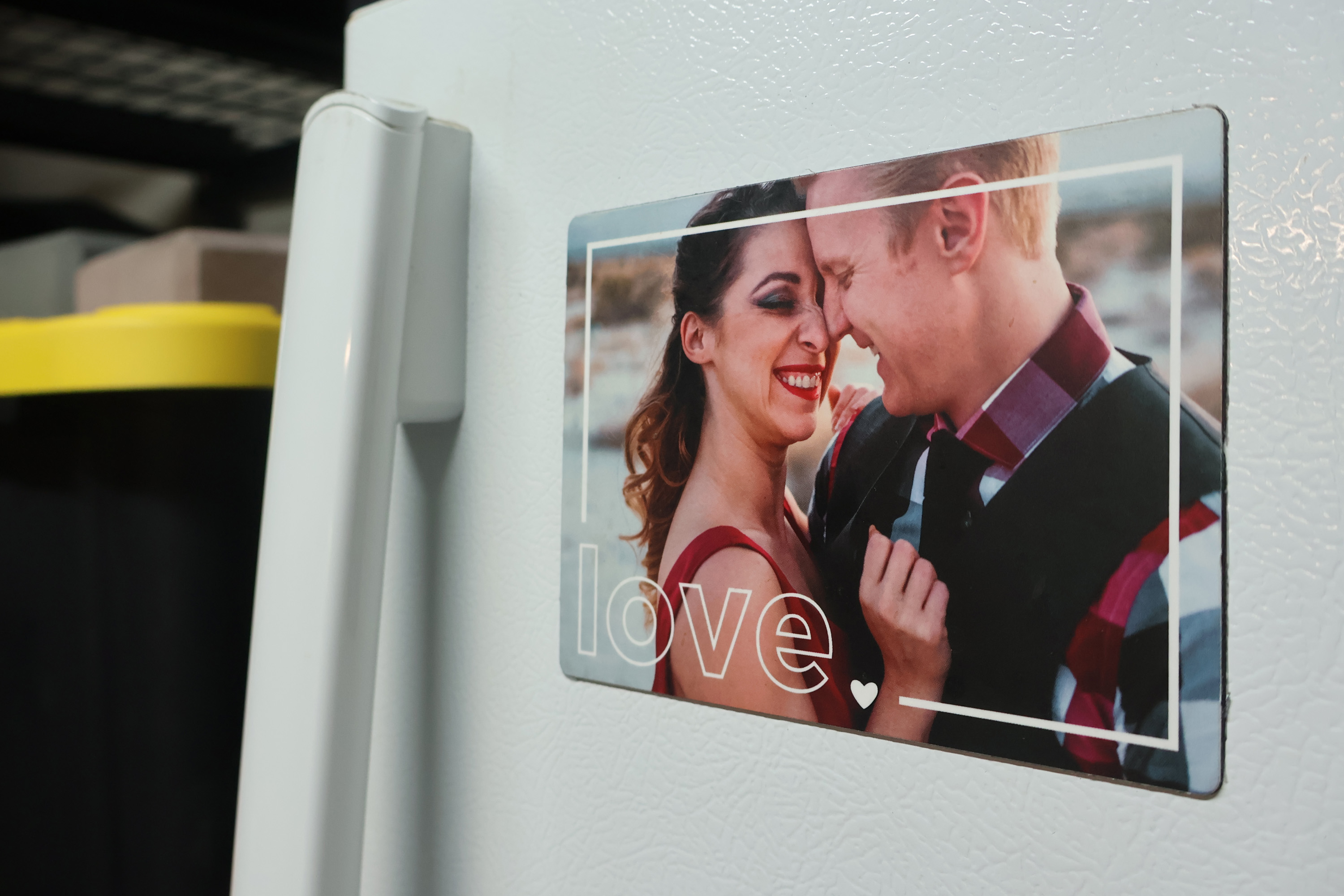
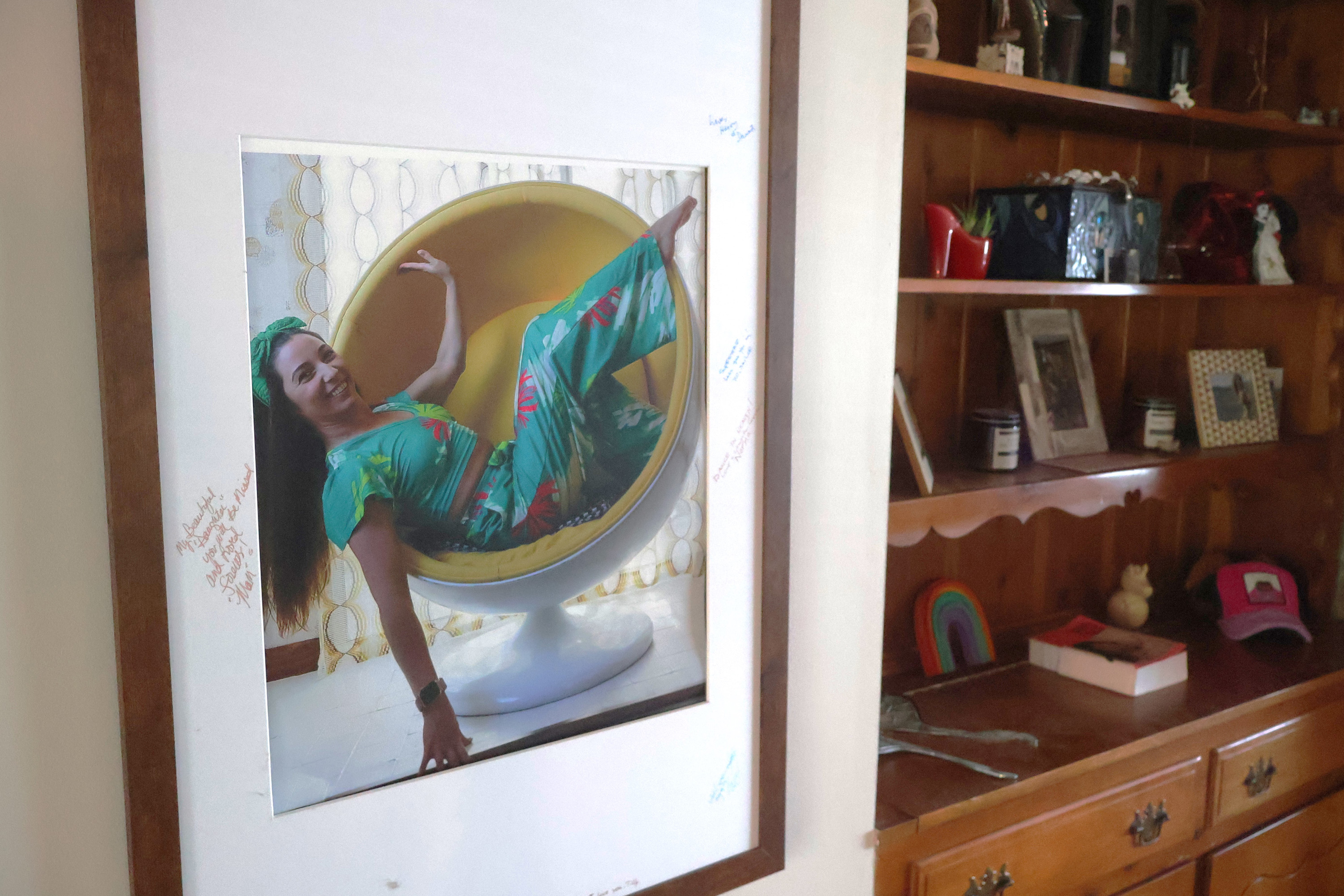
LOS ANGELES — Kris Edwards waited at home with friends for his wife, Erika “Tilly” Edwards, to go to dinner, but she never returned to the house they had purchased just four days earlier. On June 29, around 9 p.m., a hit-and-run driver killed Tilly as she walked to her car after a fundraising performance in Hollywood.
“I just have to figure out how to keep living. And the hardest part is not knowing why,” Edwards said of his wife’s death.
Despite local, state and federal safety campaigns, such as the global Vision Zero initiative to eliminate traffic fatalities, traffic fatalities have increased 20% in the United States compared to a decade ago, from 32,744 in 2014 to an estimated 39,345 in 2024, according to data from the Department of Transportation’s National Highway Traffic Safety Administration. Although the number of road deaths has decreased since the peak of 43,230 in 2021, the number of fatalities remains higher than a decade ago.
Since the Covid-19 pandemic, the Pew Research Center found, Americans’ driving habits have worsened across multiple measures, from reckless driving to drunk driving, which highway safety advocates call a public health failure. They say the technology could significantly reduce traffic deaths, but proposals often face resistance from industry, and the Trump administration is focusing on driverless cars to both innovate and improve public safety.
“Every day, 20 people go out for a walk and don’t come home,” said Adam Snider, a spokesman for the Governors Highway Safety Association, which represents state highway safety offices.

America’s roads have become more dangerous than violent crime in some cities: Los Angeles, San Francisco and Houston are among the major cities that now report more traffic deaths than homicides. In 2024, the Los Angeles Police Department reported approximately 268 homicides and 302 traffic deaths, the second year in a row that the number of people killed in crashes exceeded the number of homicide victims, according to Crosstown LA, a nonprofit community media outlet.
San Francisco reported more than 40 traffic deaths and 35 homicides in 2024. In Houston, about 345 people died in crashes and 322 by homicide.
“Simply put, the United States is in the middle of a highway safety emergency,” David Harkey, president of the Insurance Institute for Highway Safety, said at a House Energy and Commerce Subcommittee hearing this summer. Harkey said that out of 29 high-income countries, America ranks last in road safety. “This increase is not – I repeat, it is not – a global trend. The United States is an exception.”
In January 2017, Eric Garcetti, then mayor joined 13 other Los Angeles city leaders to commit to implementing the Vision Zero action plan and eliminating traffic fatalities in the city by 2025.
Instead, deaths increased.
An audit released in April and commissioned by the city’s chief administrative officer found that the level of enthusiasm for the program at City Hall had declined and that it had suffered from “the pandemic, personality conflicts, lack of full buy-in for implementation, disagreements over how the program should be administered, and scaling issues.” The report also finds competing interests among city departments and inconsistent investments in the city’s most dangerous traffic corridors.
Mayor Karen Bass’ office did not immediately respond to requests for comment.
Last year, California State Senator Scott Wiener proposed a bill that would have required new cars sold in the state to include “smart speed assist,” software that could prevent vehicles from exceeding the speed limit by more than 10 mph. But the bill was watered down following pushback from the auto industry and opposition from some lawmakers who called it government overreach. Ultimately vetoed by Democratic Gov. Gavin Newsom, who said a state mandate would disrupt ongoing federal security assessments.
Meanwhile, the Alliance for Automotive Innovation, an influential auto lobby, sued the federal government this year over an automatic emergency braking rule adopted under the Biden administration. The lawsuit is pending in federal court while the Department of Transportation completes its review. Even before Donald Trump was sworn in for his second term, the alliance appealed to the president-elect in a letter to support consumer choice.
Under Trump, Transportation Secretary Sean Duffy is prioritizing the development of autonomous vehicles by proposing sweeping regulatory changes to test and deploy driverless cars. “Federal motor vehicle safety standards were written for vehicles with human drivers and must be updated for autonomous vehicles,” NHTSA Chief Counsel Peter Simshauser said in September in announcing the modernization effort, which includes the repeal of some safety rules. “Removing these requirements will reduce costs and improve safety.”
Some Democratic lawmakers, however, criticized the administration’s repeal of the safety rules as misguided, as new rules can be implemented without undoing existing safeguards. NHTSA officials did not respond to requests for comment on Democrats’ concerns.
Advocates fear that without the continued adoption of road safety regulations for conventional vehicles, factors such as excessive speed and human error will continue to cause deaths despite the push for driverless cars.
“We need to continue to have strong collaboration from the federal, state, local, public sector, private sector and the general public,” said Snider, of the Governors Highway Safety Association. “We need everyday drivers to get involved. »
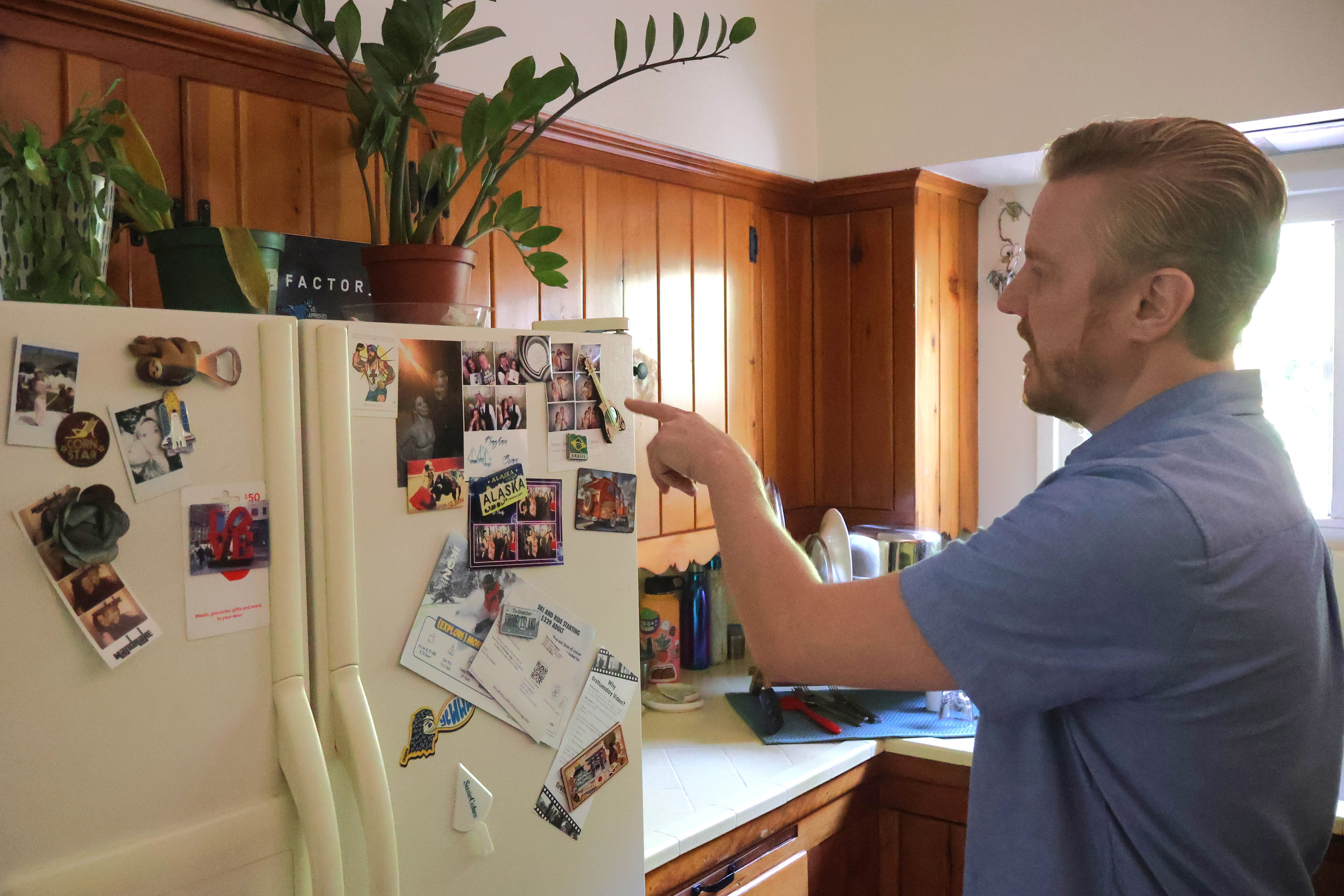
Kris Edwards shows off photos of his wife, Erika “Tilly” Edwards. Traffic deaths in the United States are higher than they were a decade ago. (Chaseedaw Giles/KFF Health News)
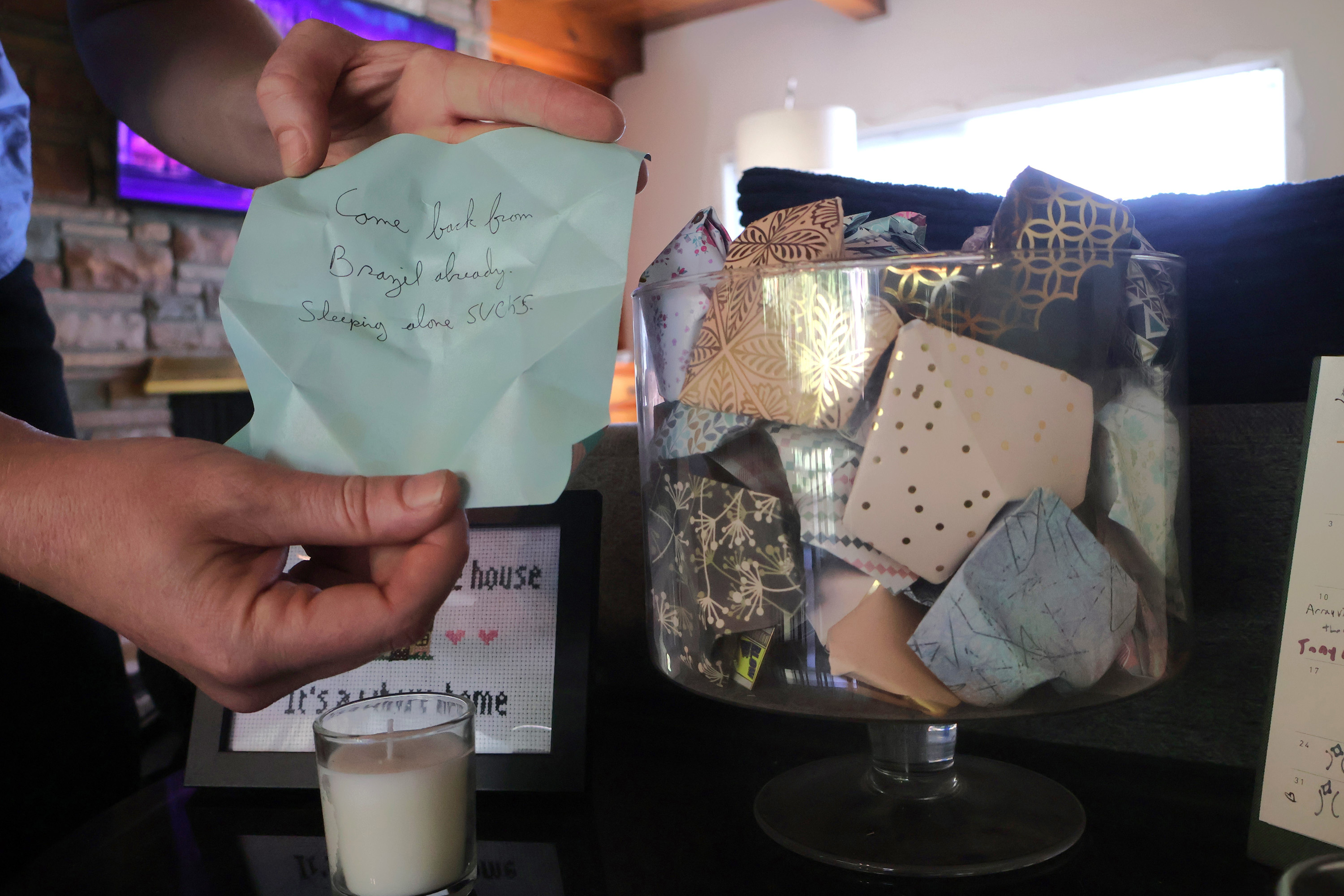
Kris Edwards holds a note from a jar of origami hearts, a Valentine’s Day gift from his wife, Erika “Tilly” Edwards, after the couple got engaged seven years ago. He still has to open all the hearts that contain memories, poems, films and quotes. Instead, he keeps a few for when he needs them. (Chaseedaw Giles/KFF Health News)
It took police nearly a month to track down the driver of a Mercedes-Benz G-Wagen believed to be involved in Tilly’s death. Authorities charged Davontay Robins with gross negligence manslaughter, hit-and-run and driving with a suspended license due to a previous DUI. He has pleaded not guilty to all charges and is free on bail.
Kris Edwards now takes care of the couple’s garden alone. Since his wife’s death, he has suffered from lack of sleep, fatigue and difficulty eating, and he uses a cane to walk. His doctors attribute his illnesses to the brain’s reaction to grief.
“I’m not alone,” he said. “But I’m alone, in this big empty house, without my partner.”
Edwards hopes justice will be served for his wife, although he says he’s not sure prosecutors will get a conviction. He wants his death to mean something: safer streets, slower driving and for pedestrians to be careful when getting in and out of parked cars on busy streets.
“I want my wife’s death to be a warning to those who get too comfortable and let their guard down even for a moment,” he said. “This moment is enough.”