Trump holds $14 billion Taiwan weapons package as China ‘negotiating chip’


NEWYou can now listen to Fox News articles!
President Donald Trump suggested Friday that U.S. arms sales to Taiwan could be factored into broader negotiations with China, prompting a swift response from Taiwan’s president and reigniting debate in Washington over the future of longstanding U.S. policy toward the island.
Asked by Fox News whether he would move forward with a delayed $14 billion arms package for Taiwan, Trump responded: “I’m keeping that on hold, and it’s up to China. It’s a very good bargaining chip for us, frankly. That’s a lot of weapons.”
Taiwanese President Lai Ching-te hit back hours later, calling U.S. arms sales “the most vital deterrent” to regional conflicts and insisting that Taiwan “should never be sacrificed or traded.”
Trump’s comments come as the administration continues to block a $14 billion Taiwan weapons program first approved in principle in late 2025, fueling a growing debate in Washington over whether Trump is returning U.S. policy toward a more traditional form of “strategic ambiguity” — or whether he is redefining support for Taiwan along a more overtly transactional lens tied to broader negotiations with Beijing.
China promises ‘countermeasures’ to US arms sale to Taiwan
The White House could not immediately be reached for comment.
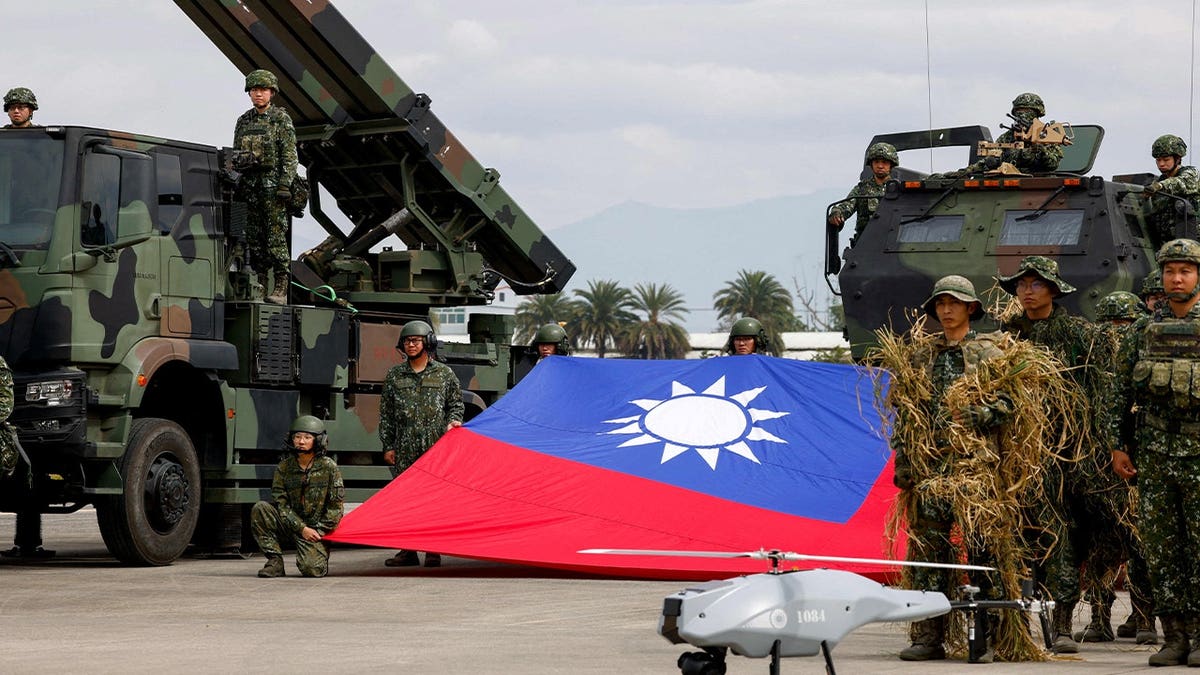
President Donald Trump has suggested that U.S. arms sales to Taiwan could factor into broader negotiations with China. (Ann Wang/File photo/Reuters)
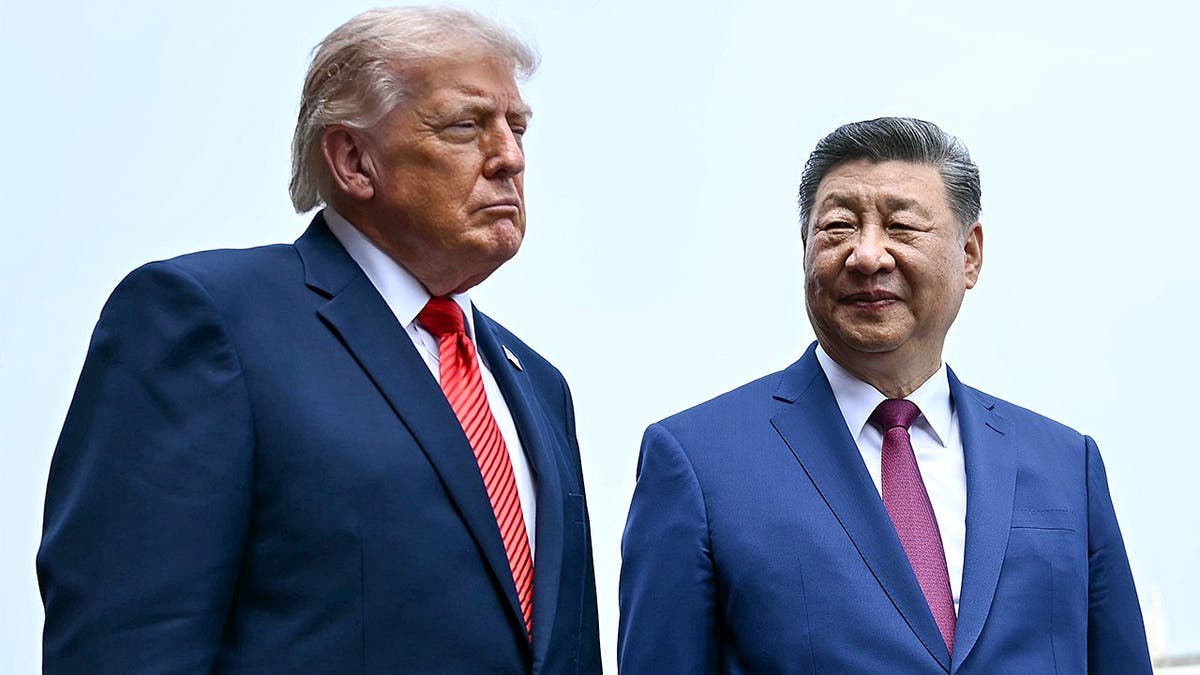
President Donald Trump and Chinese leader Xi Jinping have agreed on Taiwan, but Trump has stressed that he is not giving in to Xi’s demands for control over Taiwan, refusing to assure Xi that the United States would not defend Taiwan against a Chinese invasion. (Brendan Smialowski – Piscine/Getty Images)
Ahead of Trump’s recent summit with Chinese President Xi Jinping, bipartisan lawmakers warned in a letter that “US support for Taiwan is non-negotiable.”
The Taiwan issue had already emerged as one of the most sensitive flashpoints surrounding the mid-May summit between Trump and Xi in Beijing.
After the meeting, China’s Foreign Ministry said Xi warned Trump that Taiwan remained the “most important issue” in U.S.-China relations and warned that mishandling the issue could lead to “clashes or even conflicts” between the two powers.
The White House later downplayed the exchange, with a senior administration official telling Fox News Digital that the two sides had simply reiterated their long-held positions on Taiwan.
For decades, U.S. policy toward Taiwan has been based on a posture of “strategic ambiguity”: supporting Taiwan’s self-defense while avoiding an explicit commitment to militarily defend the island in the event of a Chinese attack.
Trump’s comments sparked competing reactions among foreign policy analysts, with some China hawks warning that treating arms sales to Taiwan as negotiable could weaken deterrence and destabilize U.S. allies in the Indo-Pacific, while others argued the remarks reflected a return to a more traditional interpretation of strategic ambiguity after years of increasingly explicit U.S. signaling toward Taiwan.
TAIWAN STRENGTHENING ITS COAST GUARD AND MILITARY PREPAREDNESS TO FACE BEIJING’S “GRAY ZONE” WAR
“Trading Taiwan’s security for Beijing’s rhetoric would be a strategic mistake of historic proportions,” said retired Rear Adm. Mark Montgomery, a senior fellow at the Foundation for Defense of Democracies think tank. “If the president does not proceed with arms sales to Taiwan, he will jeopardize U.S.-Taiwan relations and weaken U.S. credibility globally.”
Bonnie Glaser, managing director of the Indo-Pacific program at the German Marshall Fund think tank, said Trump’s comments blur an important distinction at the center of long-standing U.S. policy on Taiwan.
“Strategic ambiguity has nothing to do with providing weapons to Taiwan,” Glaser told Fox News Digital. “The Taiwan Relations Act requires the United States to sell defensive weapons to Taiwan. No president has ever said that U.S. arms sales to Taiwan constitute a useful bargaining chip.”
But some foreign policy analysts said Trump’s comments reflected a deliberate effort to refocus U.S. policy on American priorities.
TRUMP LEAVES CHINA WITH BREAKTHROUGHS – AND INTERMINATED DEALS ON XI’S BIGGEST FIGHTS
“Trump has significantly shaken up the debate on Taiwan in Washington,” Lyle Goldstein, director of Asia engagement at Defense Priorities, told Fox News Digital.
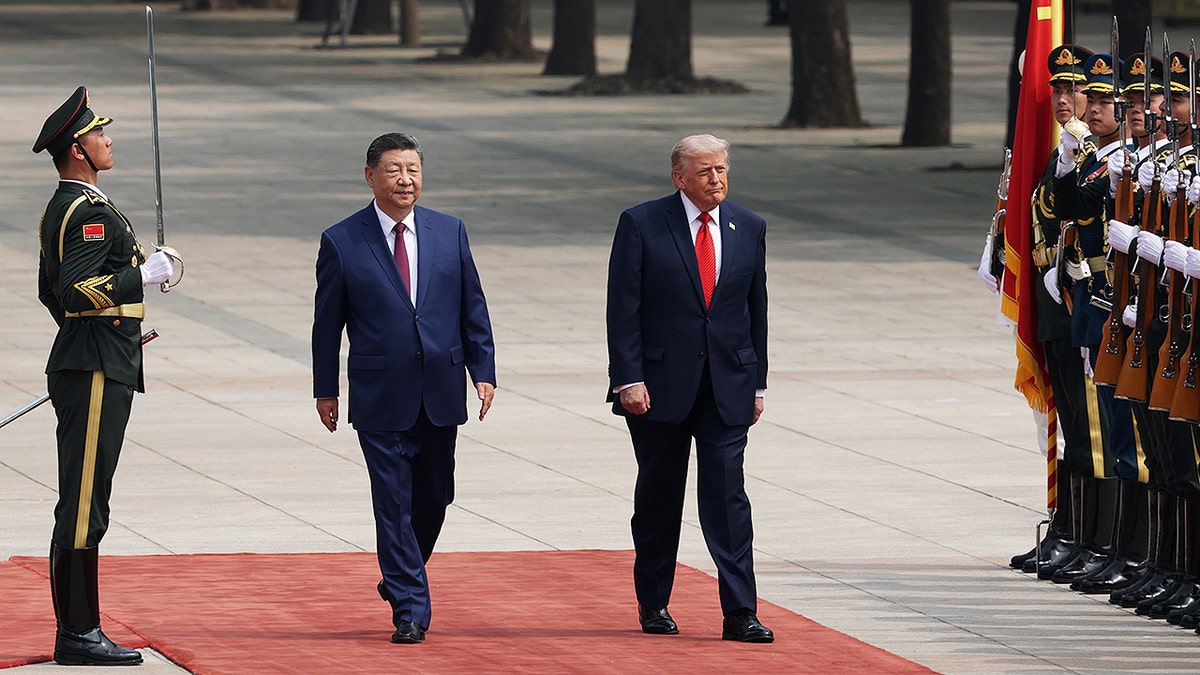
The Taiwan issue had already emerged as one of the most sensitive flashpoints during the mid-May summit between Trump and Xi in Beijing. (Alex Wong/Getty Images)
Goldstein argued that Trump’s comments reflected a return to a narrower interpretation of “strategic ambiguity” after years of increasingly explicit signals from the United States toward Taiwan under the Biden administration.
“Overall, his approach has been to return US policy to ‘strategic ambiguity,’ particularly in relation to the Biden administration, which was moving dangerously towards ‘strategic clarity,’ which threatened to trigger a US-China war in the near term,” Goldstein said.
During his presidency, former President Joe Biden repeatedly suggested that the United States would defend Taiwan militarily in the event of a Chinese attack — comments that critics said brought Washington closer to “strategic clarity,” even though White House officials maintained there had been no formal policy change.
Critics argued that Biden’s remarks increased tensions with Beijing, while supporters said the comments strengthened deterrence against potential Chinese aggression.
Goldstein argued that Trump’s willingness to openly discuss arms sales to Taiwan in the context of broader U.S.-China negotiations reflects a more restrained approach aimed at preserving stability between Washington and Beijing.
“Indeed, with these new comments, Trump acknowledges that both sides are responsible for maintaining peace across the Taiwan Strait,” Goldstein said. “He even went so far as to severely reprimand Taipei leaders for taking unnecessary risks.”
Trump has long taken a more transactional approach toward Taiwan than many traditional U.S. foreign policy hawks, previously arguing that the island should pay the United States for its defense and accusing Taiwan of “stealing” the U.S. semiconductor industry.
He also repeatedly cast Taiwan through the lens of semiconductor industry competition and supply chain dependence, saying the United States should grab a greater share of advanced chip manufacturing.
CLICK HERE TO DOWNLOAD THE FOX NEWS APP
“Trump’s new thoughts on Taiwan illustrate an enlightened approach that recognizes the fundamental truth that Taiwan does not represent a vital U.S. national security interest and that the U.S.-China relationship far exceeds in importance the U.S.-Taiwan relationship,” Goldstein added.
The central question now facing lawmakers and U.S. allies is whether Trump’s rhetoric will ultimately affect the timeline or conditions surrounding Taiwan’s pending arms package — a test that many analysts see as key to understanding how the administration intends to approach Taiwan in the future.


