
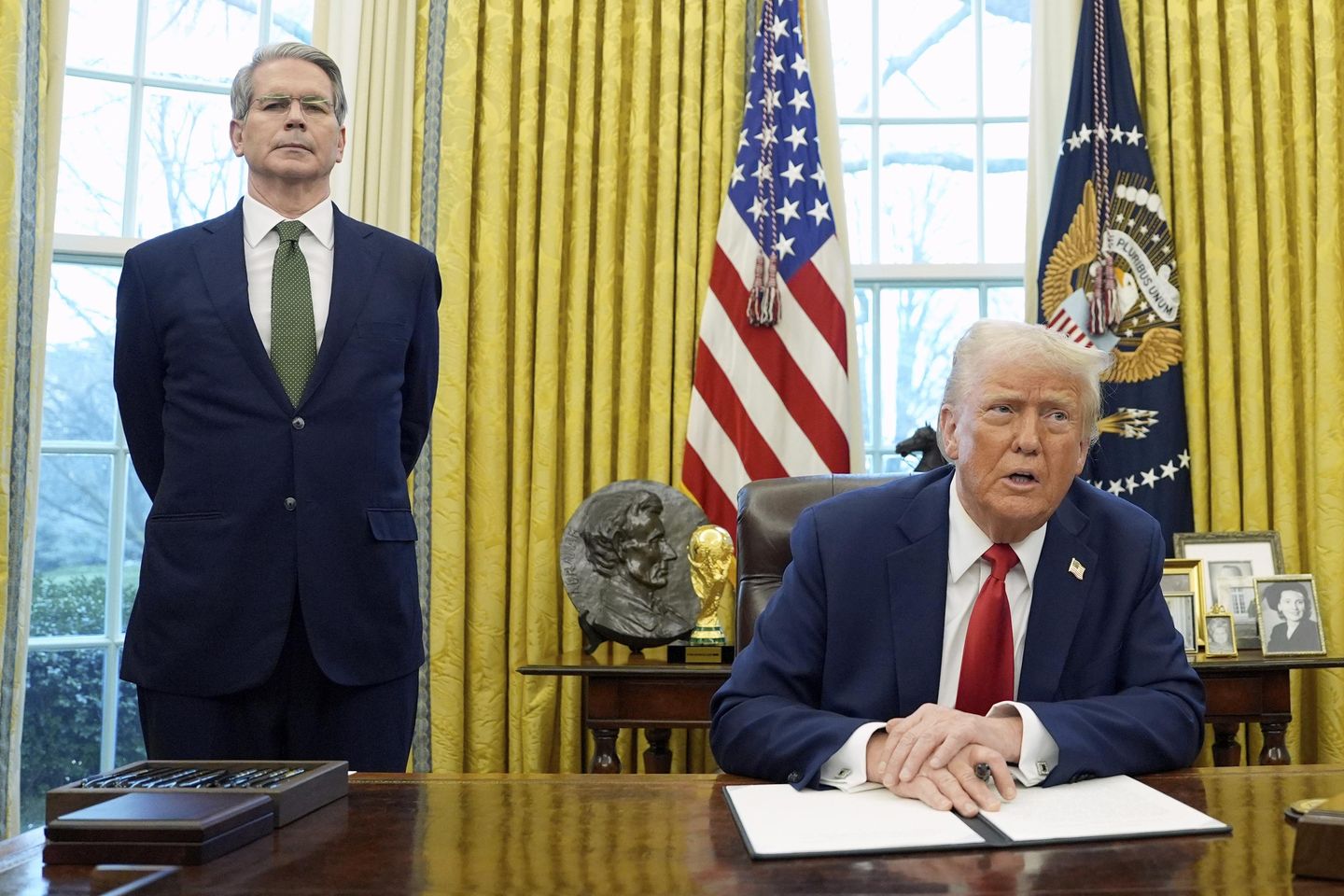
President Trump on Tuesday directed the Treasury Department and other financial regulators to issue guidance on banking services to illegal immigrants, a move that could severely restrict their access to the financial system.
Under an executive order, Treasury Secretary Scott Bessent and other financial regulators will “consider changes to the Bank Secrecy Act to strengthen customer identification program requirements, including accounting for the risks that foreign consular identification cards pose to the U.S. financial system,” according to a White House fact sheet.
The Bank Secrecy Act is the primary U.S. law to target money laundering and terrorism financing. It requires financial institutions to maintain paper trails by keeping detailed records and reporting certain transactions to the government to help detect and prevent financial crimes.
Mr. Trump also directed Mr. Bessent to issue a formal advisory to “financial institutions identifying red flags and suspicious activity patterns.”
The order is far less stringent than previously reported plans that would have required banks to collect customers’ citizenship information.
Still, the new proposal faces pushback from some banking groups and privacy activists, who say it opens up customers’ personal information to the federal government.
“America is celebrating its 250th anniversary, but President Trump has forgotten the Constitution. The Bank Secrecy Act is one of the biggest attacks on the Fourth Amendment and yet has chosen to expand it with his latest executive order,” said Nicholas Anthony, a financial privacy and banking regulation research fellow at the libertarian Cato Institute.
“This EO might be better than the original proposal to have banks check citizenship status. So President Trump should be commended for walking it back. However, the better move would be for him to walk away from the Bank Secrecy Act entirely,” he said.
Mr. Trump also signed a separate order on Tuesday that was intended to “streamline regulations and promote financial innovation and collaboration” between fintech firms, financial institutions and regulatory agencies.
That order directs regulators to identify practices that could be updated to better “facilitate innovation and greater competition in the provision of financial services,” according to a fact sheet.
It also calls on the Federal Reserve to conduct a similar review and evaluate frameworks governing access to reserve bank payment accounts.


