Trump’s Fed fight looks like something from another country


Natalie ShermanEconomic journalist

 Getty Images
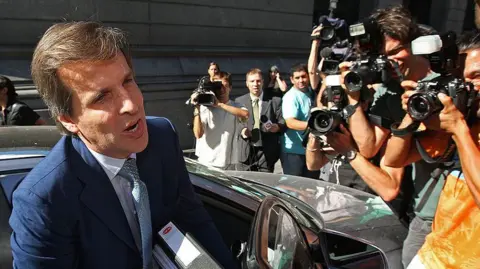
A political leader demanding questionable policy from the central bank and testing the legal limits to get it – for Martin Redrado, sitting in Argentina, Donald Trump’s standoff with the Federal Reserve seems surprisingly familiar.
Redrado was removed as head of Argentina’s central bank in 2010, after resisting orders from then-President Cristina Kirchner to hand over reserves to help pay down the national debt.
He successfully fought the decision in court, but ultimately resigned in the face of what he called “intolerable” pressure at the BBC.
Today, that clash is remembered as one of the first harbingers of the economic turmoil that later engulfed Argentina, exposing it to high inflation and a currency collapse from which the country is still recovering.
The conflict between Trump and the Fed has sparked debate over whether the United States could follow a similar direction.
Since returning to power last year, Trump has accused U.S. central bank Chairman Jerome Powell of mismanaging the economy and driving up the cost of the government’s debt by keeping interest rates too high.
But his interventions with the bank are not limited to complaints on social networks.
In August, Trump decided to fire a top policymaker, Lisa Cook, a decision now being challenged in the Supreme Court.
Then on Sunday, Powell said the Fed was facing a criminal investigation from the Justice Department, relating to cost overruns during a real estate renovation — concerns Powell dismissed as a “pretext.”
Market reaction to the tragedy remained muted, which analysts say is a sign that investors expect the bank to be able to continue operating freely.
But that confidence will be tested in the coming weeks, when the Supreme Court is scheduled to hear arguments on Cook’s firing and the president is expected to announce his choice to replace Powell, whose term as head of the Fed ends in May.
Redrado said he was surprised to see echoes of his own battle in the United States, long considered a global model.
“It seems more like an emerging market story,” he said.
He is not the only one to make the comparison.
“This is what you do in banana republics, not what should happen in the United States of America,” economist Jason Furman, who headed former President Barack Obama’s Council of Economic Advisers, told the BBC, using a derogatory term often used to describe countries with unstable politics and economies subject to the whims of a ruling class.
In an interview with CNBC, former Fed Chair Janet Yellen, who served as Treasury secretary under Joe Biden, raised a similar specter in warning about the way Trump wants the Fed to conduct policy. “This is the path to a banana republic,” she said.
Inflationary risks
Trump has remained defiant in the face of calls to limit his interference in the bank, a powerful economic player. player, which has access to vast financial reserves and the ability to influence borrowing costs across an economy.
He denied any involvement in the criminal investigation, which he said had nothing to do with interest rates, while saying he had the right to express his views.
“I think what I’m doing is good,” he said.
But economists say Trump is continuing his attacks on the economy’s risk, arguing that hard-won evidence shows central banks achieve the best results when they operate without political pressure.
 AFP via Getty Images
This consensus grew out of painful clashes with inflation in the 1970s, particularly in the United States, which led to a wave of global reforms.
Much academic research has since linked central bank independence to lower inflation over time.
Experts say elected officials have too much incentive to try to use the power of banks to achieve an immediate economic stimulus or satisfy individual constituents, even though doing so can harm the economy in the long run.
But even though Trump’s pressure on the Fed is unprecedented in the United States, the president is not the only leader ignoring advice to leave central bankers alone.
In the United Kingdom, former Prime Minister Liz Truss attacked the Bank of England, criticizing its independence and accusing it of having too much power.
A study of central banks in 118 countries between 2010 and 2018 found that about 10% of central banks each year faced pressure from political leaders, like Trump, for lower interest rates, which makes borrowing cheaper and can provide a short-term economic boost.
Pressures on central bankers were more likely to appear in countries led by nationalist or populist leaders and were generally followed by higher inflation, says economist Carola Binder, a professor at the University of Texas at Austin who led the study.
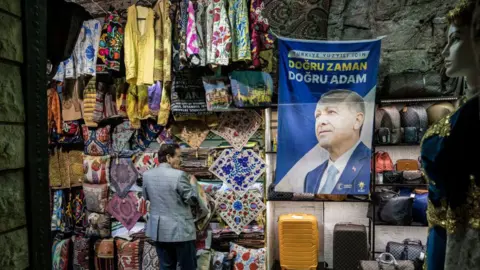
In Turkey, for example, President Recep Tayyip Erdogan succeeded three central bank leaders in three years, between 2019 and 2021, as he looked for someone who would follow through on his unorthodox view that high interest rates were fueling inflation.
Inflation soared above 50% as the bank bowed to his demands, before agreeing to appoint leaders with more moderate views.
Even in countries where central banks resisted interference, Binder’s research found that inflation tended to rise, albeit to a lesser extent, suggesting that pressure alone could cause damage.
 Getty Images
Binder says she thinks the pressure has led people to doubt central banks’ ability to effectively manage inflation, leading them to expect higher prices in the future – a view that often fulfills itself.
For now, polls suggest that U.S. inflation expectations remain contained, making the likely importance of the current fight more political than economic, Binder says.
She nevertheless warned: “It is a possibility for the United States, that this could be inflationary.”
The fallout in the United States
Even if the Fed becomes a tool of the president, analysts say it is unlikely the U.S. economy would face consequences as severe as those of smaller countries like Argentina and Turkey.
But some say there are already signs the struggle is having consequences, pointing to an 8% fall in the value of the dollar against a basket of currencies over the past year.
In the long term, it can be difficult to identify the cause of economic damage – whether it is the loss of central bank independence or other often linked problems, such as the erosion of democracy or the rule of law, says Carolina Garriga, professor of political science at the University of Essex.
But she said immediate market movements, such as the dollar’s decline following news of the Fed’s criminal investigation, show that investors view central bank independence as an important piece of the puzzle.
“It’s difficult to untangle, but it’s not difficult to untangle when it comes to the market reaction to an announcement.”
Since the criminal investigation became public, top Wall Street executives and members of Congress, including some Republicans, have come out forcefully in defense of the Fed.
At the Supreme Court, the justices also indicated that they viewed the bank as different from other branches of government, where they let Trump’s firings proceed.
Analysts believe the Fed will be able to maintain confidence in its policy, noting that it sets interest rates through a 12-member committee, of which the chairman appoints only seven and who each have long, staggered terms.
“There is a slight concern,” says Jennifer McKeown, chief global economist at Capital Economics. “But there is nothing here to indicate that trust in American institutions has been lost and that we are therefore in a downward spiral.”
But much of the Fed’s reputation for independence is based on convention rather than legal design. In global comparisons of central bank independence, measured by its legal characteristics, the Fed ranks in the bottom third.
Redrado said he remained hopeful that the strength of U.S. institutions would prevail, unlike Argentina, while warning that Trump was running unnecessary risks.
“President Trump is really fighting himself by waging this kind of fight,” he said. “He should know better.”
What questions do you have about Trump’s first year since returning to the presidency? Click here or use the form below.