U.S. intelligence chiefs’ testimony is out of sync with Trump’s talking points


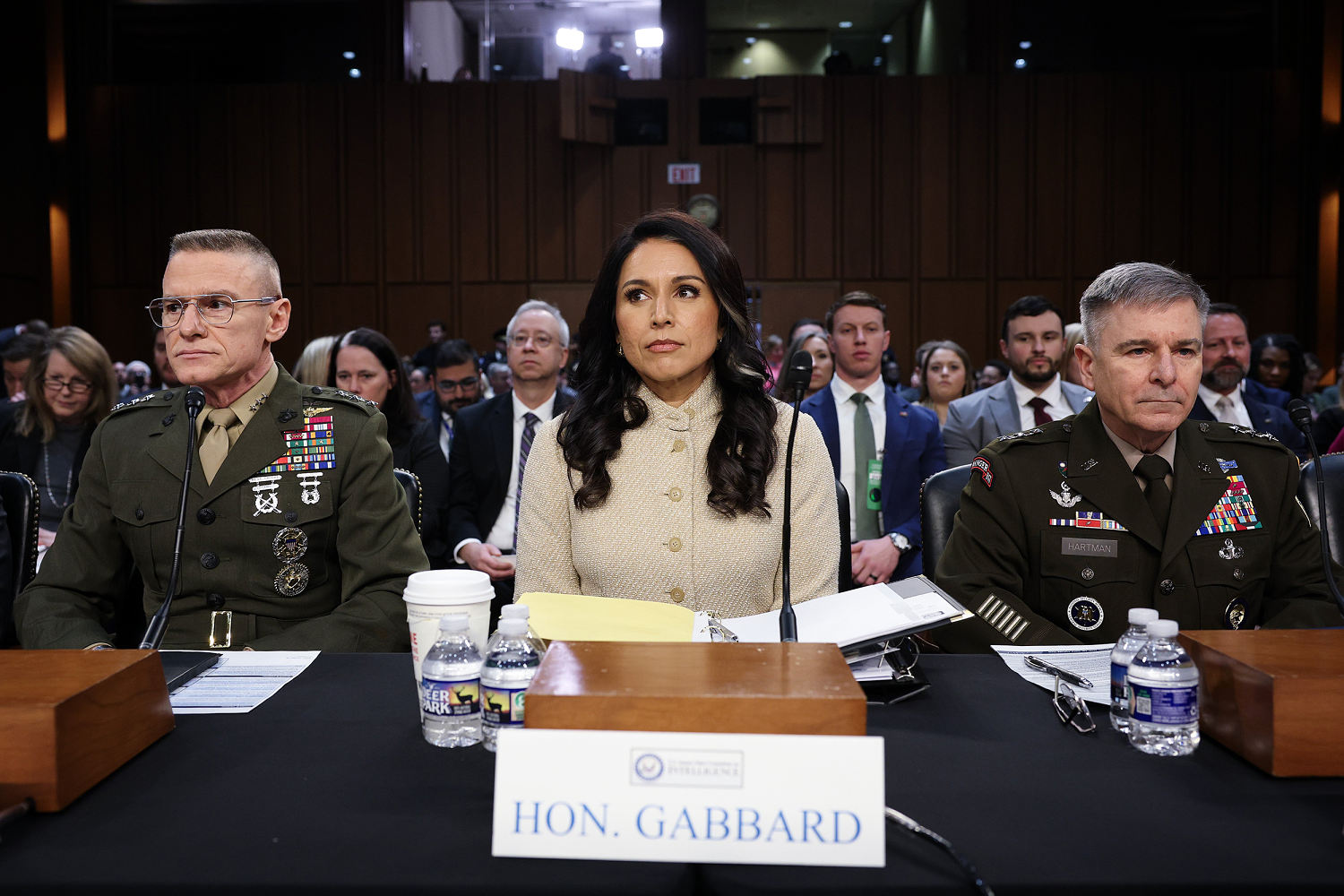
But Director of National Intelligence Tulsi Gabbard and CIA Director John Ratcliffe told members of Congress that the president was briefed on Iran’s potential response to a U.S. attack, including likely retaliatory strikes against its Arab neighbors, and that Tehran could endanger commercial shipping in the Strait of Hormuz. Intelligence assessments prompted the Pentagon to take steps to protect troops at bases based in the region before the war broke out, Ratcliffe said.
Gabbard added that even though Iran’s “capabilities have been largely degraded,” the regime could “still have the means to threaten passage through the Strait of Hormuz.”
As for Trump’s prediction three weeks ago that the Iranian regime would collapse once the airstrikes ended, Gabbard told lawmakers the regime was still “intact” but damaged. And Ratcliffe said toppling the regime was not a goal of the operation, dubbed “Epic Fury,” for the United States, although it could be a goal for the Israeli government.
“So, to be clear, the president’s goals for Operation Epic Fury did not include regime change. That may be different than what Israel’s goals were,” Ratcliffe told the House Intelligence Committee on Thursday.
The testimony also revealed differences in how Gabbard described intelligence perspectives in the run-up to the war compared to her CIA counterpart, Ratcliffe. When pressed by Democrats on the Senate and House intelligence committees, Gabbard declined to give her views on whether the intelligence showed Iran posed an urgent danger and was about to attack the United States.
Instead, she adopted neutral language, saying her role was simply to ensure that the president had all relevant intelligence and that only the commander in chief could decide whether the country faced an “imminent threat.”
Ratcliffe struck a different tone, however, telling senators Wednesday that Iran has been a threat for years.
“I think Iran has been a consistent threat to the United States for a long time and is an immediate threat right now,” Ratcliffe said.
A day later, at the House hearing, Democrats pressed for answers about the intelligence supporting the claim of an imminent threat.
Ratcliffe said Iran and Israel were likely heading toward war and that Tehran would have attacked the United States even if Washington had not taken part in the conflict.
The intelligence “effectively reflects that in the likely event of a conflict between Iran and Israel, the United States would be immediately attacked, whether or not the United States stays out of that conflict,” Ratcliffe said.
His response echoes Secretary of State Marco Rubio’s remarks shortly after the war began. Rubio had said the United States needed to launch a preemptive strike against Iran because Israel risked striking Iran and the regime would then retaliate against U.S. forces in the region.
Rubio later walked back his comments and the administration did not repeat this explanation.
Intelligence officials also fielded questions about whether the administration and the Israeli government shared the same agenda in the military campaign, and Gabbard suggested that each side had different goals.
Although White House and Israeli officials have said there is no difference between Trump and Israeli Prime Minister Benjamin Netanyahu, Trump told reporters Thursday that he did not approve of Israel’s decision to bomb a major natural gas facility in Iran and that he had told Israel not to repeat the decision.
Gabbard said that, based on each government’s public statements, the goals of the United States and Israel differed, with Israel focusing on Iranian leaders and the regime while the United States focused on strikes against Iran’s missile network and other military targets.
Gabbard and other intelligence officials did not support President Trump’s pre-war statements that Iran would “soon” have intercontinental ballistic missiles capable of reaching the United States. Neither Gabbard nor Ratcliffe responded directly when asked whether Iran could have intercontinental ballistic missiles within six months.
Ratcliffe said Iran’s arsenal could hit targets in the Middle East and Europe, as U.S. intelligence agencies have previously said, and that its missile arsenal posed a growing threat.
Gabbard, echoing the findings of a previous Defense Intelligence Agency assessment, said Iran could use its space launch program to begin building a viable ICBM “before 2025, should Tehran attempt to pursue this capability.”