U.S. rivers are experiencing unprecedented and unexpectedly intense warming


American rivers are hot.
A new analysis of almost 1,500 river sites over 40 years has revealed that the frequency, intensity and duration of heat waves increase in rivers across the country, posing a threat to many species suitable for cooler temperatures.
“The trend of river heat waves actually increases faster than air heat waves. So, this is a very surprising thing,” Li Li, professor of environmental engineering at the Penn State University and author of the study, told Li Li.
The new analysis, which was published in the journal evaluated by peers, acts of the National Academy of Sciences, is the first in -depth study of river heat waves, which are defined as five consecutive days of high temperatures compared to seasonal averages.
The authors have found that climate change caused by humans is the main engine of the trend, because the snowpack decreases and that the streams flow more slowly.
Other human factors also affect the trend. The dams slow down the flow of water downstream. The buildings and the road absorb the heat that warms the air and then the water.
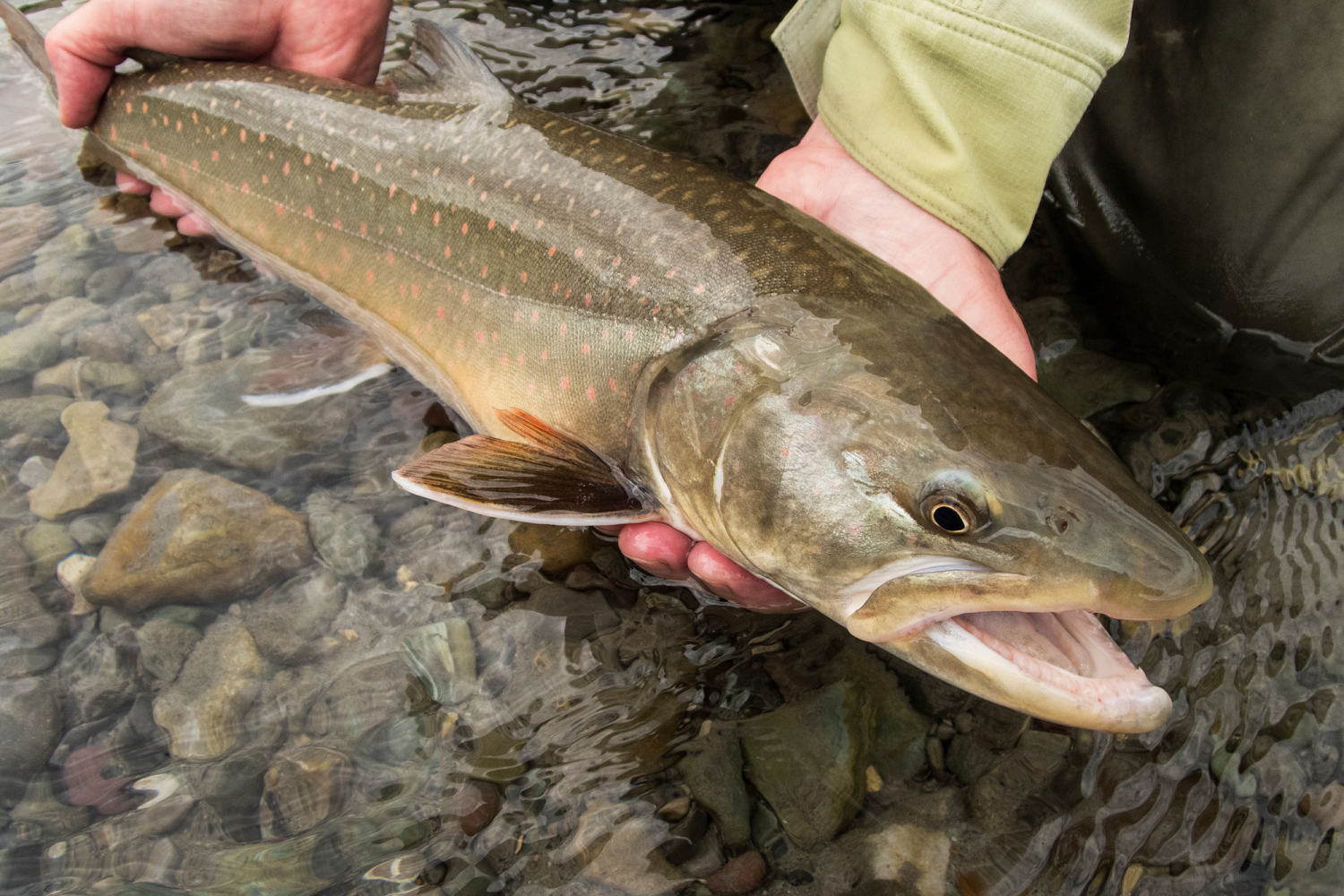
Scientists expect species that depend on cold water, including salmon and trout, are increasingly fighting as the streams warm up. Li said it would be important to document fish killed to see if and what trends are emerging.
Heat decreases the amount of oxygen dissolved in water. Meanwhile, cold water species often see their metabolism increasing in warmer waters, which means that there is less oxygen available.
The results could inform how to manage the watersheds and if the modifications made to the versions of irrigation or dams could help the species cling to hot weather.
“The way we use water, how we manage these resources can have an impact on heat waves,” said Jonathan Walter, a researcher at the UC Davis Center for Watershed Sciences, who was not involved in this research. “Assuming adequate quantities of water in a tank, we could be able to release water in such a way that downstream temperatures are somewhat cooled and prevent these hot and stressful temperatures.”
Heat waves have been widely studied in the oceans and lakes, but so far, researchers had only limited information about how higher temperatures affected rivers.
Satellite data leads to heat in the oceans and lakes. The study of the temperatures of the river is more difficult because it depends on the caliber sensors in the rivers which are often inside and out of service, leaving data gaps which can be difficult to analyze.
For the new study, the researchers collected data from 1,471 surveillance sites for the United States Geological Survey from 1980 to 2022.
The data allowed researchers to assess changes in the country’s flows. They found that river heat waves in 2022 occurred more often than in 1980 – with an average of 1.8 additional heat waves events which took place per year. Heat waves were also more intense, with temperatures during thermal events of approximately 0.8 degrees Fahrenheit higher, on average, in 2022 compared to 1980. The events of heat waves lasted more than three days more than in the past.
Li said additional heat causes approximately 12 additional days of thermal stress, on average, for species that need cold water. The authors of the study used 59 degrees F as thermal stress threshold because certain species, such as bull trout, find it difficult to survive this marker.
“When we think of water, there is much more attention to the quantity, because we can see it,” said Li. “We hope that this type of study will increase public awareness to the problem of water quality linked to climate change.”


