ULA aimed to launch up to 10 Vulcan rockets this year—it will fly just once


Engineers attributed the problem to a manufacturing defect in an insulator on the solid rocket motor, and telemetry data from all four boosters on the next flight in August showed “perfect” performance, according to Bruno. But authorities decided to collect the used engine cases from the Atlantic Ocean for inspections to confirm there were no other surprises or near misses.
The problem delaying upcoming Vulcan launches is not rocket production. ULA has hardware for several Vulcan rockets stored at the Cape Canaveral space station in Florida.
Instead, one of the main reasons for Vulcan’s past delays has been the rocket’s performance, particularly its solid boosters. It’s unclear whether the latest delays are related to the readiness of the Space Force’s GSSAP satellites (the next GPS satellite that will fly on Vulcan has been available for launch since 2022), inspections of Vulcan’s solid-state rocket engines, or something else.
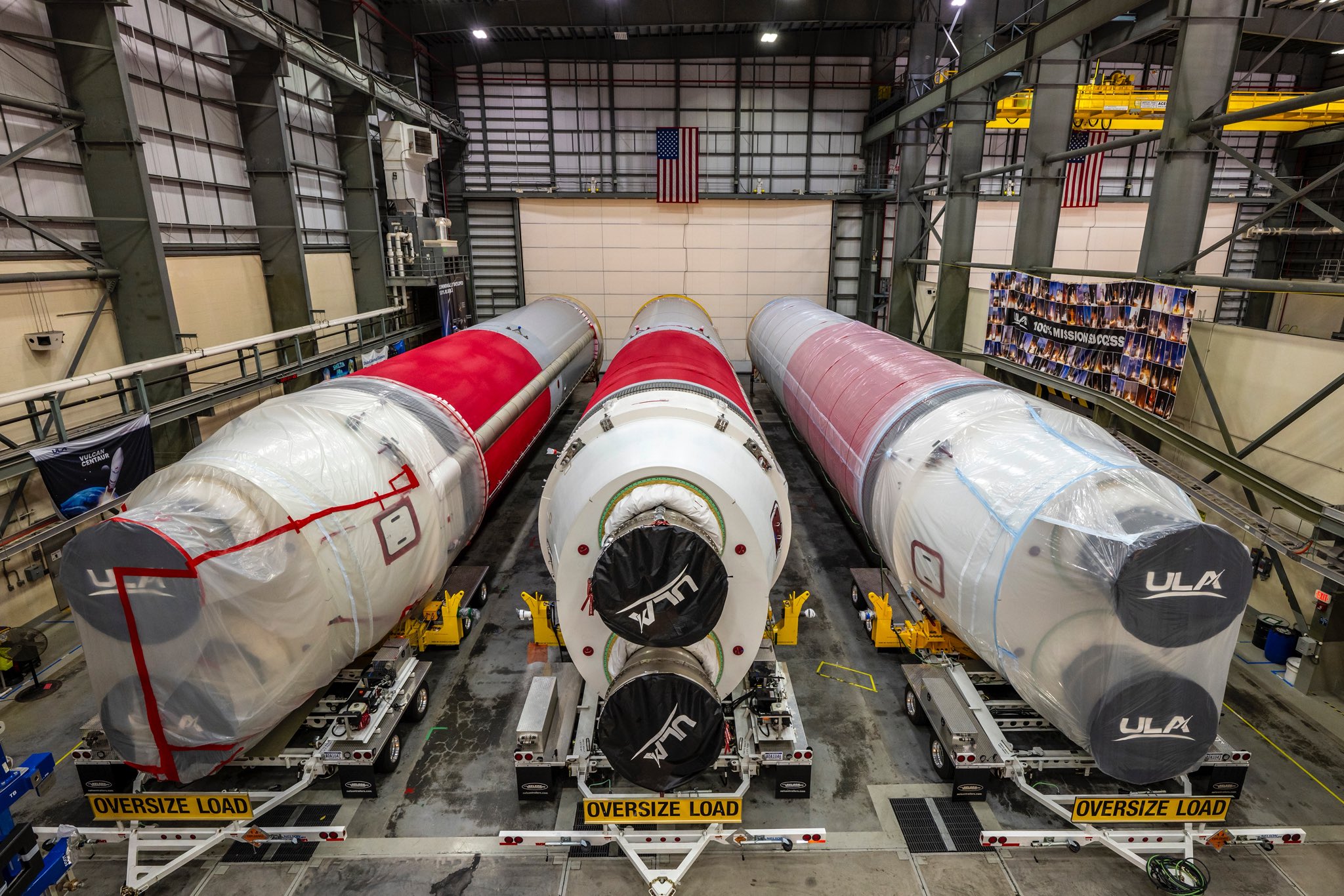
Vulcan booster cores stored at the Cape Canaveral space station, Florida.
Credit: United Launch Alliance
A Space Systems Command spokesperson told Ars that “appropriate actions are being executed to ensure the success of the USSF-87 mission…Teams are analyzing all hardware as well as available data from previous missions to assess the spaceflight value of future missions.”
The spokesperson did not provide a specific response to a question from Ars regarding inspections of the solid rocket engines on the latest Vulcan flight.
ULA’s equipping of a new rocket assembly hangar and a second mobile launch platform for the Vulcan rocket at Cape Canaveral also faced delays. With so many launches behind schedule, ULA needs the capacity to stack and prepare at least two rockets in different buildings at the same time. Ultimately, the company’s goal is to launch on average twice per month.
On Monday, Cape Canaveral ground crews moved the second Vulcan launch pad to the company’s launch pad for fit checks and “initial technical testing.” It’s a good sign that the company is getting closer to accelerating Vulcan’s launch cadence, but it’s now clear that won’t happen this year.
Vulcan’s slow launch since its first flight in January 2024 is not unusual for new rockets. It took SpaceX’s Falcon 9 and ULA’s Atlas V 28 months to reach their fourth flight, a deadline the Vulcan vehicle will reach in May 2026.
ULA’s Delta IV rocket flew its fourth mission 25 months after its debut in 2002. Europe’s Ariane 6 rocket made its fourth flight in 16 months, but it shares more in common with its predecessor than the others. SpaceX’s Starship also saw a faster ramp-up, with its fourth test flight taking place less than 14 months after its first.


