Intel doesn’t suck anymore. It’s redemption time


I revised a lot of laptops with Intel processors over the past year, and I’ve had some gripes. The Core Ultra Series 2 generation was a branded mess with its mix of Lunar Lake, Arrow Lake, and Meteor Lake architectures. But at CES 2026, Intel reached a milestone. Intel Core Ultra Series 3, codenamed Panther Lake, actually appears to be a consistent platform to take on AMD and Qualcomm.
Intel also seems to have regained its boldness. Intel asked TSMC to make its latest generation Lunar Lake processors, but Intel is now back to making its own processors. This year, Intel struck a major deal with Nvidia and the U.S. government became a major shareholder in its operations. Despite recent struggles, the big chipmaker isn’t expected to be delisted just yet.
I didn’t get a chance to compare any of these new Panther Lake-powered machines at CES, so stay tuned once we get our hands on the review units. But I’m still impressed – and here’s why.
Battery life and performance in one
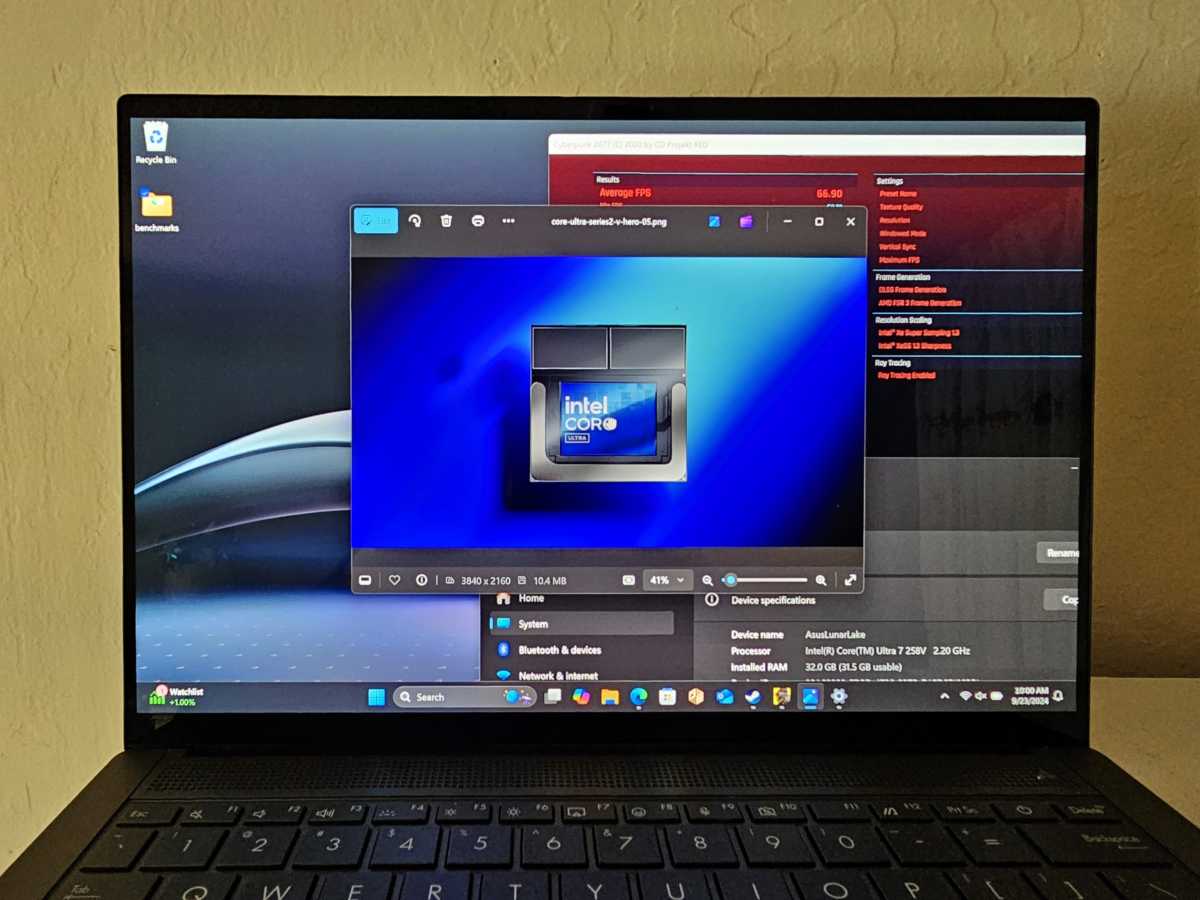
Intel’s Lunar Lake was a strange beast. Made by TSMC instead of Intel, it was Intel’s attempt to jump into the power-efficient laptop revolution, with onboard memory that couldn’t be upgraded, a fast NPU to run overrated Copilot+ PC AI features, and a surprisingly capable integrated GPU.
Mark Hachman / Foundry
But Lunar Lake’s big limitation was multithreaded performance. It falls far behind Arrow Lake and even Meteor Lake processors in our Cinebench and Handbrake benchmarks. That’s why most of the laptops I reviewed throughout the year ended up being equipped with Arrow Lake or Meteor Lake chips. Yet while these offered better performance, they sacrificed battery life and also ran hotter than Lunar Lake.
With Panther Lake, Intel says we should expect more than 50% better multithreaded performance compared to Lunar Lake and Meteor Lake, with 10% lower power consumption than Lunar Lake. Intel also claims that Panther Lake’s performance is similar to Arrow Lake.
This time around it looks like we’re getting both battery life And solid multithreaded CPU performance in the same hardware package. (Want to dig deeper? Learn more about the technical details of Panther Lake.)
The new integrated GPUs are impressive
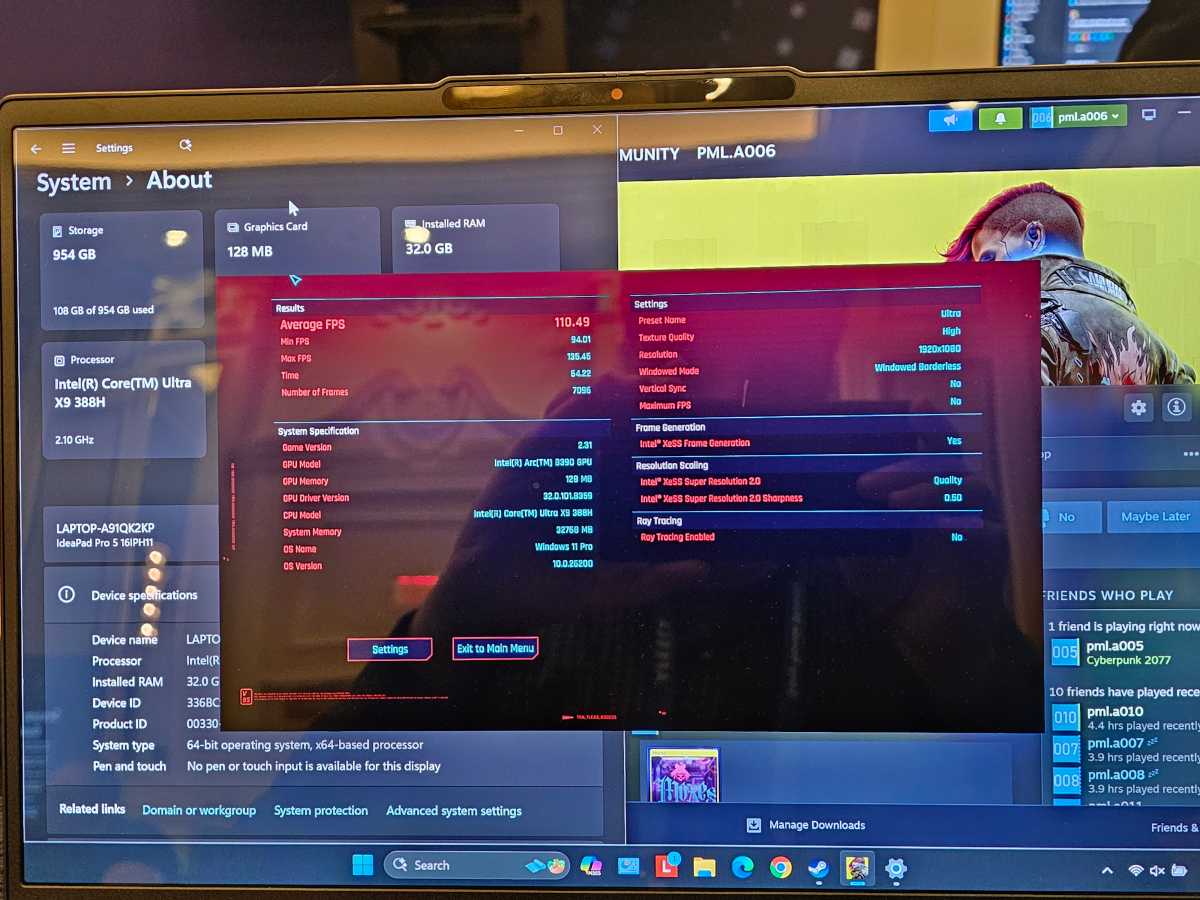
Intel has worked hard to upgrade its integrated graphics over the past few years and is now marketing its new Arc B390 iGPU as being on par with Nvidia’s RTX 4000 series discrete graphics cards. We compared the hardware at CES 2026…and it’s close!
With Lunar Lake, Intel delivered some very impressive integrated Arc graphics, but Lunar Lake wasn’t the place for serious iGPU upgrades. Lunar Lake focused on battery life and not CPU performance, which meant Intel’s best-performing integrated graphics were paired with a CPU platform struggling with multi-threaded performance. Meteor Lake and Arrow Lake had even worse iGPUs.
Mark Hachman / Foundry
By pairing Intel’s fastest iGPUs with an even faster processor, Panther Lake promises to power laptops with impressive gaming performance on integrated graphics.
This is something a few PC makers were eager to tell me about at CES 2026. New Intel Core Ultra Series 3 hardware could power PC gaming experiences without a discrete GPU. Companies like HP were showing demos of PC games running on Intel’s new iGPUs.
Compete with AMD in handhelds
With Panther Lake, Intel plans to bring more competition to the gaming handheld space. Steam Deck-style portable gaming PCs largely use AMD processors, and there is speculation that companies like Valve could release hardware with Arm chips in the future.
Intel was so boastful that one executive even spoke openly at CES 2026, accusing AMD of “selling old silicon” for handhelds. Intel is promising custom Panther Lake hardware for the gaming handheld market, which could be very impressive, considering the quality of Intel’s integrated graphics.
AMD disagreed (naturally), saying Panther Lake would come with a bunch of baggage and not be suitable for handhelds. We’ll see who’s right after the hardware releases. I’m just excited to see more competition.
NPUs that meet Windows 11 minimum specifications
While many PC makers are still eager to talk about Copilot+ PCs and AI laptops, Microsoft appears to be moving away from its NPU obsession. Companies like Dell are also moving away from AI laptops.
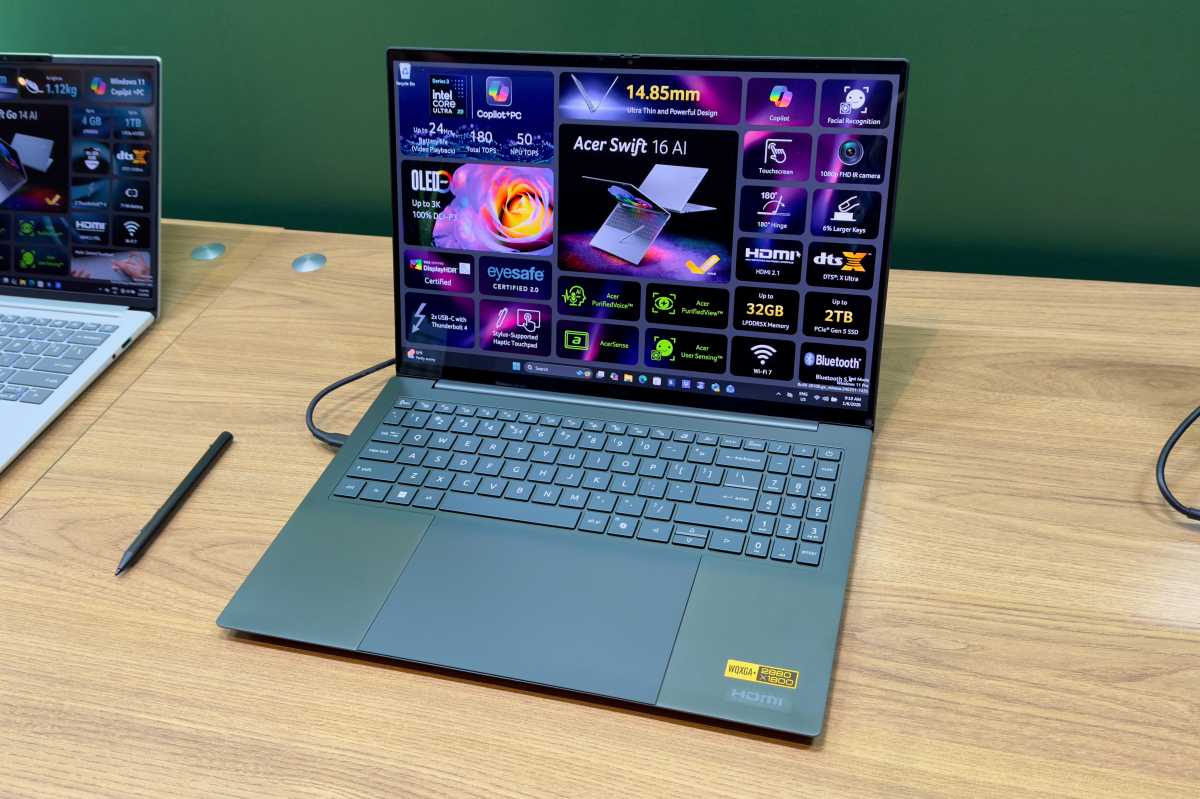
The NPUs shipped by Intel in recent years have fallen well short of Microsoft’s minimum specifications. After Microsoft announced in May 2024 that Copilot+ PCs would require an NPU with at least 40 TOPS performance, Intel mainly shipped laptop hardware with 13 TOPS NPUs, a far cry from Microsoft’s minimum target.
Only Lunar Lake and now Panther Lake have paved the way for Copilot+ PC features. Meanwhile, all Qualcomm Snapdragon
Matthew Smith / Foundry
It’s been a big problem for Intel that most laptops with Intel processors still don’t meet Microsoft’s minimums for these hot AI features, more than 18 months after Microsoft’s announcement.
The good news? Most PC buyers don’t care much about the Copilot+ PC’s features, and Microsoft now seems to be downplaying them. But at least Intel has finally caught up with Microsoft’s minimum specs.
Renewed focus on the manufacturing process
Intel’s choice to outsource Lunar Lake manufacturing to TSMC represented a major shift in its priorities. Until then, the company always manufactured its processors in its own foundries.
Intel even threatened to abandon manufacturing in the future. In July 2025, Intel said it would abandon its next-generation 14A chip manufacturing process if it couldn’t find a customer, and some have speculated that Intel might abandon its own chip manufacturing processes.
The US government took a stake in Intel a few weeks later, and I always wondered if this disastrous announcement to shareholders was a negotiating move. Intel reported that its U.S.-based manufacturing business was in trouble and quickly brought the federal government on board as a shareholder. Today, Intel’s CEO told CES 2026 that he is very excited to invest in its 14A process. This is a huge change from how the company was operating last summer.
Panther Lake is the first product built on the Intel 18A manufacturing process, and Intel is no longer dependent on TSMC. Intel is also ditching some of Lunar Lake’s weirder decisions. For example, Panther Lake no longer has onboard memory. In a world where RAM drives up the price of PCs, this is valuable.
Will Intel’s “Core Ultra Series 3” also be watered down?
As Intel cleans up its name a bit, one thing worries me a little: does “Core Ultra Series 3” mean anything this time around? A year ago, “Core Ultra Series 2” meant “Lunar Lake”… until Intel released a bunch of Arrow Lake and Meteor Lake chips with the Core Ultra Series 2 branding, confusing the brand.
Now, at CES 2026, everyone seemed to be using “Core Ultra Series 3” as a replacement for “Panther Lake.” But will Intel re-release older architectures with the Core Ultra Series 3 branding in the coming year? Will we get another round of rebranded Meteor Lake chips? Or Lunar Lake chips? If that’s the case, “Core Ultra Series 3” may not mean anything.
Either way, Intel’s hardware platform feels like it’s getting where it needs to be. The company combines performance and battery life, offers significant integrated graphics power, makes its own processors, and no longer issues dire warnings that it might abandon its future manufacturing processes.
I can’t wait to review the Panther Lake powered PCs because they look impressive. More competition is always good for PC users.


