Virginia Supreme Court presses Democrats in redistricting arguments


NEWYou can now listen to Fox News articles!
The Virginia Supreme Court heard oral arguments in a challenge to Tuesday’s redistricting amendment, as a former state attorney said Democrats’ eagerness to impose early voting could help derail their redistricting efforts.
The state’s high court appeared to put more pressure on counsel for the Democratic-led “yes” camp than on counsel for the Republican plaintiffs, as Chief Justice Cleo Powell brought the court back to order Monday.
While certification of the election is on hold after Tazewell County Judge Jack Hurley Jr. launched a legal challenge to projections that the “yes” vote would win by single digits, a separate argument over the validity of the October-November process that led to the referendum has been brought to the High Court in Richmond.
In a postmortem analysis of Monday’s arguments, former Virginia Attorney General Ken Cuccinelli said that only a few justices asked questions of the litigants and that their questions for the “Yes” side were particularly pointed.
OBAMA URGES VIRGINIANS TO VOTE YES ON REDISTRIBUTION MEASURE THAT COULD GIVE DEMOCRATS 4 ADDITIONAL SEATS
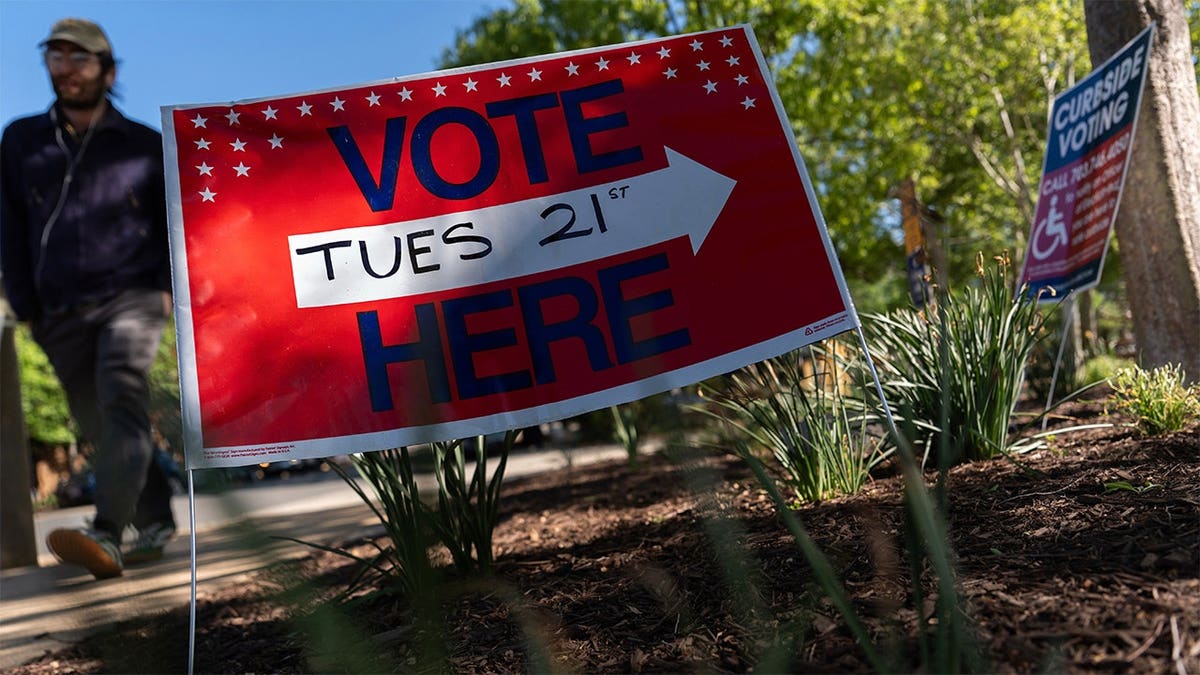
The approved referendum could give Democrats a 10-1 advantage in Virginia’s congressional delegation, up from 6-5 currently, if the courts don’t overturn it. (Julia Demaree Nikhinson/AP Photo)
Attorneys Richard Hawkins and Matthew Seligman and Solicitor General Tillman Breckenridge represented Democrats seeking to uphold Tuesday’s election result, while attorney Thomas McCarthy argued for Senate Minority Leader Ryan McDougle, R-Hanover, and other officials to challenge it.
Justice Wesley Russell’s first question to Seligman and Hawkins was whether Tuesday’s vote, in which the “Yes” side won, even had legal significance.
“He asked the defendants’ lawyers to admit that ‘no, the outcome of the vote doesn’t matter’ – they didn’t talk about the margin.” [or the] expenses of 3:1,” Cuccinelli said later Monday.
Cuccinelli said Democrats, led by Attorney General Jay Jones, have since used that victory to justify the legitimacy of redistricting.
“The current attorney general of Virginia…has actually said it in his public statements: The only defense I’ve heard him offer is ‘will of the people’…and his own lawyer in court today said that’s irrelevant,” Cuccinelli said. “[Hawkins] this completely undermined the public position of the current Attorney General. »
Cuccinelli added that the defendants were also “incredibly jaded” when they suggested early voters should vote at their own risk of an “October surprise” like redistricting, when they were challenged on the merits of the case given the 45-day early voting window established the last time Democrats had full control in Richmond.
INSIDE JAY JONES AND THE DEMOCRATS’ LATE OVERRIDE TO UPWARD VICTORIES ACROSS VIRGINIA, FROM SUBURBAS TO THE SHORE
The former attorney general said that perhaps it was this effort that was “self-driven in 45 days” and that, with Republican spending 3:1, the only thing Democrats’ money would have been good for was “driving voters crazy” and thus giving the GOP an accidental victory.
In court, Seligman addressed the justices, saying Virginians had cast their votes through a “clear and complete process” outlined in the Virginia Constitution, and that the General Assembly, led by Speaker Don Scott Jr., a Portsmouth Democrat, and Senate President L. Louise Lucas, a Portsmouth Democrat, passed the measure through appropriate means during an October special session.
Republicans argued that the intent of the special session — called months earlier by then-Gov. Glenn Youngkin and adjourned indefinitely — was incorrectly used to pass the amendment. They also argue that the November 2025 election did not represent a “mid-term election” as required by law because early voting had already begun.
DAVID MARCUS: VIRGINIA’S BATTLE AGAINST GERRYMANDERING BETRAYS OUR BROKEN POLITICS
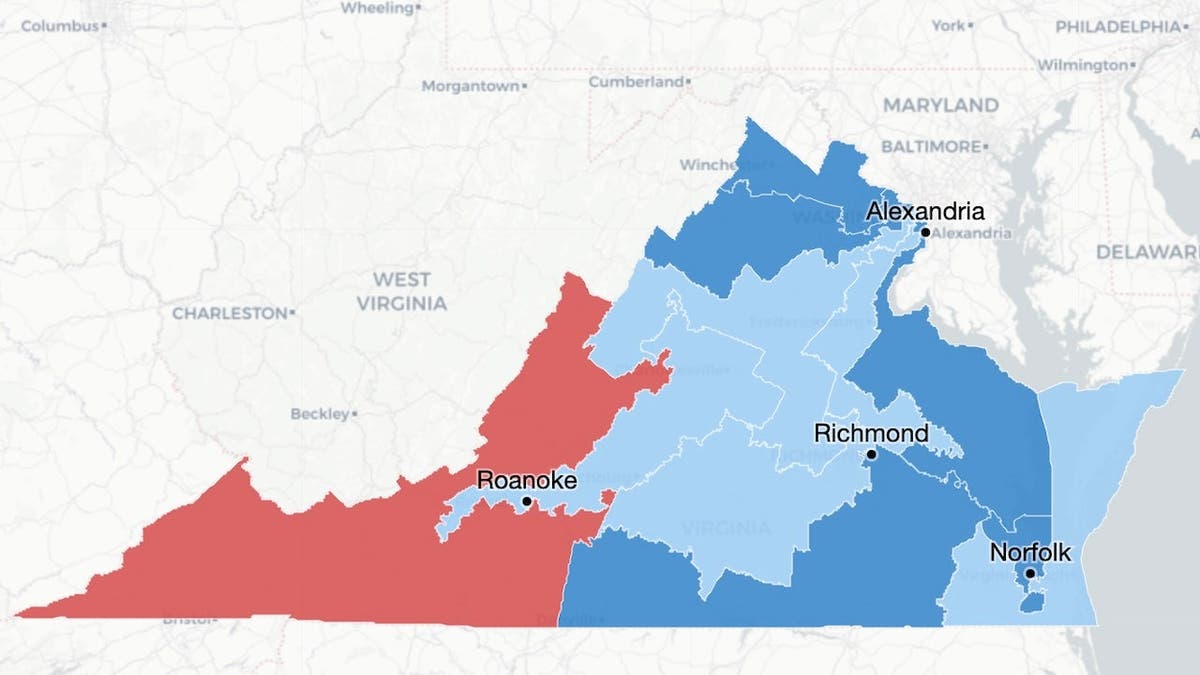
Virginia’s redistricting map was narrowly approved by voters late this week in a special election that the Virginia Supreme Court allowed to take place amid a legal battle over redistricting’s “sink” in the middle of the decade. (Virginia Legislative Information System)
Seligman said the Assembly rightly sent the proposed amendment back to lawmakers a second time in January, as was required, and it went before voters Tuesday.
“That is all that Section 12 requires. As a result, the proposed constitutional amendment has been ratified and is now part of the Virginia Constitution. The circuit court attempted to interfere with that democratic process by stopping it,” he said, referring to Hurley’s prior objection. “This court has rightly put a stop to that.”
In response to Seligman, a judge said he did not understand the explanation “as a legal argument” given that the Democrats had asked the court – according to the legal scholar – not to rule on procedural irregularities until after the election itself, in accordance with a 100-year-old SCOVA ruling in this regard.
“The fact that there is a ‘yes’ vote tells us nothing about the merits” of the McDougle camp’s argument that the legislative element resulting from the referendum did not comply with the law.
Another justice offered an incredulous response during a discussion of the “constitutional silence” that surrounds when a special session adjourned “indefinitely/sine die” is in fact officially over — including whether a regular session potentially meets in between.
“A special session called in 1929, if they forgot to adjourn sine die, would it still be in progress?” » asked the judge.
Seligman said no, while later adding that the practice was “mixed” in Richmond and Washington.
In contrast, the justices’ questions to McCarthy seemed more open-ended, as he began his remarks by saying the redistricting amendment violates the state Constitution’s limitations on special sessions in several ways, including by then-Gov. Youngkin called it for budgetary purposes – not election planning.
CLICK HERE TO DOWNLOAD THE FOX NEWS APP
In turn, the justices asked questions asking McCarthy to weigh in on the “historical record” of the General Assembly’s special sessions and whether the two-thirds majority policy or the argument made by the governor were more important.
The court is expected to act on an expedited timetable in this case, given that the 2026 primary election is about two months away and the precincts will need to be known by then.


