Viruses in the Gut Protect Us and Change with Age and Diet


September 8, 2025
2 Min read
“Gut Virome” little known protects us – and changes throughout our lives
A new review study examines the “intestine virome”: the mysterious viral population of the microbiome
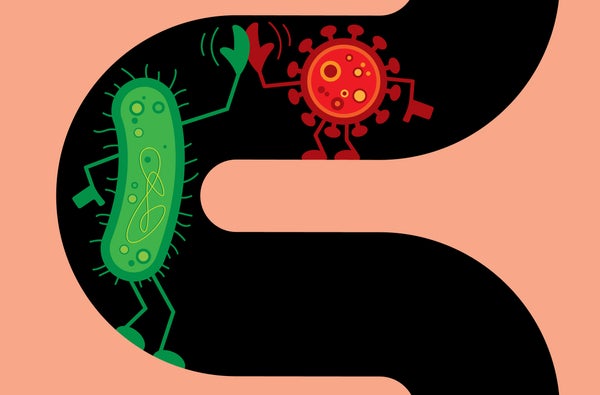
Viruses have a bad reputation naturally. But in the depths of our digestive system, many of them work quietly to keep us healthy. This “intestinal viroma” is a key element of the global microbiome – the vast collection of microbes that play a crucial role in our digestion, our immunity and our global health.
“The bacteria of the microbiome is well known,” explains Tao Zuo, microbiologist at the Sun Yat-Sen university in China. “But the virome that we don’t really know.”
This is due in part to the fact that the virome represents only about 0.1% of the total biomass of the microbiome, explains Zuo. And viruses are quickly swinging, making their genetic equipment more difficult to isolate for the study. To get a better understanding, Zuo and his colleagues have gathered a multitude of research data to catalog how the intestinal virome changes with age, food and the environment.
On the support of scientific journalism
If you appreciate this article, plan to support our award -winning journalism by subscription. By buying a subscription, you help to ensure the future of striking stories about discoveries and ideas that shape our world today.
Their review, published in Precision clinical medicine,, Particularly focuses on bacteriophages – viruses that infect bacteria and represent more than 95% of the virome. These viruses sometimes take advantage of us by infecting and killing harmful intestinal bacteria. But they can also strengthen pathogens – “for example, if a bacteriophagus carries a gene that offers antibiotic resistance,” explains the virologist Jelle Matthijnssens, specializing in research on viraces at the Catholic University of Belgium in Leuven (Ku Leuven) and did not participate in the journal.
The authors of the study show how an individual’s viroma is constantly developing according to genetics and the environment. At birth, the bacteriophages of infants are often more numerous than bacteria of their microbiome, but it is starting to change with exposure to the outside world and as the intestine is developing. During adolescence, bacterial populations develop more from hormonal changes and exposure accumulated to other microbes. In adulthood, healthy individuals organize a delicate and mutually beneficial balance of bacteriophages and bacteria.
Certain bacteriophages which help to maintain this balance are extremely reactive to environmental factors such as food and air quality, and they also respond to the levels of inflammation of their host, immune signaling, stress hormones, etc. Factors such as exposure to certain drugs and poor diet can trigger an imbalance that reduces the diversity of the virome. In turn, this was associated with disorders such as inflammatory intestine disease. In the elderly, an aging immune system and an increase in metabolic stress can still throw this system and increase the viral number, potentially contributing to age -related diseases.
Understanding these effects of aging and the environment can one day contribute to clinical applications such as “phage therapy”, say the researchers – but much more research is necessary.
“A key challenge consists in distinguishing causality from correlation,” explains Evelien Adriasens, microbiologist at the Quadram Institute in England, which was not involved in the new study. “The virome of each individual is unique …, so we cannot make radical statements on the health of an individual looking at his virome alone.”
It’s time to defend science
If you enjoyed this article, I would like to ask for your support. American scientist has been a defender of science and industry for 180 years, and at the moment can be the most critical moment of this two -centuries story.
I was a American scientist The subscriber since the age of 12, and that helped shape my way of looking at the world. Sciam Educates me and always delights me, and inspires a feeling of fear for our vast and magnificent universe. I hope that does this for you too.
If you subscribe to American scientistYou help make sure that our cover is focused on significant research and discoveries; that we have the resources necessary to report the decisions that threaten laboratories in the United States; And that we support the budding scientists who work at a time when the value of science itself does not become often again.
In return, you get essential news, Captivating podcasts, brilliant infographics, Maybe not miss newsletters, videos to watch, Difficult games and the best writings and reports in the scientific world. You can even Give someone a subscription.
There has never been more time for us to get up and show why science counts. I hope you will support us in this mission.


