We Need to Prepare for the Mammoth Task of De-Trumpification


The damage he and his acolytes have caused could take decades to repair, particularly when it comes to science and public health.
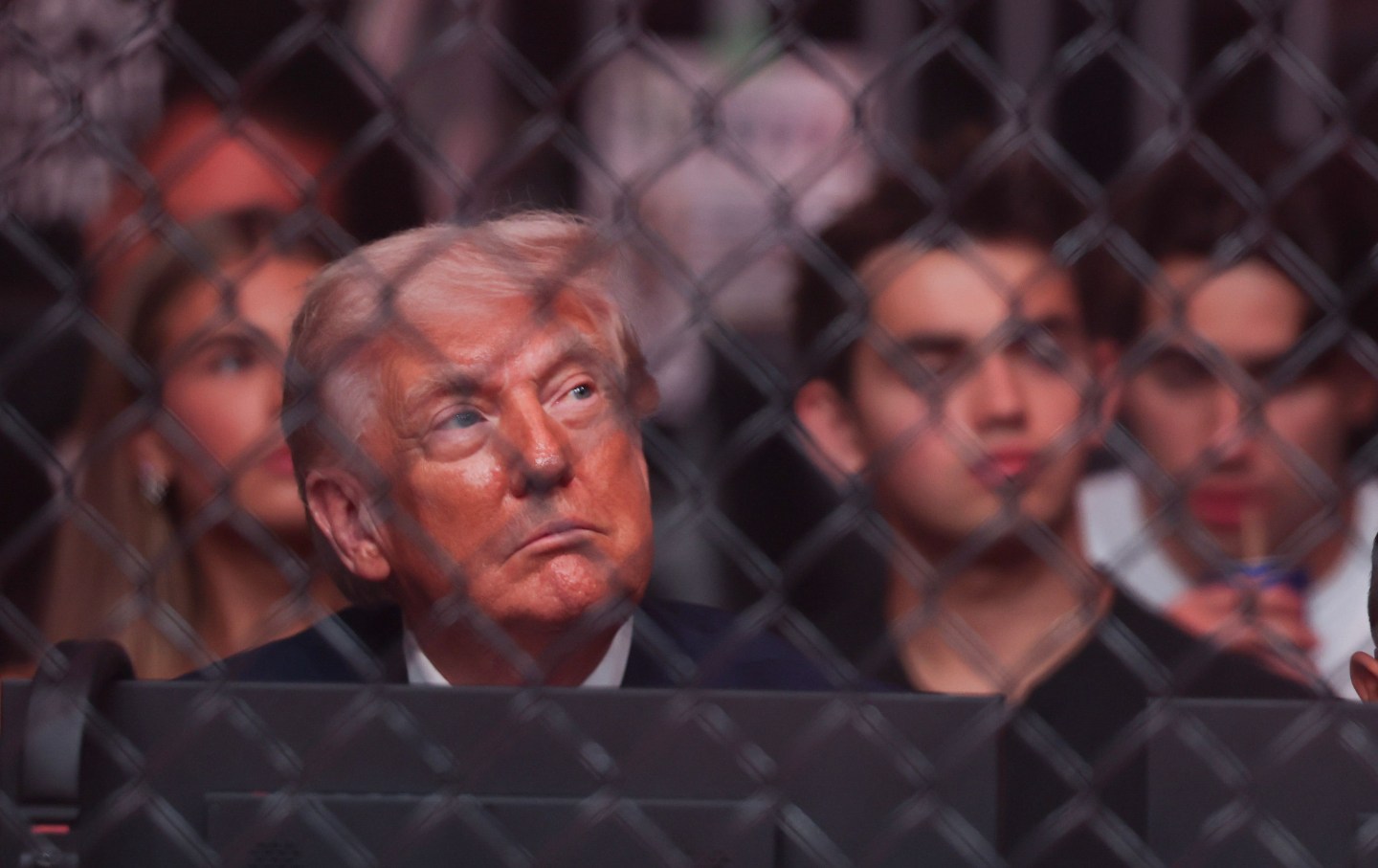
Donald Trump attends a UFC fight in Miami on April 11, 2026.
(Tasos Katopodis/Getty Images)
Last December, after Donald Trump renamed the Kennedy Center in his honor, Kerry Kennedy, the daughter of the late Robert F. Kennedy (that’s Kennedy Sr., not the ill-begotten son), posted on union.
The de-Trumpification of our narcissist-in-chief’s buildings and other edifices, and the melting of his commemorative gold coins, will fill many of us with joy, but the effects of this monster’s reign will be lasting. The road to recovery will be long, in many cases, and the damage will take decades to repair.
In public health, biomedicine, and other sciences alone, we have a generational task before us. Simply rebuilding what we lost will require a “Marshall Plan” for these fields. Entire agencies have been decimated; divisions were disbanded, thousands of officials who kept these places running were fired, data was erased, key agencies like the Advisory Committee on Immunization Practices populated by cranks and charlatans, others like the U.S. Preventive Services Task Force were put in limbo, and NIH study sections and advisory boards were thrown into disarray. Procedural screw-ups have dramatically reduced the number of grants funded, while capable leaders are replaced by cronies and ideologues, often with little expertise or professional experience.
You don’t just turn the lights back on for these things after Trump leaves office and expect to get everything back the way it was. From the NIH, FDA, SAMHSA, CMS, and CDC to the NSF, NOAA, EPA, and NASA, the damage is so great that massive amounts of resources will be needed just to get us back to baseline, let alone prepare for the challenges of the 21st century and beyond.
If Democrats win back the White House, Senate and House of Representatives, they will have to spend billions just to restore these agencies to where they were before Trump. Deficit hawks will say we can’t afford such spending, but we actually can’t afford to delay these investments. Unless we bring our nation’s public health and science institutions fully back online, the U.S. economy could shrink by nearly $1 trillion or more over 10 years, and this country would be doomed to scientific innovation status for the rest of the century as well.
Outside of government, the downstream effects of Trump’s policies are dire. Universities have been the engine of scientific research since the end of World War II, but today established researchers are looking elsewhere to continue their work, doctoral programs have reduced their admissions or stopped accepting new students, and current students are now seeking careers outside of research. The talent pool for American science is drying up. From a biomedical perspective, this means fewer cures and new treatments for diseases. Industry, which depends on its own workforce trained at these academic institutions, cannot simply fill the void. Attacks on science have been felt most acutely among women and people of color, from funding cutbacks to training opportunities. If we need a Marshall Plan for our federal science agencies, we will need to extend it to our academic institutions to ensure that the erosion of research at universities can be halted and reversed.
Current number
And unfortunately, the carnage does not stop there. Cuts to agencies like the CDC and EPA mean cuts to state and local health departments, environmental monitoring programs, which means basic disease surveillance and air and water quality measurements are compromised. Most of these local and state agencies have been underfunded for years, so even returning them to pre-Trump funding and operating levels will leave us as unprepared as we were in 2019 for the new pandemic that arrived on our doorstep in 2020.
None of this is to say that public health and scientific research in the United States were perfect before Trump returned to power. But that’s also the point: recovering from devastation gives us the chance to build the system we’ve needed for so long. Yet facing the scale of what needs to happen is the first step toward recovery.
The scale of the damage and the enormous amounts of money, time and energy that will be required to return us to 2024 levels are staggering. I’m not sure anyone really understands what this means, given that many other areas of public life will need their own Marshall Plans. Trump, in his misdeeds, wickedness and incompetence, is paying a heavy bill, and we, our children and our children’s children, will be left with the bill.
Nor did Trump act alone. The de-Trumpification of public health and American science will have to confront the legacy of its accomplices. From agency heads like Marty Makary and Jay Bhattacharya, to high-ranking officials like RFK Jr. and Russell Vought, to low-level insiders like NIH’s Matthew Memoli and Jon Lorsch, whose knowledge of how their agency worked helped bring it down from the inside, all of these men must be held accountable. Once again, Democrats will have to show some courage if they regain leadership and at least hold hearings. Better yet, they should create an independent commission to document the daily work done by all of the president’s men and women, agency by agency, to destroy public health and science in America.
This is not about retaliation; it’s about testifying, putting the facts out in the open so that everyone knows what these people did. Allowing them to slide back into private life, back to quiet academic appointments and far-right think tanks, without accountability for what happened is an affront to decency, dishonors the dead of this administration’s policies, whitewashes history, and makes it all the easier for it to happen again. Truth? Yes. Reconciliation. Maybe.
There will be a day after Trump. Weeks. Month. Years to follow. One day we will be free. But we must now keep in mind that rebuilding will take decades and not lull ourselves into thinking that we will return to normal (even if everything was deeply flawed before 2025) any time soon or without the necessary effort. Our leaders, whoever they may be after this man leaves office, must know now that timidity and modest, poll-tested versions of the future will do nothing to slow the decline of public health and science in America, nor will they heal our nation’s gaping wounds in other areas of federal governance. We’re going to have to run for the fences again. Without a bold and expansive vision to guide us, there is no turning back.
More than The nation
The Bureau of Prisons’ new guidelines amount to government-mandated conversion therapy.
Kali Holloway
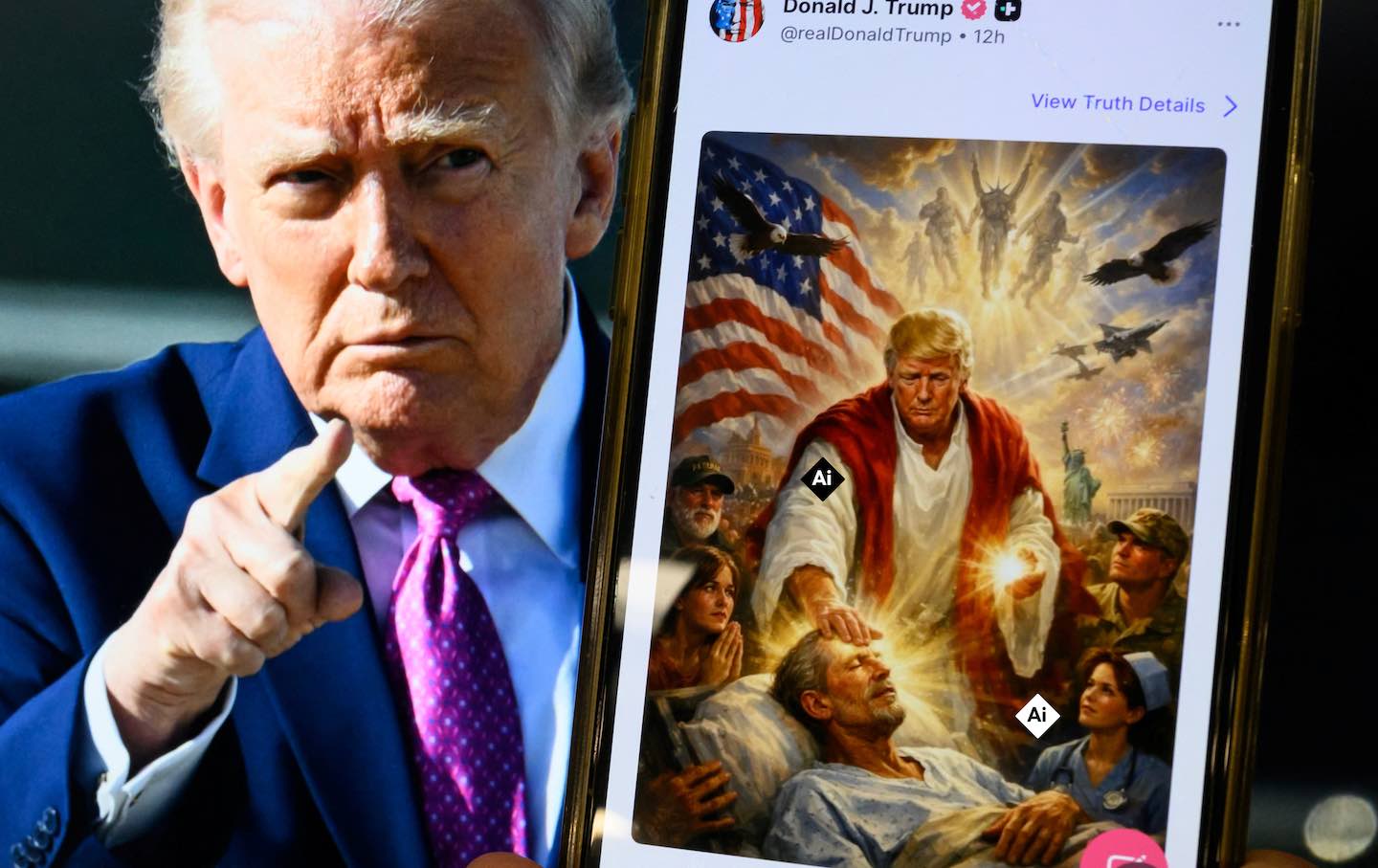
Liberals have a hard time understanding why the president’s evangelical supporters never seem to care about his sacrilegious tendencies. They miss the point.
Chris Lehmann

Liberals are delighted with the MAGA titan’s opposition to the Iran war. All they do is bolster the credibility of an unrepentant, pathologically dishonest, bad-faith bigot.
Rafi Schwartz
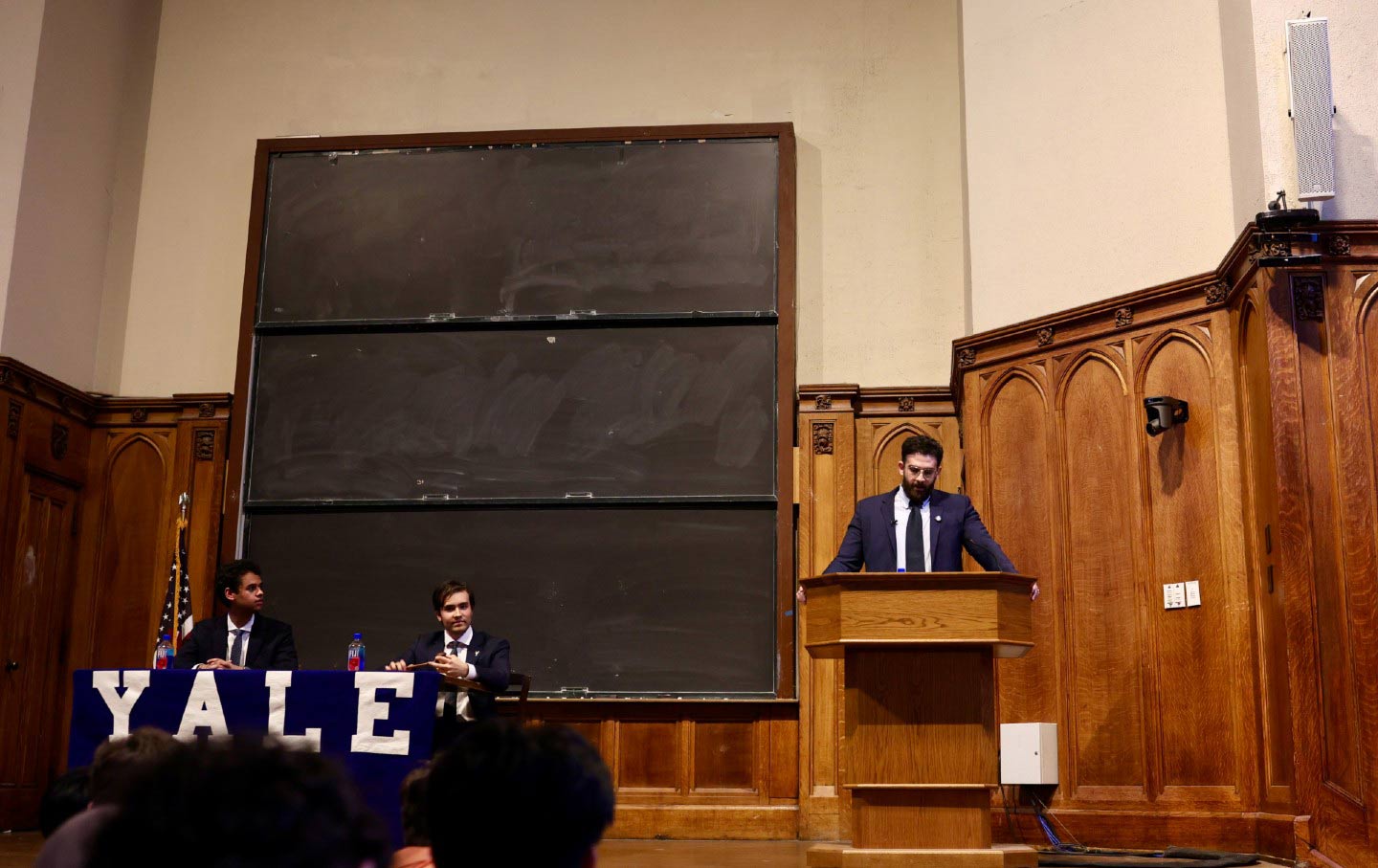
The Twitch streamer’s invitation to debate at the Yale Political Union drew the ire of Laura Loomer, Rick Scott and Turning Point USA.
Student Nation
/
Zachary Clifton
In an election year under an administration that has wreaked unprecedented havoc, journalism is more important than ever — and we must act like it.
Arnold Isaacs

This isn’t the kitschy White House ballroom, but logistics warehouses converted into ICE detention centers.
Column
/
Kate Wagner


