What causes volcanoes to erupt?

Curious Kids is a series aimed at children of all ages. If you have a question you’d like an expert to answer, send it to curiouskidsus@theconversation.com.
What causes volcanoes to erupt? – Avery, 8 years old, Los Angeles
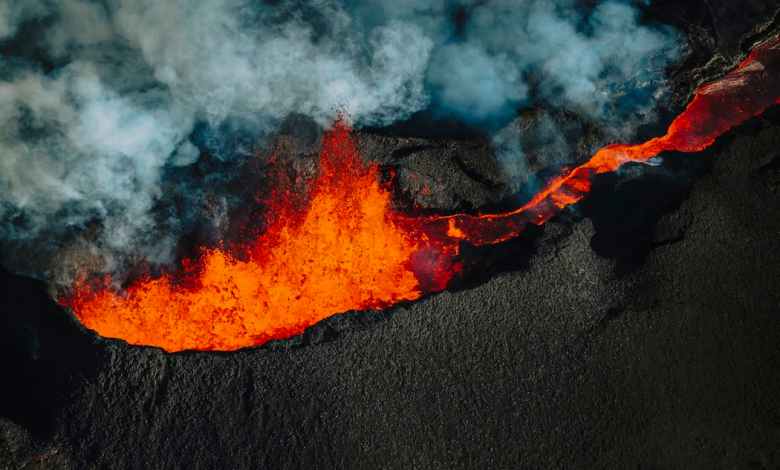
On November 27, 2022, Mauna Loa – the world’s largest active volcano – erupted on the island of Hawaii. For days, fountains of lava, boiling at more than 2,000 degrees Fahrenheit (1,100 degrees Celsius), gushed upward and flowed down the mountainside.
For tens of millions of people around the world, the videos were a fascinating spectacle. Then, a few weeks later, the rash ended. Fortunately, there were no deaths or major property damage.
About a week later, Mount Semeru in East Java, Indonesia, erupted with a mixture of ash, gas and hot rock. The plumes rose a mile above the mountain peak. Thousands of people living nearby were evacuated; many wore masks to protect themselves from the ash-filled air. Mount Semeru has continued to erupt for months.
I am a geologist who studies minerals in volcanic rocks. I want to know more about the causes of volcanic eruptions. Millions of people live near an active volcano, that is, one of the 1,328 volcanoes in the world that have erupted in the last 12,000 years.
At any given time, 20 to 50 of these active volcanoes erupt. The proximity of people and buildings makes it important to study volcanoes and understand the dangers.

How volcanoes blow their chimneys
The center of the Earth is called the core; the next layer is the coat; the outermost layer is the crust.
Over time, magma – molten rock mixed with gas and mineral crystals – accumulates in an underground chamber beneath the volcano. Mauna Loa magma forms when a hot plume from the mantle – think of a heat transporter – partly melts the mantle rock.
The volcano is essentially an opening that lets magma escape to the Earth’s surface. Once released from the volcano, the magma is called lava.
In the months before its eruption, scientists noted an increase in earthquakes and Mauna Loa swelling, like an inflated balloon. These signs suggested that more magma was rising, because the pressure from rising magma can expand the walls of a volcano and cause rocks to shift and break, leading to earthquakes.
Typically, for an eruption to occur, enough magma must accumulate in the chamber beneath the volcano. Something must then trigger the eruption. This could be an injection of new magma into the chamber, a buildup of gas in the volcano, or a landslide that removes material from the top of a volcano.
Types of volcanoes
Mauna Loa is a shield volcano, built over thousands of years by lava eruptions. Its sides slope gently in all directions.
But Mount Semeru is different: it is a composite volcano, also known as a stratovolcano, with steep walls that reach a point at the summit, like an upside-down sugar cone.
Semeru’s most recent eruption began when heavy rains washed away rocks near the volcano’s summit. This allowed the gas to escape and the ashes to begin to erupt.

The dangers
Many dangers are associated with erupting volcanoes: lava flows, acid gases, ash, and lahars, which are dangerous flows of water, ash, and rock that hurtle for miles down the steep slopes of volcanoes, sometimes at more than 100 miles per hour. The force of lahars can move huge boulders and destroy bridges and buildings.
The recent eruption of Mount Semeru covered nearby villages in ash – tiny particles of rock that can penetrate deep into the lungs, causing irritation and making breathing difficult.
As ash accumulates, it can smother crops, contaminate water supplies and cause buildings to collapse. Freshly fallen dry ashes weigh 10 to 20 times more than snow.
Scientists generally don’t try to stop volcanoes from erupting. They are a natural part of the Earth. But volcano monitoring is essential. People need early warning of an eruption so they can get out of harm’s way.
Although we can’t predict the exact time of an eruption, scientists are learning more about what causes it and how to protect people who live nearby.
What’s essential: warning systems for lahars, planned evacuation routes in areas threatened by volcanoes, and excellent communication between scientists at volcano monitoring stations and government agencies that can let people know when a volcano is about to disappear.
Hello curious children! Do you have a question you would like an expert to answer? Ask an adult to send your question to CuriousKidsUS@theconversation.com. Please tell us your name, age and the city where you live.
And since curiosity has no age limit – adults, let us know what you’re wondering too. We won’t be able to answer every question, but we will do our best.
This article is republished from The Conversation, an independent, nonprofit news organization that brings you trusted facts and analysis to help you make sense of our complex world. It was written by: Rachel Beane, Bowdoin College
Learn more:
Rachel Beane receives funding from Bowdoin College and the National Science Foundation. It is affiliated with the Harpswell Heritage Land Trust.


