What Makes Point Calimere a Survival Hotspot?

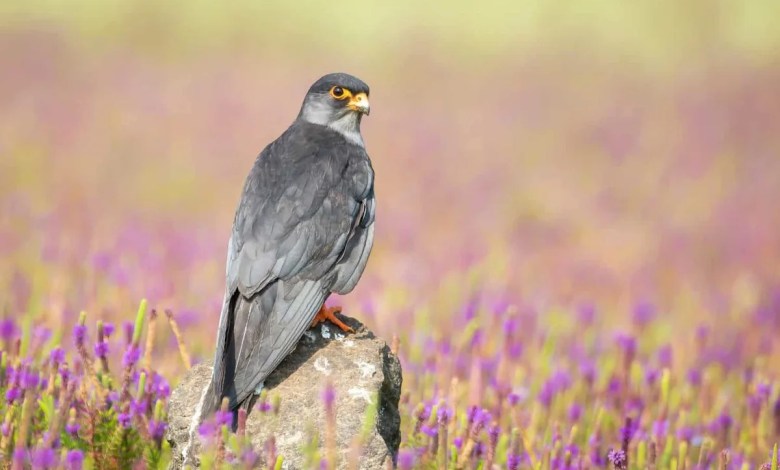
The Return of the Amur Falcons: What Makes Point Calimere a Survival Hotspot? appeared first on AZ Animals.
Quick take
-
Hunting in the Doyang Reservoir once eliminated 10% of the world population of Amur falcons.
-
Severe cyclones In South Asia redirect bird migrations, leading to rare sightings.
-
Make a 13,670 miles the round trip requires the Amur Falcon to use specific ecological rest areas.
-
THE 2025 observations indicate several positive factors on the Calimere Point ecosystem.
A rare wildlife sighting is exciting bird watchers across South India. The elusive Amur falcon was first sighted in this region in 2020, following the arrival of two major cyclones. And now, confirmed sightings have occurred again in 2025. Birders have remained hopeful that the falcon will return, and this new sighting is significant in more ways than one for Point Calimere in Tamil Nadu in southern India, including for the health of its ecosystem.
As news of the Amur falcon sighting spreads, more locals are optimistic that its revival bodes well for the region. Here’s what else the appearance of this rare raptor means for south India.
Why is the Amur falcon so elusive?
In 2012, conservationists denounced Doyang Reservoir hunters. The artificial reservoir had become a feeding area for Amur falcons, which stopped mid-migration to feed on the insects found there. When local hunters realized this, it also became a hot spot for netting and catching hawks. Once captured, falcons were traded for meat and as trophies.

Amur falcons are not endangered, but local hunting once threatened them.
©Ali Bernie Buga-ay/Shutterstock.com
Poultry hunting is common around the world, but the hunt at Doyang Reservoir has been particularly devastating to Amur falcons. Hunters captured these birds en masse by hanging fishing nets in trees, causing between 120,000 and 140,000 deaths. According to The conversationthis represented approximately 10% of the global population of Amur falcons. Not only was this practice inhumane, but it also led to a significant decline in the region’s raptor population.
In 2013, following numerous calls for action by conservationists and a documentary titled “The Amur Falcon Massacre”, falcon hunting became illegal in local villages like Pangti. Unfortunately, the damage was already done. Although Amur falcons are not endangered today and are listed as least concern, migrations in India remain under threat. Several sightings before 2020 sparked excitement, but it wasn’t until the most recent sighting in 2025 that birders regained real hope.
Why are Amur falcons migrating again via Point Calimere?
The sighting of Amur falcons at Point Calimere is a good sign. As with the falcons spotted in 2020, storms are thought to have brought them back in 2025. Cyclones are common across South Asia, known to cause damage inland and change the migration patterns of many birds. As the Amur falcons began their long journey between Asia and Africa, cyclone winds pushed them off their usual path. This forced them to seek refuge elsewhere, and it was both by coincidence and design that they ended up at Point Calimere.

An Amur falcon lands on a piece of dead wood.
© Butterfly Hunter/Shutterstock.com
Bird watching is a popular pastime at Point Calimere, where the land is protected as a wildlife and bird sanctuary. Its lush greenery lies between two bodies of water: the Palk Strait and the Bay of Bengal. These bodies of water are essential to terrestrial and avian life, as animals use them for hunting and hydration. It is also home to abundant marine life, which is preyed upon by local seabirds. It is also a popular spot for migratory birds, including flamingos, sandpipers and pelicans.
This year, the Amur falcon joined the ranks of these migratory birds. Raptors such as black and brahminy kites are regular visitors, and their sightings are not uncommon either. But for birders, watching an Amur falcon swoop down to feed is an unprecedented experience. Recent cyclones in southern India are known to have altered bird migration patterns, which may have contributed to the presence of Amur falcons at Point Calimere.
What this means for places like Tamil Nadu
Point Calimere is not on the normal migration route of Amur falcons. These birds have considerable endurance and regularly fly up to 13,670 miles round trip. Their unexpected stop in Tamil Nadu is a testament to the status of the sanctuary and the overall health of its ecosystem. When a rare bird stops here to rest during migration, it indicates several things: an abundance of food, shelter from bad weather and predators, and enough space for Amur falcons to land in groups, as they often do during migration.

Pointe Calimère is a sanctuary for all types of birds, including two species of birds of prey and, now, the Amur falcon.
©IK Fotos/Shutterstock.com
This means that Point Calimere Wildlife and Bird Sanctuary is crucial to the life of migratory birds. While banning local falcon hunting and protecting endangered species is a start, preserving such lands is essential. There is no definitive proof that Amur falcons regularly land at Point Calimere, but for now, bird lovers enjoy their rare appearances. These unusual encounters also serve as starting points to make visitors aware of the presence of falcons. Knowledge is power, and this is how many conservation groups develop their missions.
Tips for birders observing Amur falcons
Unlike most raptors, Amur falcons are social birds. Where birders spot one, they are likely to see several more. They migrate, congregate, roost and feed in groups and can often be found together in trees. They are recognizable by their bright orange eye rings and are slightly smaller than peregrine falcons. Males are mostly gray, while females have unique patterns alternating gray and white.
The best time to observe Amur falcons is during their annual migrations. In a place like Point Calimere, birders should:
-
Check open forests, forest edges, and open waterside areas.
-
Watch out for swarms of insects, as this can become a feeding area.
-
Observe the trees at dawn and dusk, when hawks are most active.
-
Use binoculars with a powerful zoom to observe birds from a distance.
-
Avoid wearing bright colors, as they can distract birds and make birders stand out.
-
Be patient; Seeing Amur falcons is rare and they do not always return to the same places.
The Return of the Amur Falcons: What Makes Point Calimere a Survival Hotspot? appeared first on AZ Animals.


